
Meet the 2026 Potters
Tyler-James Anderson
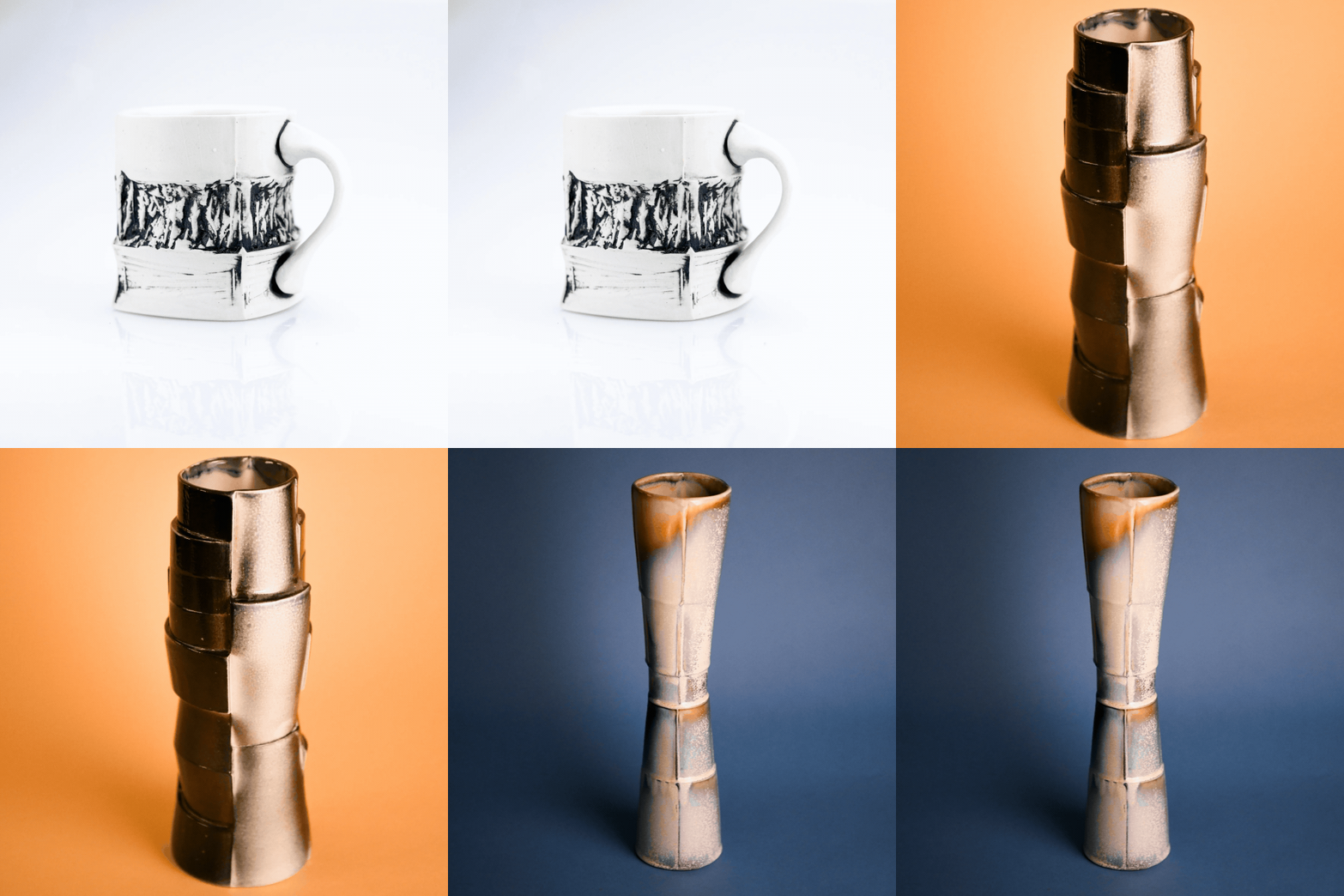
Tyler-James Anderson creates functional porcelain ceramic wares that deviate from the standard fare. He is heavily inspired by nature, science, architecture, and myth. In his wheel thrown and slip cast ceramics, he implements a diverse color palette and minimalistic design motifs that feature elements of weathering and age. He considers his work an exploration in surface, form, and texture, utilizing slip work and modular mold systems to bring his forms to life. Working under the moniker Moon Hand Pottery in Asheville North Carolina, his goal is to challenge the norm with functional vibrant pieces meant not only for decoration, but as conversation pieces for everyday use. Crafted with care, these pieces go through a lengthy production process turning mounds of earth into the beautiful functional pieces they are today.
Maria Andrade Pottery
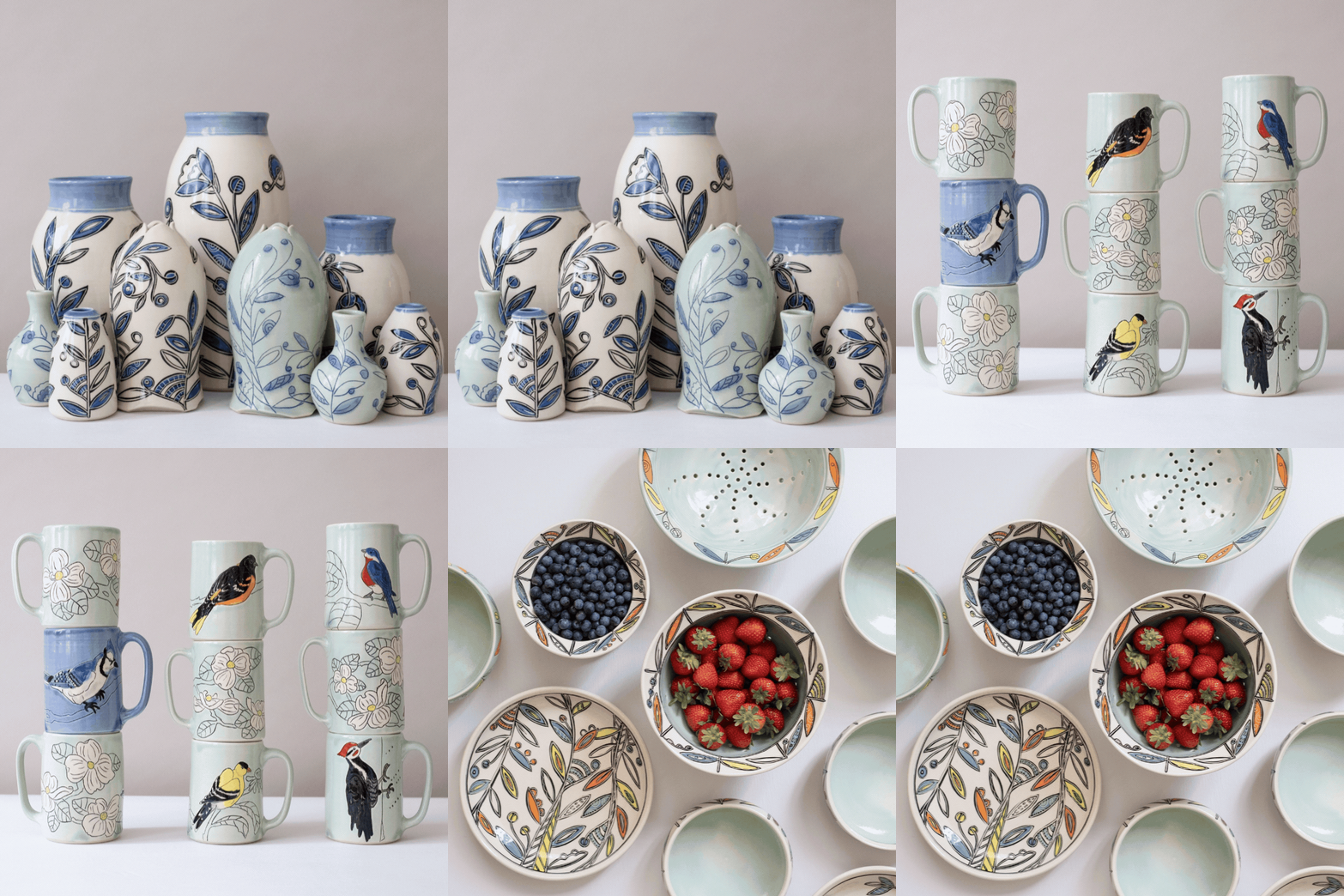
María is a ceramic artist working in Asheville, North Carolina. Originally from Quito, Ecuador she attended UNC-Asheville and graduated with a BFA in Printmaking. Afterwards she did a studio assistantship at Odyssey Center for Ceramic Arts and pursued a pottery making career. Currently Maria is a Resident Artist and teacher at The Village Potters Clay Center in Asheville, North Carolina.
As a ceramic artist, María is deeply attracted to the reflective relationship between form and function in our homes. Pottery is the perfect embodiment of incorporating utility and beauty into daily rituals. Using white stoneware clay to throw pots on the wheel. Some of the decorating processes include: mishima/inlay drawings, wax resist, slip trailing and carving. The pots are then fired in an electric kiln to Cone 6 which allows consistency in the glaze surfaces as well as a wide palette of brilliant and jeweled colors.
Inspiration from plants an animals informs all the hand drawn images on her pottery.
María’s pots also revolve around the love of cooking, entertaining and bringing the joy of gardening into everyday life.
Alexandra Barao
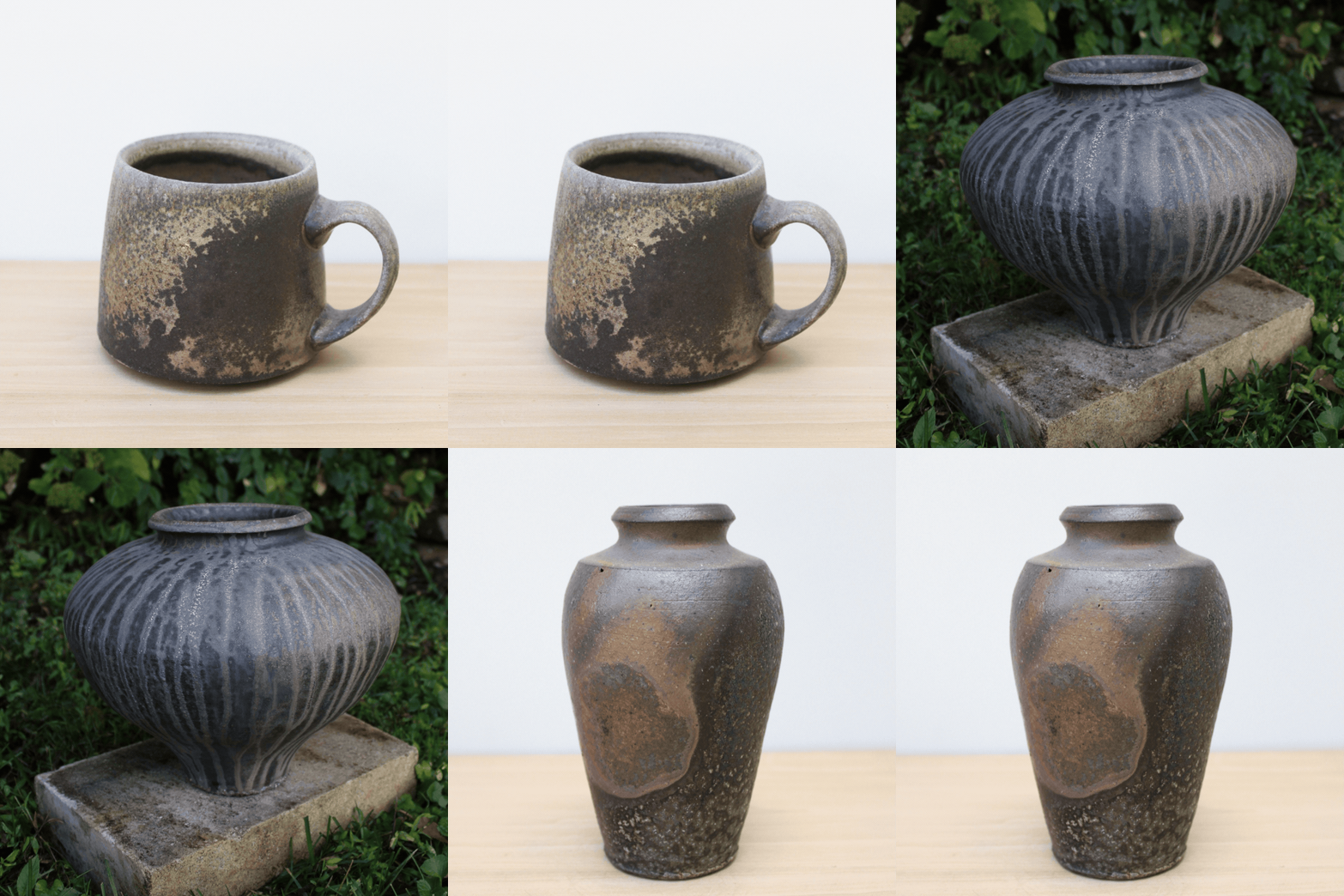
I make functional, wood fired pottery with North Carolina clays. I’m drawn to quiet forms and surfaces that allow space for the flame to leave its mark, highlighting the tones and textures of the material as much as the marks of my own hands. I find inspiration in historical pots, geological formations, and the landscapes that surround me. The towering granite slabs of the Sierras, the lichen-covered boulders of Appalachia, the deep iron-rich reds of the Virginia clay I grew up with under my feet - I can trace glimpses of these influences from across the places I've lived and worked directly to the surfaces of the pots I am making now.
Anja Bartels Porcelain
Originally from Hamburg, Germany, stencil artist Anja Bartels discovered pottery making while living in an intentional community in Virginia. Passion ignited, she returned home to study in the German Ceramics Guild, which honed her skills in a way much different from the typical experience in American art schools.
With a strong focus on craftsmanship and technical skill, Guild training provided her with the groundwork for making a quality product paired with the practical experience of working with a master potter for three years. The apprentices must engage in all aspects of the business, including marketing, sales, accounting, and production.
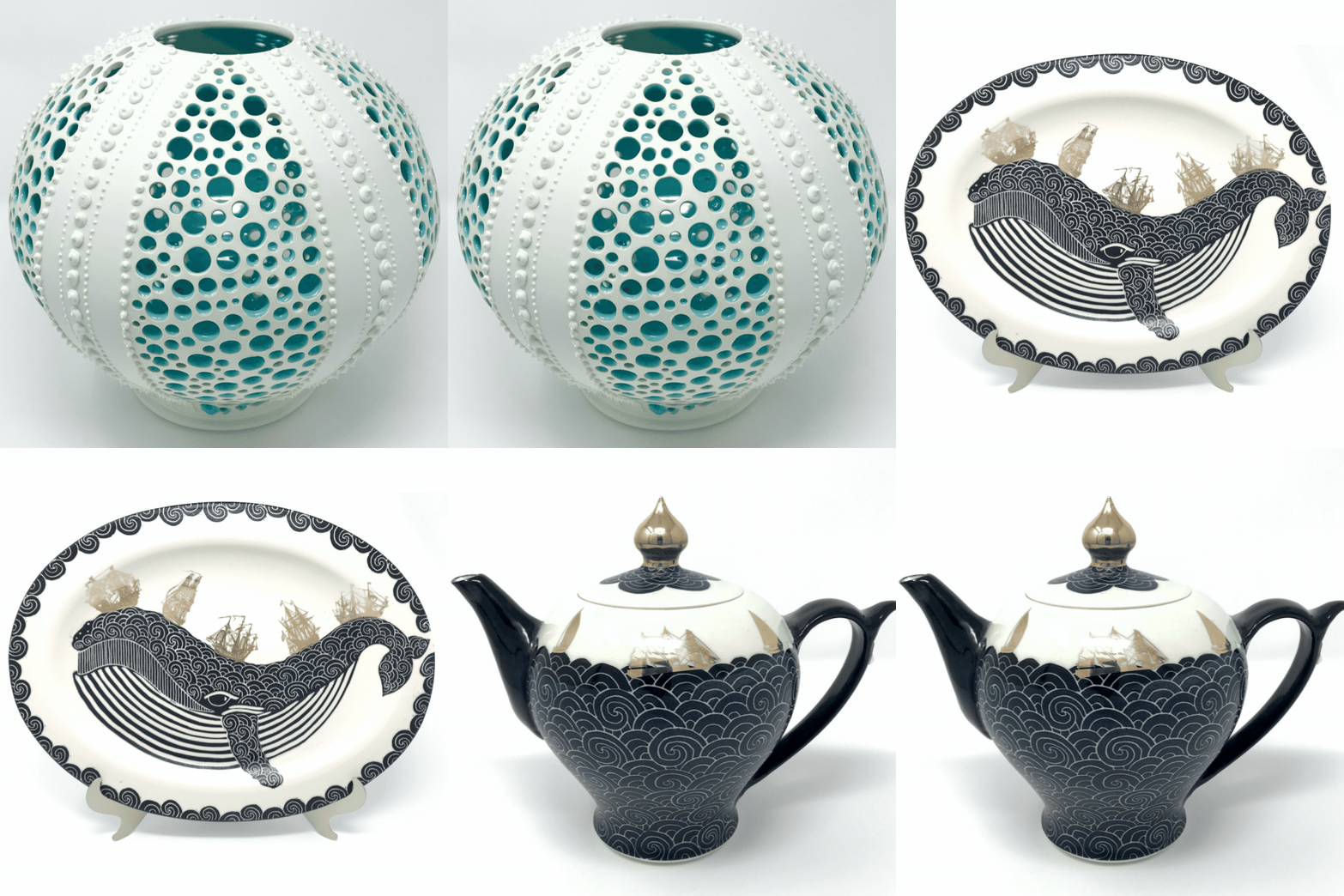
Anja’s nautically themed porcelain employs several different techniques including slip trailing, sgraffito (a technique where underglaze is painted onto greenware and a design is carved back through, revealing the clay body underneath), poured and sprayed glazes, and a unique resist technique used in the making of her beautiful urchin bowls. These bowls are thrown and trimmed on the wheel, then several thousand small slip-trailed spikes are applied using a surgical bulb while she listens to audiobooks about shipwrecks. Anja’s personal aesthetic and process are consistent and highly developed, reflecting her upbringing in a port town and her love of ships and the ocean. It is as if her pieces were born in the sea.
Cooley Clay
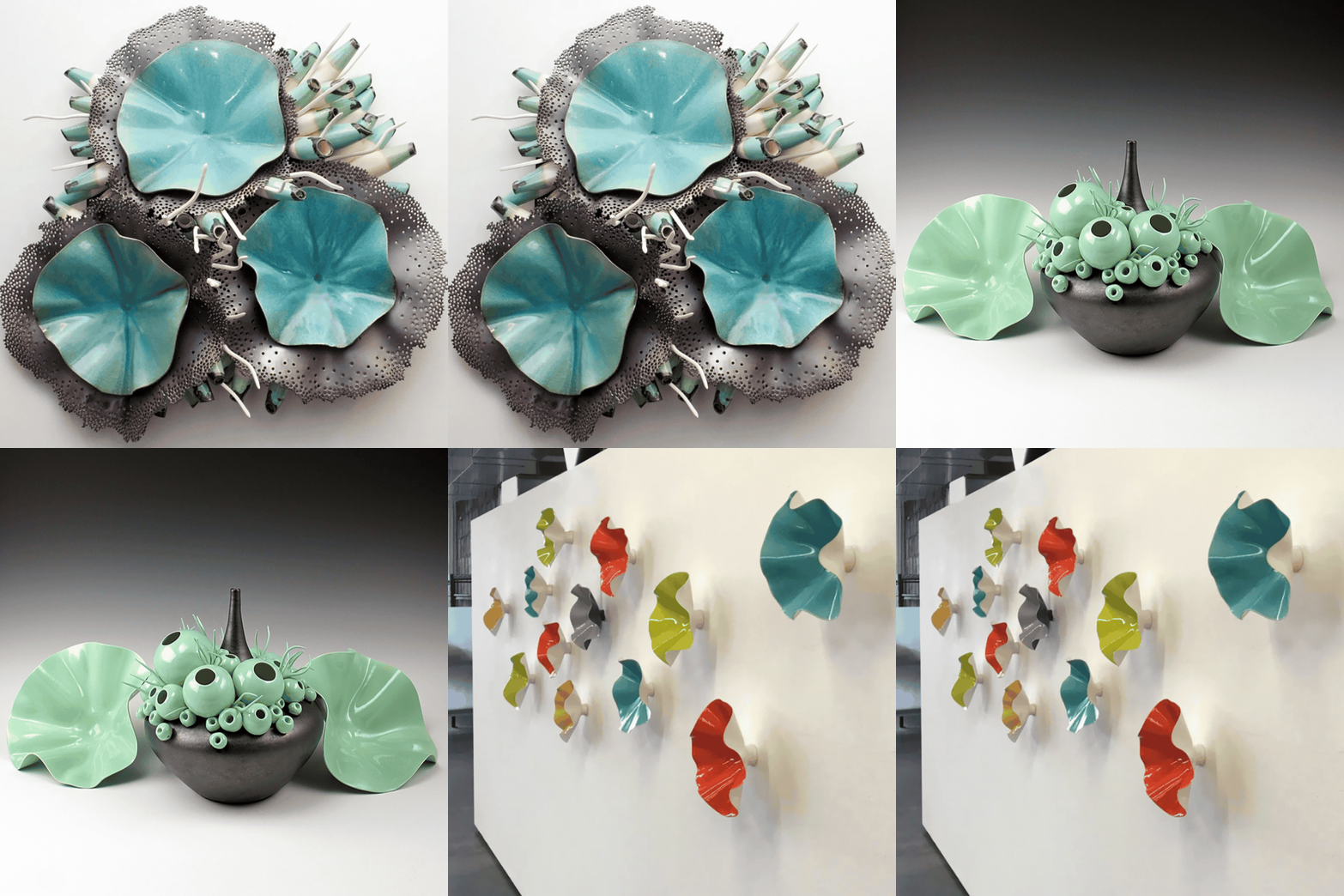
As a former interior designer, I am inspired by how people interact within their environment and how the environment can influence the individual's interactions with others. I often look to the colors and textures found in nature to influence my work, which often takes on a soft, explorative quality.
These inspirations extend to my work in sculpture as well.
I turn to ceramics to find creative relief and respite from the stresses of the commercial design industry. With clay, I am able to explore the tactile quality of the material to create biomorphic-inspired designs that relate us to nature, most notably the ocean. Born in Kansas, it was not until I went to college in Savannah, Georgia, that I found my connection to the water. The complexities and sensitivities of oceanic life are a constant theme in my sculptural work.
Covington Pottery
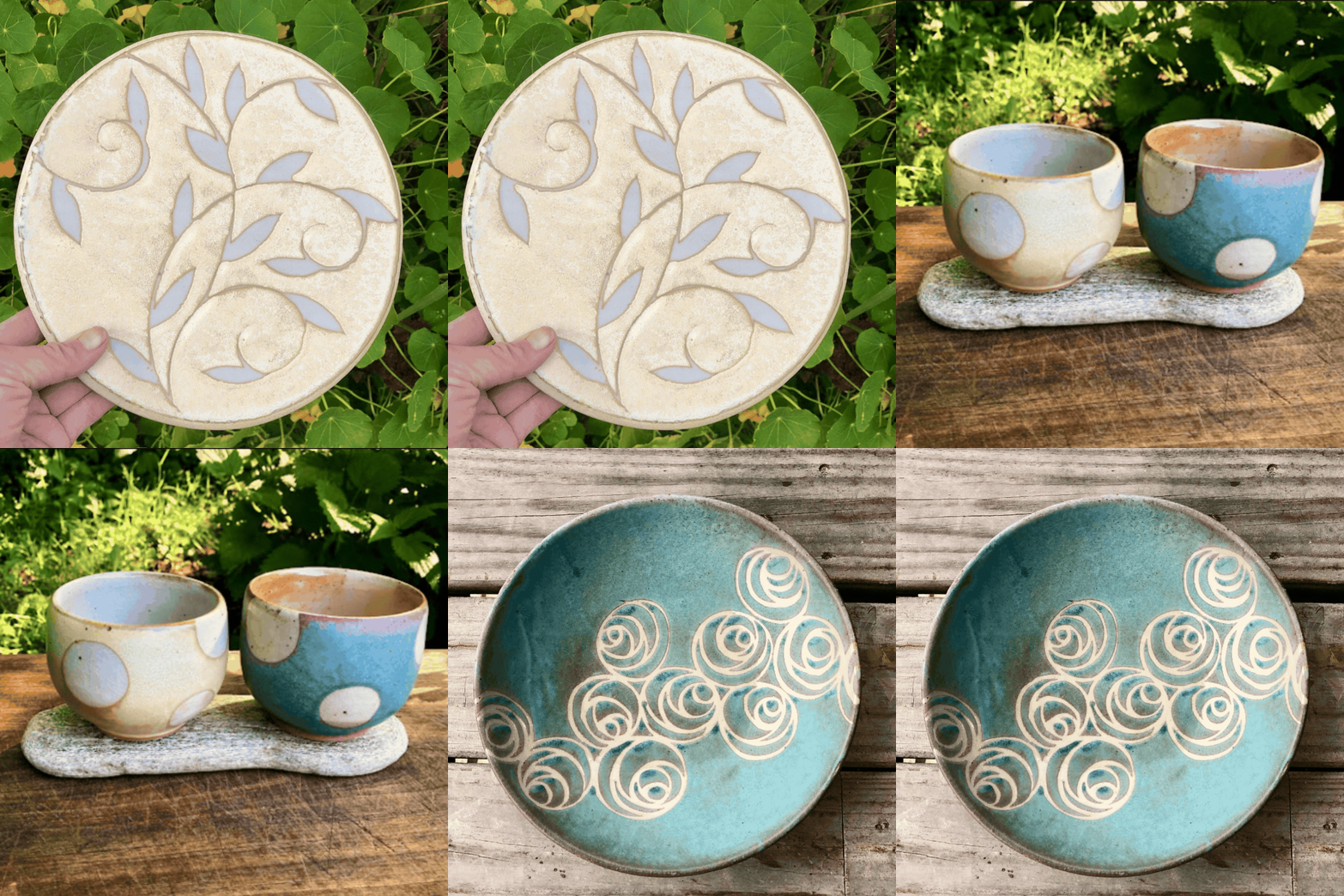
‘Don’t ask what the world needs. Ask what makes you come alive, and go do it. Because what the world needs is people who have come alive.’
I've been collecting quotes that strike a nerve for decades, and this one from Howard Thurman has long been one of my favorites. It has come to serve as a sort of touchstone. A reminder to stay awake. Stay alive. Stay curious. Stay delighted. For most of my life I've been lucky enough to be surrounded by folks who fill their days doing such things as felting tiny baby shoes, hand stitching buckskin skirts, hunting for wild foods and mushrooms, building hand-hewn log cabins and straw bale cottages, growing heirloom vegetables and flowers, whittling adorable little wooden spoons, waltzing in the moonlight, making bamboo fences, and a thousand other things that I am fascinated and humbled by. When I make pots it is with the hope that they will nestle comfortably into the lives of the wild and wonderful artists and farmers and musicians all around me and beyond, who seem to be forever raising the bar of what it means to walk around on this earth in a good way. I aim to create simple, sturdy tableware that feels and looks pretty good, and is equally at home on an intimate dinner table or on the floor of an old pick-up truck.
Allison Daniel
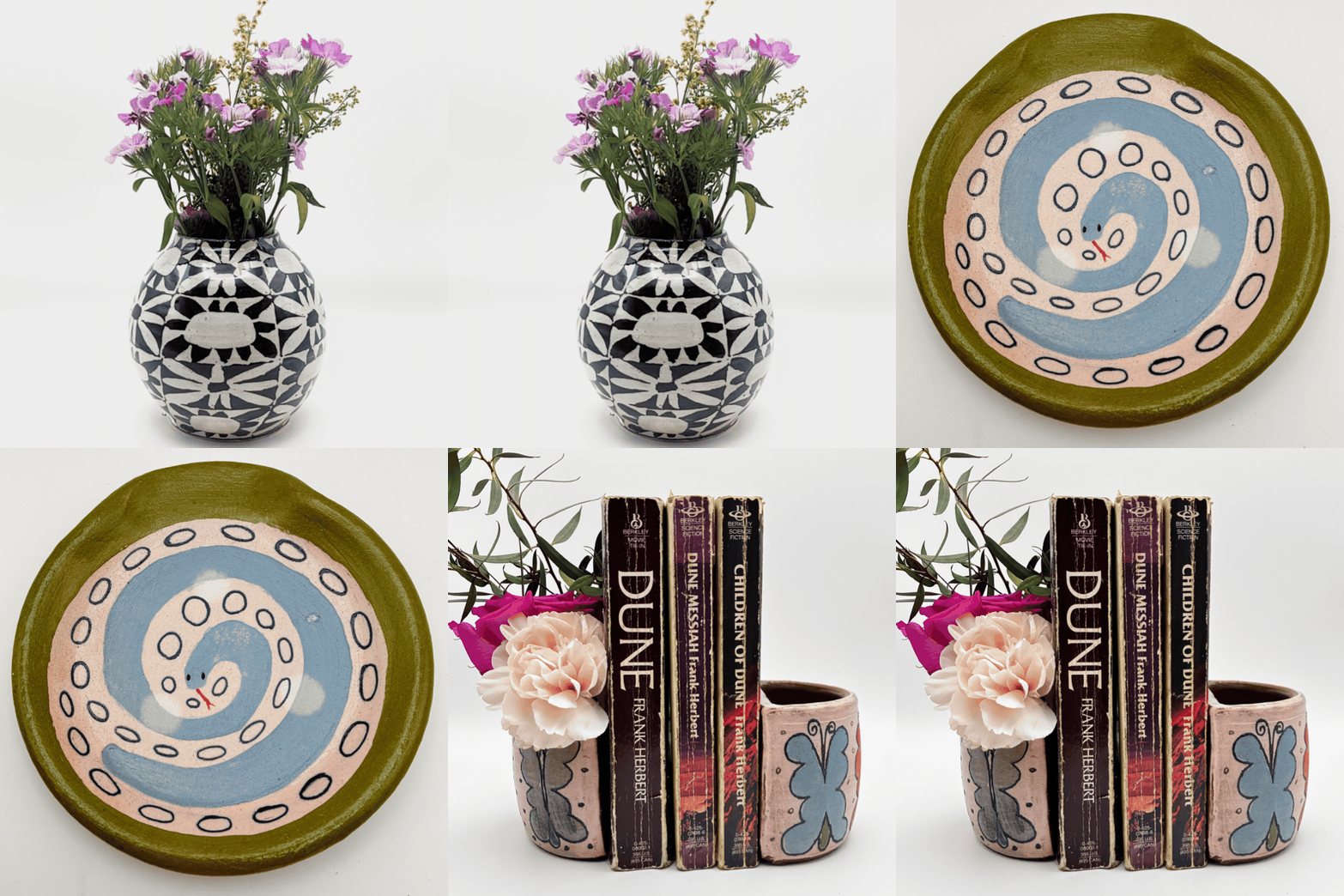
I use local NC clay bodies to create functional pottery forms with a focus on niche tableware and home goods. I make runs of pots in unique series, always evolving the techniques and materials with what I have around me. The pots are wheel thrown with the intention to be of useful and comfortable design. I use wax resist, carving and slip inlay techniques to create surface patterns and images inspired by the clay itself, my arts education, and cultural movements of art deco, arts and crafts, pop art and more. To me, my process is a balm on the effects of capitalism and a meditation on connection, community and thriving sustainably.
Will Dickert
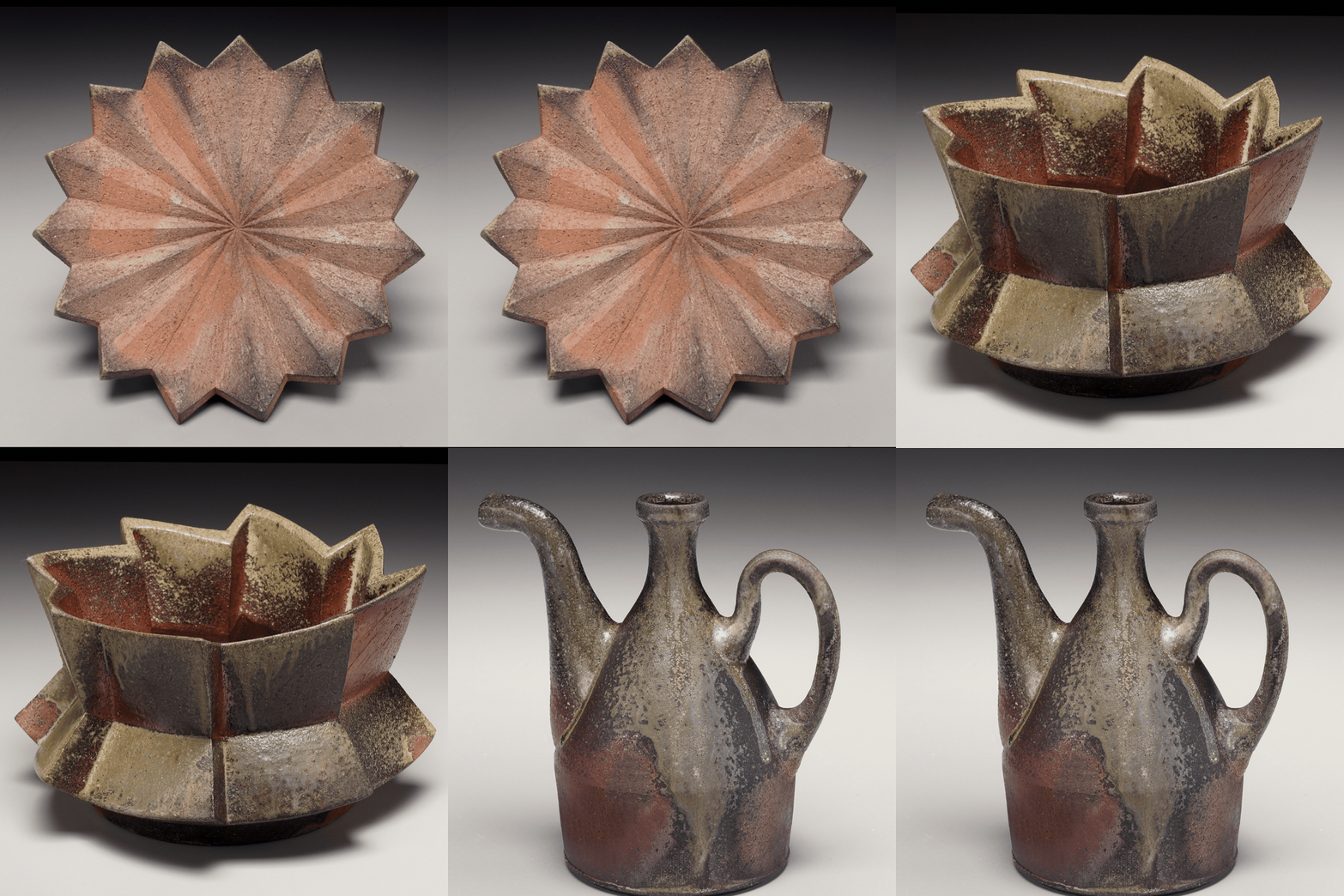
My work and practice are influenced by a strong sense of sentimentality for my family and friends, my recollection of childhood, and my home in the Blue Ridge Mountains of Southern Appalachia. I find inspiration in architecture, landscape, topography, geology, music, tools, toys and humor. In my life, objects provide a link to memories and people that I find comforting and somewhat mysterious. By using a holistic approach to making that encompasses my senses, the materials, history of process, experimentation, and careful observation, my intent is to elicit a feeling or sentiment that relates to time, place, people, purpose or impermanence through the objects I make. I am most interested in exploration of form, line, space and volume in the vessels I make. The methods I use in my studio practice split my work into two intermingled yet distinctive avenues for exploration: wheel thrown pots that focus on the parameters set by function, and hand built vessels that reference utility, but seek to expand my perspective and definition of functional ceramics and sculptural objects. I choose to woodfire my work in order to enhance and illuminate the forms through collaboration and manipulation of naturally occurring effects inherent to firing primarily unglazed stoneware clay bodies with wood. I am enamored with contemporary and historical pots and sculpture fired this way and aim to make work that is reverent to those examples and relevant to the evolution of the artform.
Lucy V Dierks
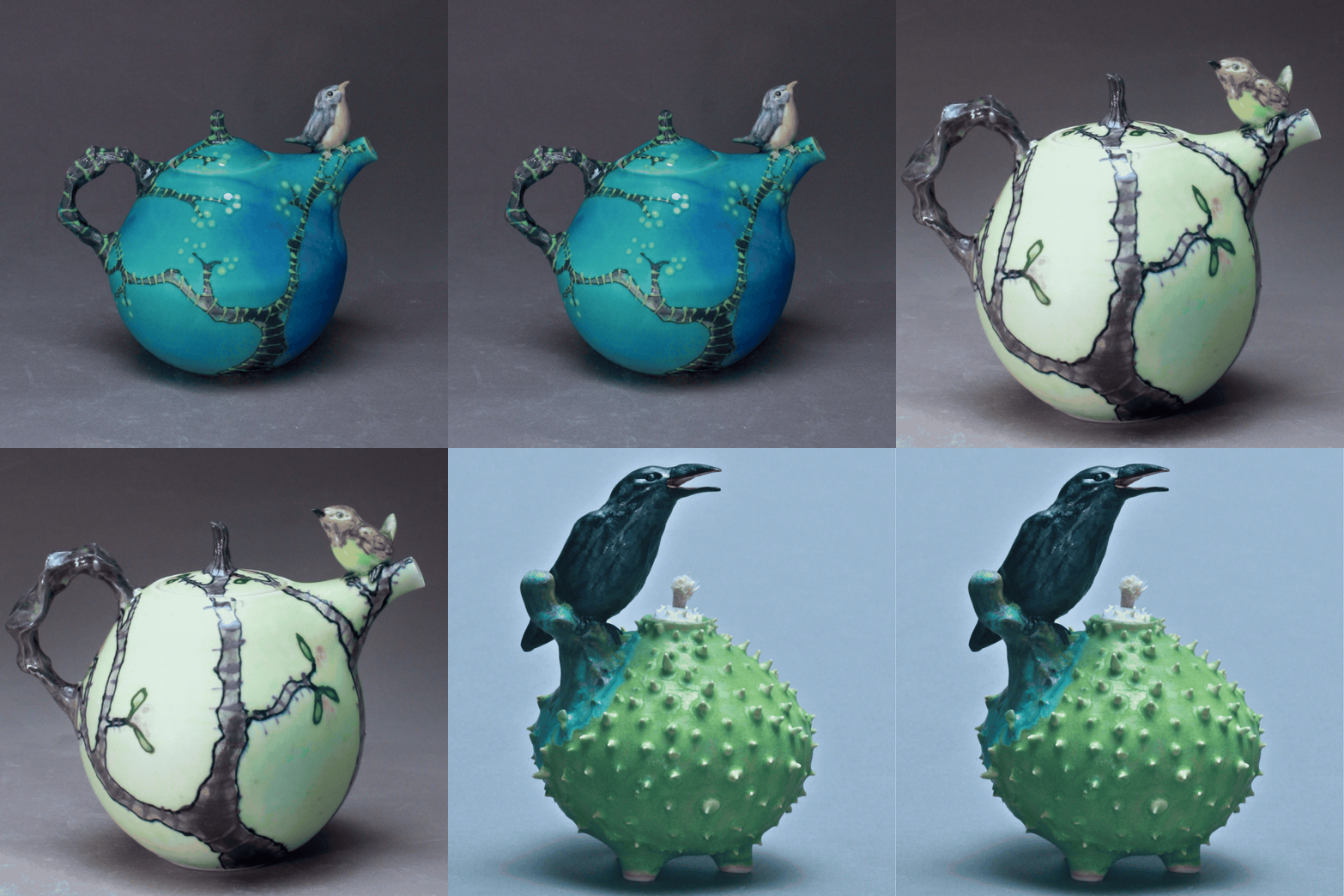
My pieces express my delight with nature, and like nature, I want them to reflect a harmony of form, surface, and purpose. i strive to make small intimate pieces whose design and texture invite you to hold them. The contradictory aspects of birds intrigue me . I perch them on my pieces to incourage contemplation and conversation.
Gillan Doty Pottery
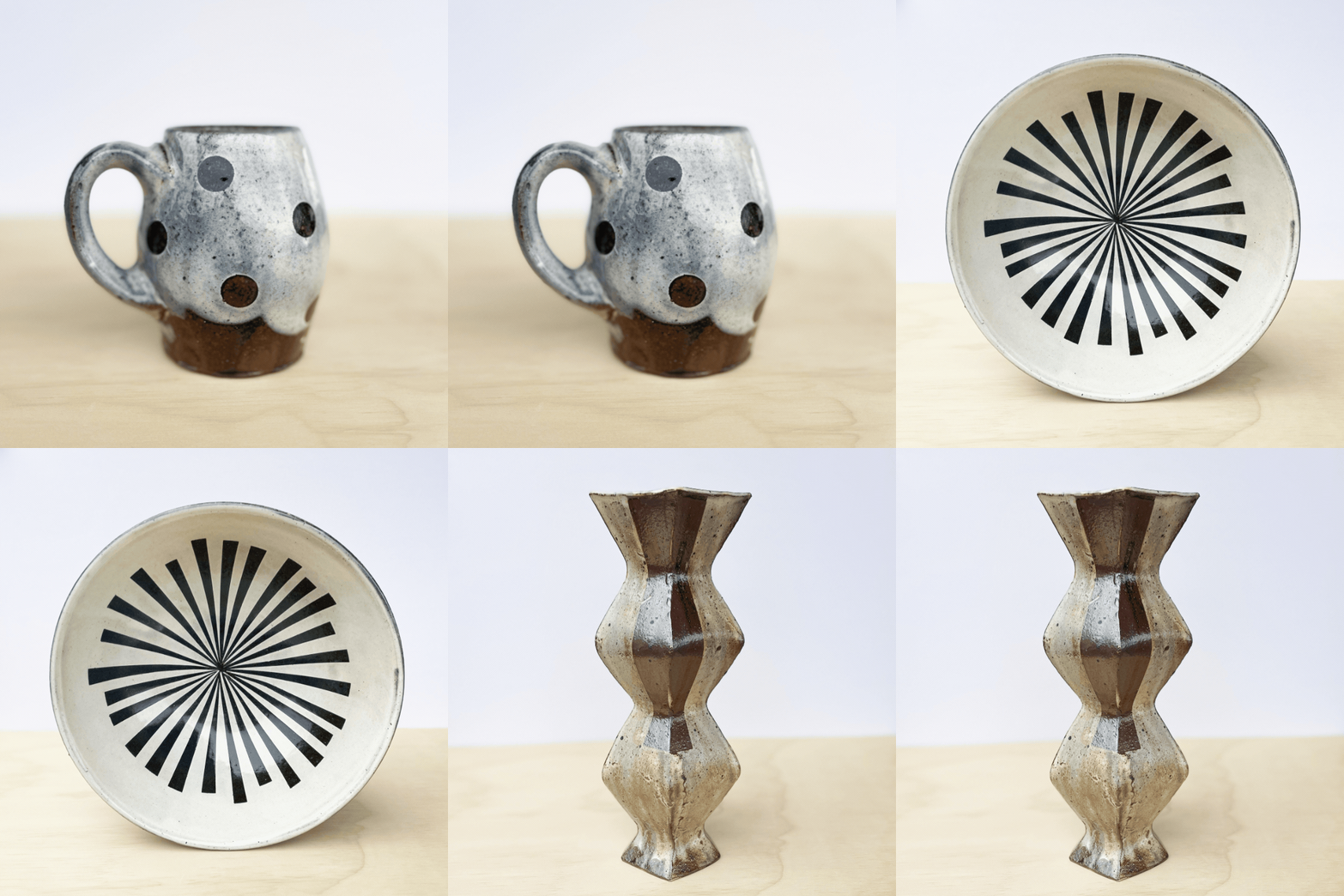
Although not makers themselves, my family put a premium on things we interacted with on a daily basis, like a hand carved wooden bowl on the kitchen table or the salt glazed crock that three generations of Doty’s have made pickles in. My grandfather was a collector and curator who had a particular interest in folk art. There was a simplicity in these works, a delicate balance of precision and an unselfconscious attitude. Growing up around these sometimes strange and unsophisticated works was impactful, forming the connection to the work I would discover later on my own.
There is a vitality in the physical forms created by the hands of our predecessors. However, my intention is not to mimic, rather an attempt at creating something new that has an understanding of where it came from. Along with a deep reverence for historical works, I am drawn to primitivism, vernacular architecture, and the natural landscape we all exist in. Those influences are rooted in a similar place, simplicity, practicality, and functionality. I am constantly balancing those ideals with the persistent challenge of problem solving with this transformative but sometimes humbling material. When I am in the studio, I aim to create something new that is accessible while still possessing deeper connections to the world around us and the people who inhabit it.
Three Little Teapots
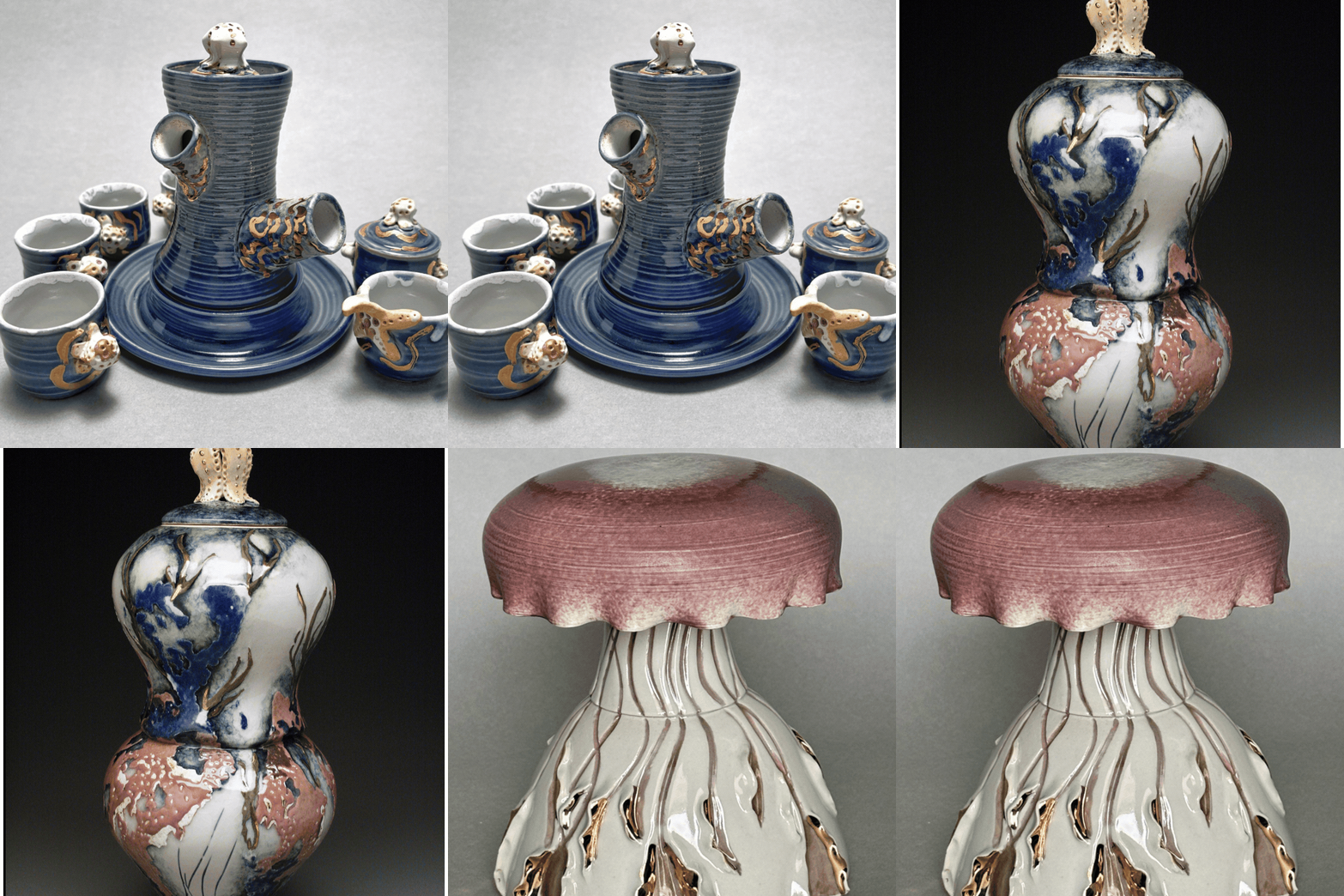
Overall, my work is a joyful celebration of life. I enjoy using porcelain to create both functional and decorative pieces of pottery. I use etching techniques, layering techniques, and a variety of slips, engobes, and glazes to achieve a range of colors and textures that evoke nature and organic life. I love throwing forms on the wheel, then joining them together as one graceful piece. I then achieve a variety of the textural details in my work by water-etching, slip trailing, hand sculpting extra figures, carving, or using rubber tipped tools to press into the leather hard clay. The works are fired to cone 10 with reduction in my gas kiln, then finished with a luster firing to add a touch of refinement and whimsy.
I draw inspiration from my family and from the natural world. I spent my childhood growing up near the beaches of Charleston, South Carolina. Now, my husband and I are raising our daughters near the mountains of North Carolina. These experiences have translated into the images and functions of my work; I present ocean life in one body of work and mountain life in a second body of work. Both bodies represent my experiences as a daughter, a sister, a wife, and a mother.
Seagrove Stoneware
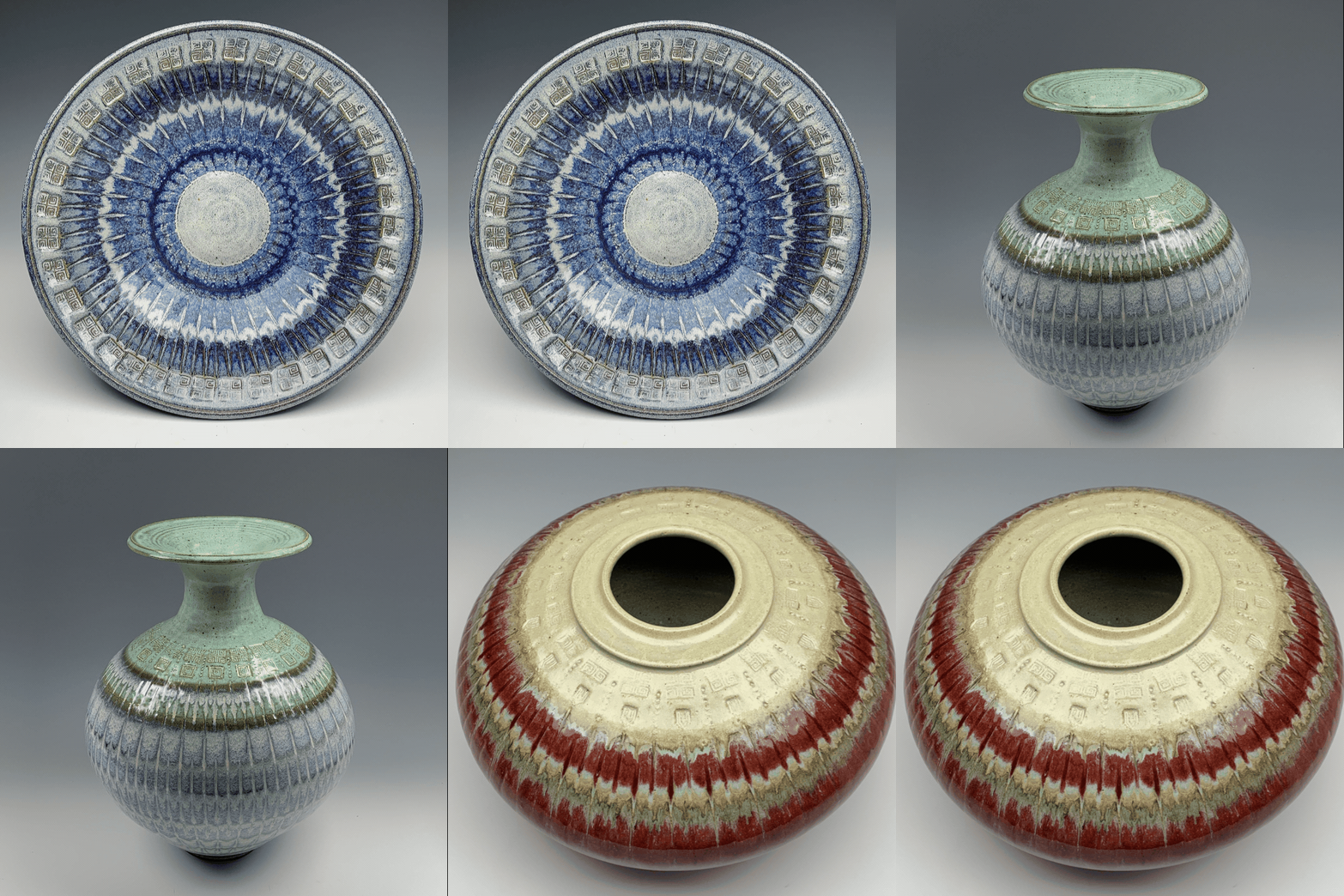
My stoneware pottery forms are contemporary interpretations of Attic Greek, early Mycenaean, and Egyptian pottery. In my travels abroad I have collected clay stamps from various countries (like South Korea). I have incorporated the stamping along with my signature carving to give my pieces a recognizable surface texture that I have refined over the 50 plus years I have been making pottery. That coupled with the wide color range of the reduction glazes I have developed, and the scale my work, makes my pottery unique. I designed and built the high fire fiber kiln I use over 40 years ago. My friends are surprised when I tell them I fire from cold to cone 11 in five hours and fifteen minutes!
Susan Filley Porcelain
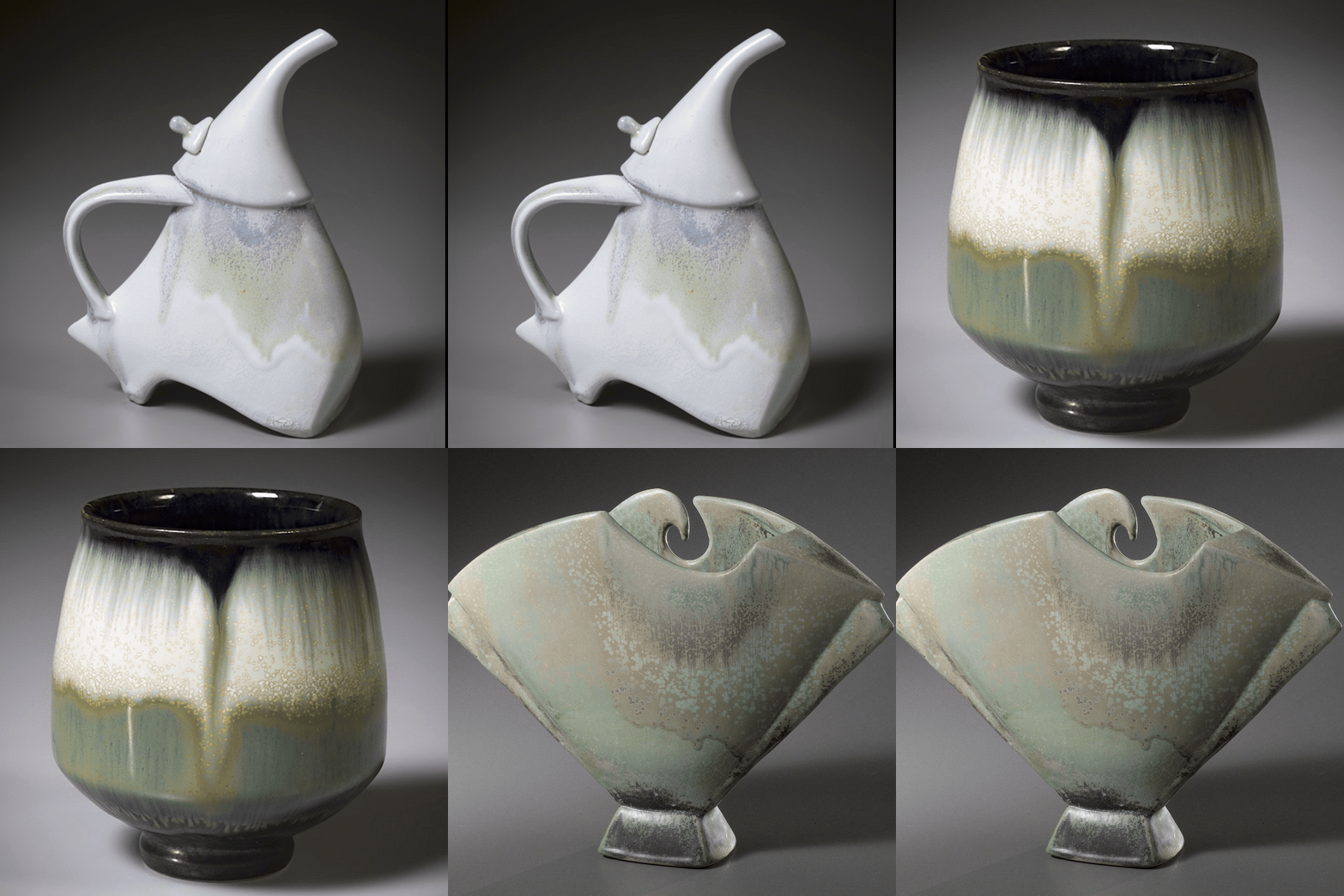
I work with a grolleg porcelain which is a beautiful white high fire clay. When fired, it becomes a luscious material with qualities that are almost like marble. It is translucent when thin, extremely durable when in use, and the Chinese poetically describe it - “as white as jade that rings like a bell”.
I have been making pots for over 45 years. It was the functionality of the craft that first enchanted me. But now, for much of my work, I am making pots that add value in their presence, a favorite pot that lives on a mantle as much as one that might be used on a dinner table. I am striving to simply make beautiful pots in all that I do.
I make many forms, using both the wheel and hand building. I love to make cups that perfectly fit the hand and lip, and traditional vessels that are simple in form, rich in history, and offer me the best of glazing opportunities. I also make more complicated forms, gestural and dancing teapots, highly altered elegant pitchers, and sculpted boat and landscape forms.
In my development of form, there is a distinctive elegance of design. I use many tools for carving and refining that allow me to make strong forms and graceful edges. I want a sense of gestural motion in my ‘dancing‘ teapots and strong fluid lines in the landscape and boat forms.
I also have a passion for glazes. They enhance the movement of my work with luminous flowing crystal surfaces and embellish the pots with rich glaze surface and color. Layering of glazes promotes unique microcrystalline effects. I have formulated copper red variations with delicate white crystals for cups and vessels, brilliant celadon on white glazes (the Dancing Teapot) and other fascinating microcrystalline effects that are not represented in the limited images.
After so many years exploring pottery and my fascination for porcelain, I am still always striving to make that next pot more beautiful and intriguing than those before it.
kfishpottery
I am inspired by the tactile nature of pottery – both in the making of pieces and in its impact on how those pieces are experienced and enjoyed. It is this tactile, three-dimensional aspect of pottery which drew me to it in the first place and which keeps my attention as I continue to learn and evolve as a ceramic artist.
My current practice focuses on an exploration of texture and surface decoration as a means of influencing how my pieces are experienced. I conceive most of my decorative designs through the process of drawing and am therefore interested in how two-dimensional designs can be effectively adapted into and for three-dimensional forms.
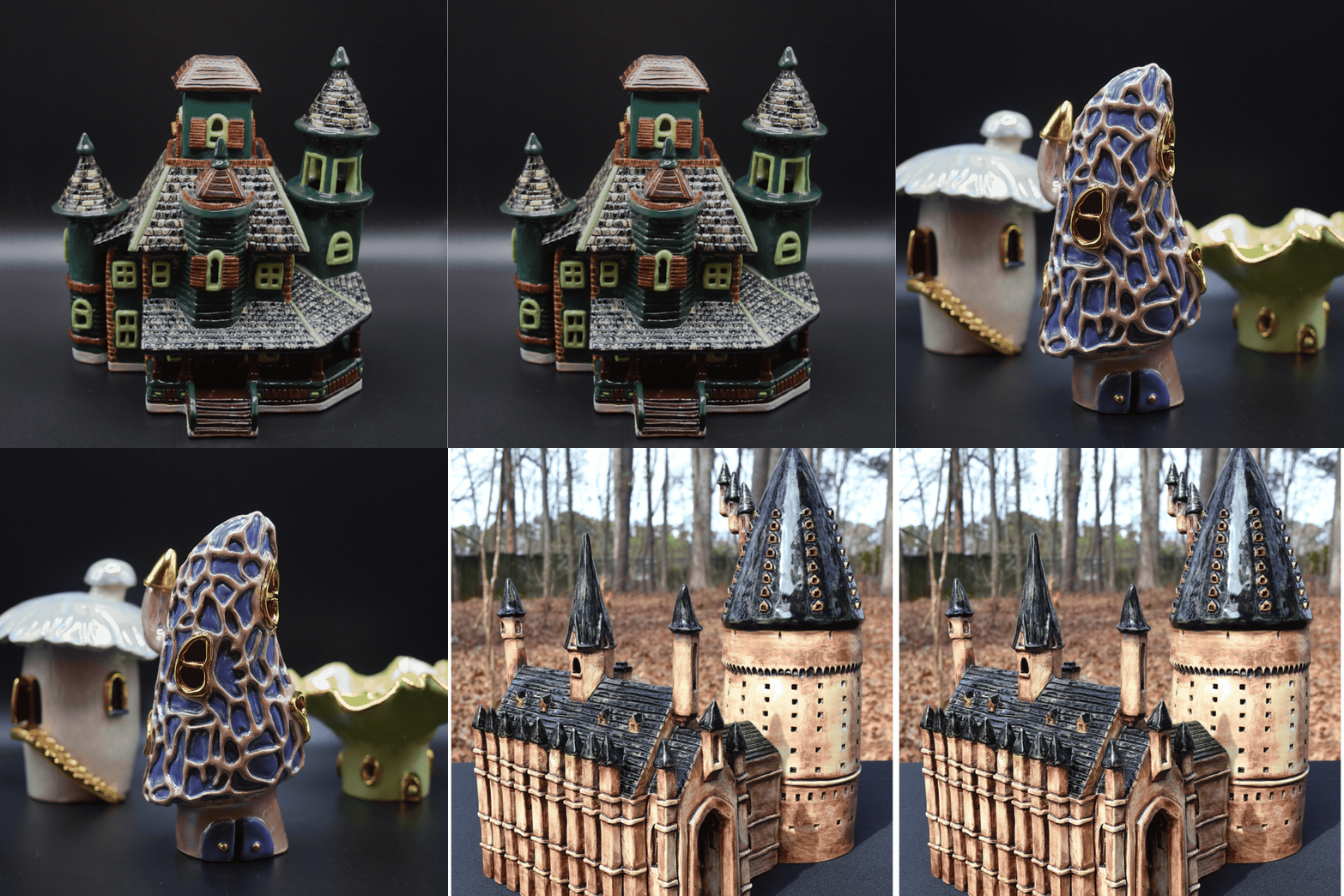
For example, in the making of miniature house luminaries inspired by both the village houses I grew up admiring around the holidays and by the very real houses I encounter in my daily life. Using playful textures, vibrant glazes, and whimsical flourishes, I attempt to create pieces that speak to our collective sense of family and place. Or, in the surface decoration of functional pieces. Inspired by the deep-seated pottery traditions of North Carolina, I explore the impact of texture and surface decoration on how functional vessels are perceived. A favourite motif of mine, which appears in much of this work, is inspired by the natural world and bears the likeness of a ginkgo leaf. This leafy motif has been especially successful, perhaps because its organic nature allows me freedom as I decorate each piece.
Whether decorative or functional, I use texture and surface decoration to infuse a sense of playfulness into my work. My hope is that both my attention to detail and passion to create unique art are evident to those who interact with my pieces.
Maria Frey
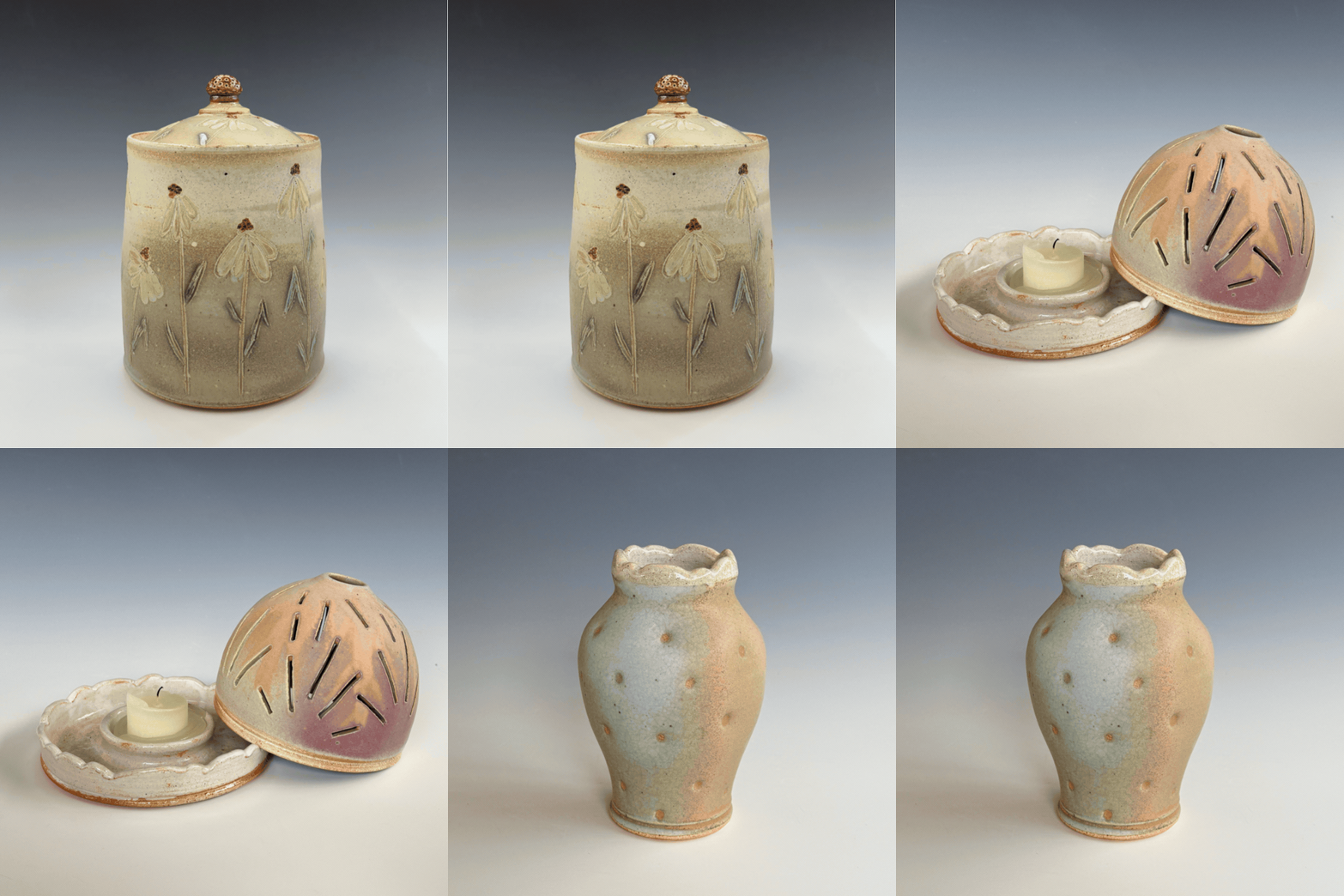
My studio practice celebrates the artistry and craft of clay. I produce high fired stoneware pottery finished in a gas soda kiln that I built myself. I love to spend time refining details of form and decoration before the pots enter the kiln, then let its atmosphere of soda vapor and flame dictate the rest. Working this way forces me to collaborate with uncertainty, to give way to the elements of chance and change, and to accept the results that I can’t totally control but am guided and inspired by.
Daniel Garver Studio
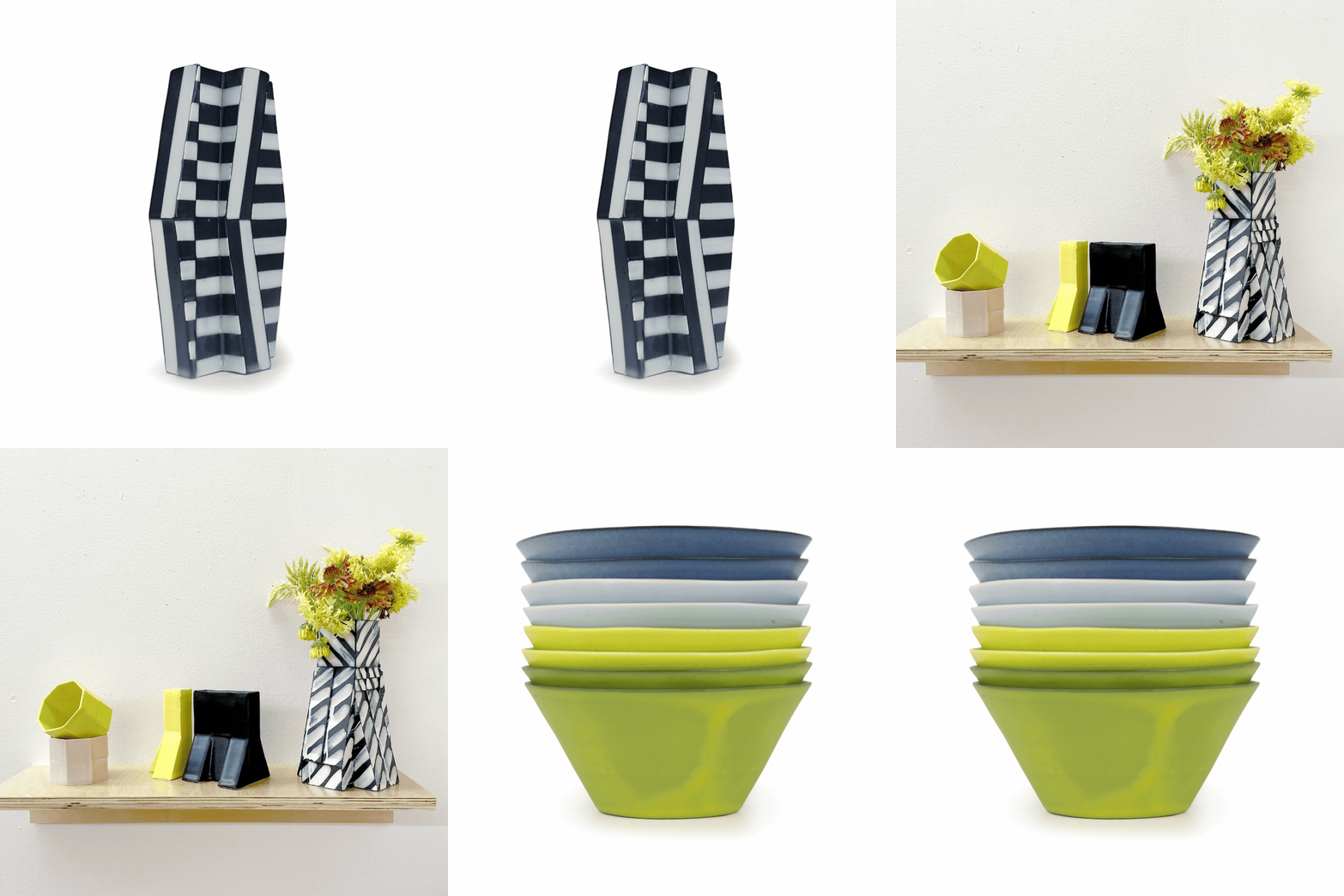
Daniel Garver is a clay artist, his work consists of functional and sculptural slipcast ceramics. The studio work is focused on creating systems which result in iterative processes that investigate structure and form. He has constructed a comprehensive library of interchangeable plaster mold parts from which he can compose a wide range of ceramic forms that are unique, yet also related to one another through their method of creation. The work is pushed further through the use of color and pattern in relation to the structural composition. For source material, Daniel researches cast concrete, mid modern design, brutalist architecture and industrial design to inform his work.
Paul Haigh Pottery
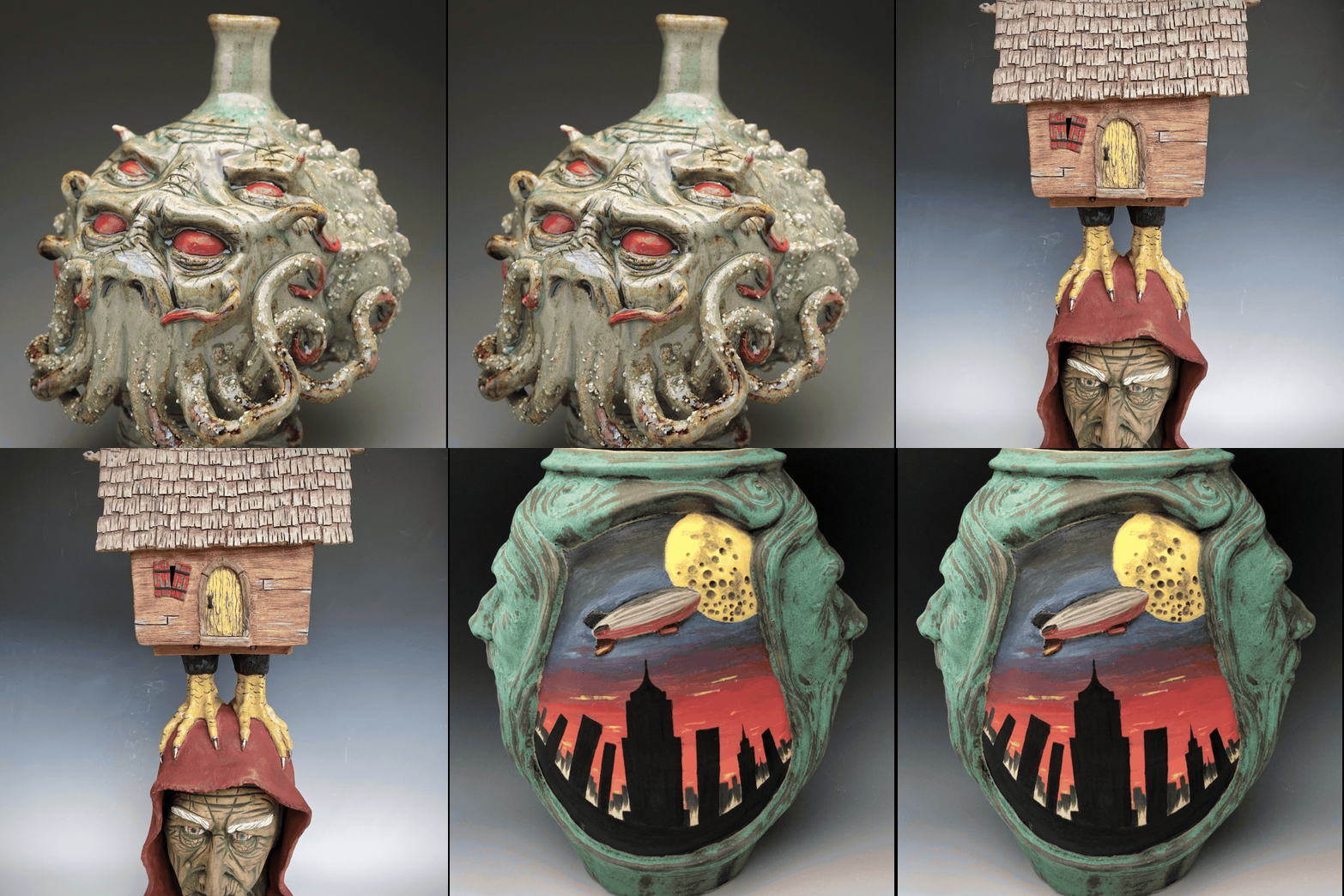
The main body of my work applies realistic sculpting to the traditional wheel turned face jug. The idea of creating realistic human faces was intimidating and so I took it on as a challenge. I draw on a wide range of subject matter as inspiration, including normal human emotion, as well as mythology, and the science fiction and horror genres. Pieces start out as wheel turned jugs, vases, and mugs that are then extensively altered to not just apply a simple face, but to transform the whole piece into a sculpture. Finishing techniques include electric, salt, and raku firing.
Hamlin Ceramics
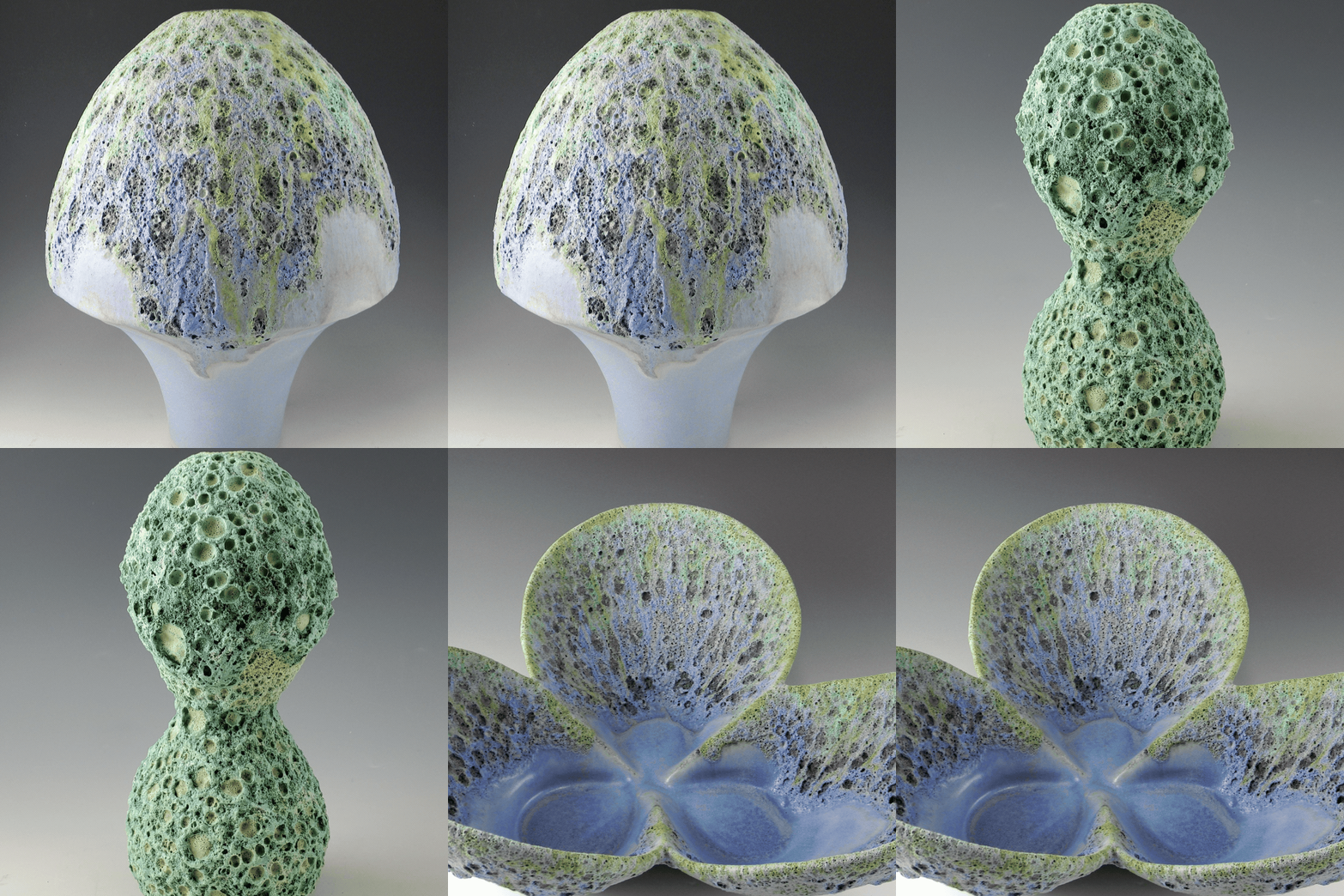
I live in the mountain forests of the Upper Hickory Nut Gorge, in Gerton, NC. The mosses, fungi, lichen, and orchids growing around me inspire my clay vessels and the glaze surfaces. All pieces are handbuilt or wheel thrown on the potter’s wheel, using a high iron bearing clay that accentuates my formulated glaze surface and color. I fire to 1195 degrees Celsius. At this temperature, the clay body vitrifies, and the vessel becomes watertight. Every piece made contributes peace and serenity to an interior environment. The surfaces entice the fingers to touch and interact with the object.
Phil Haralam
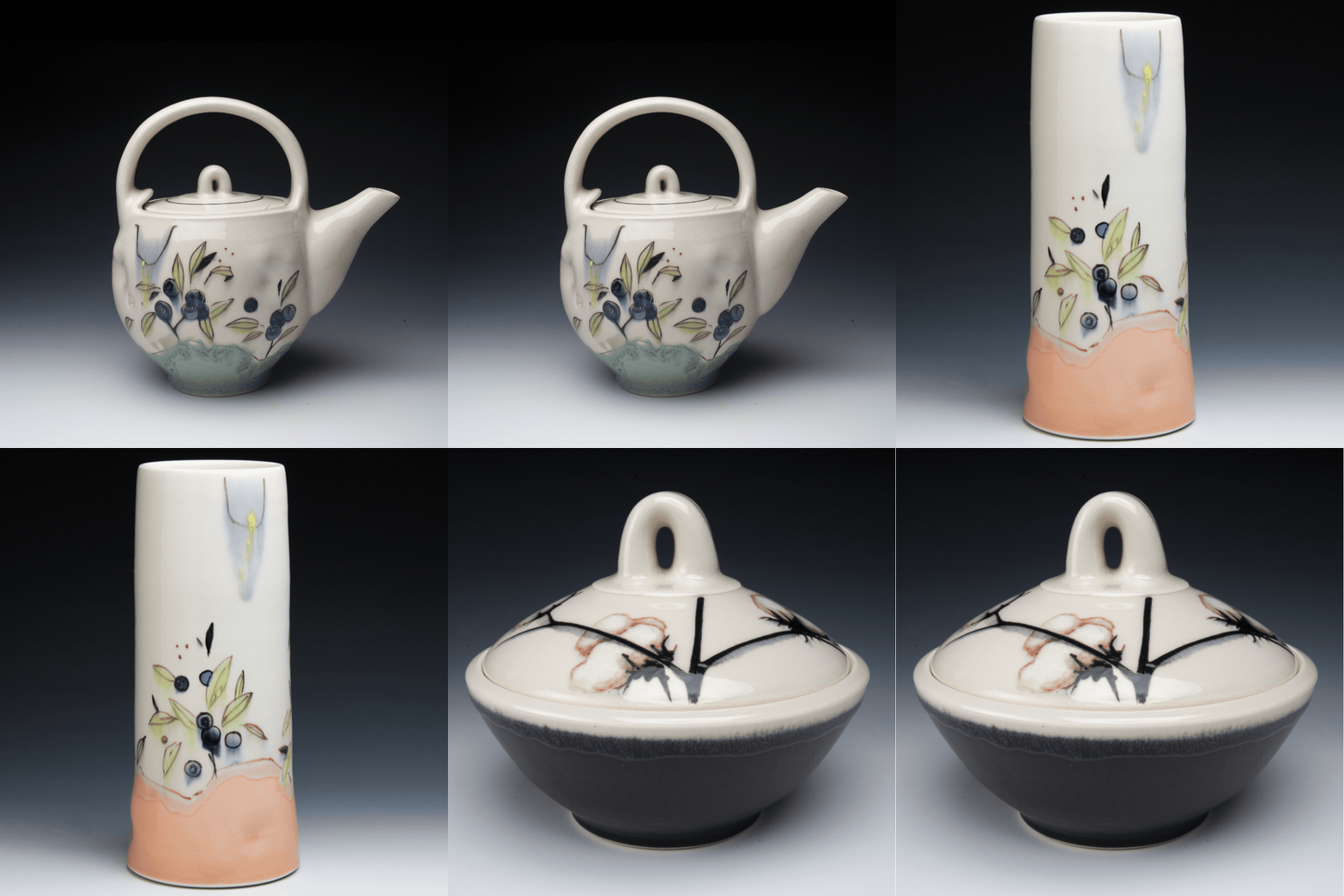
I take a slow and meticulous approach to working with clay. I obsess over every edge, line, surface, and application of color.
My studio practice is focused on both functional pottery vessels and ceramic sculpture, but all of my work is rooted in craft traditions, material exploration, and imagery responding to my environment.
These images often reflect the gardens outside my studio which mark the passage of time, feed my family, and enhance my environment. Travel increasingly informs and inspires my work by exposing me to new visual language and meeting artists that challenge me to reconsider my work.
My functional pottery is influenced by American studio pottery traditions and formal qualities of Song Dynasty porcelain. The refined profiles and surfaces of this work reflects my desire express control through the execution of craftsmanship, while letting go of control by setting up opportunities for playful glaze interactions.
When done well, functional objects can capture our attention, heighten our awareness, and perform with harmonious success.
Hartsoe Pottery
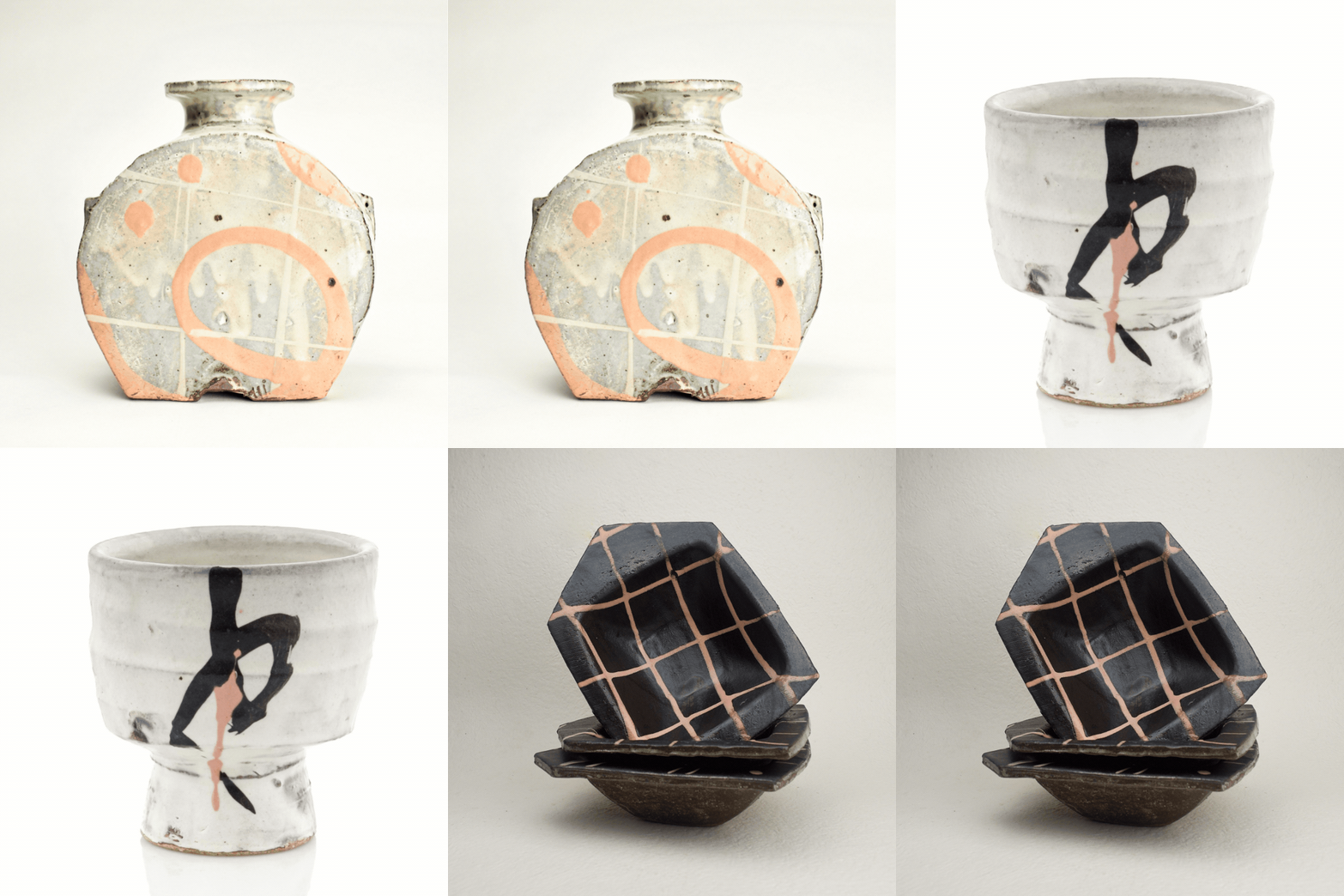
I believe that successful art has a firm foundation in the work that came before it. It operates by recognizing and pursuing good form from our past and present traditions. The common language of form is dictated by themes of functionality and of a common, human scale. I look not only to the forms themselves but also to the traditional methods used to make them. I have pursued my education through the process of apprenticeship and working closely with other master potters, beginning in Japan and continuing through England and here in the US. This slow education allowed for an organic training and development of the eye for form and instructed the hand in how to respond to the material. As a functional potter I am unapologetically deeply reverent of tradition. However, I demand that my work resist a static complacency in merely the replication of the past. The challenge of my studio practice is to escape the dangers of the derivative and to allow the free experimentation with preexisting fundamentals and to synthesize them with a fresh, contemporary approach and consideration. My design is to encourage something new from the past and in so doing, to create something vital and lasting. It is my hope that perhaps it will succeed in demonstrating a kind of new translation of the better themes of our functional forms.
Knook Ceramics
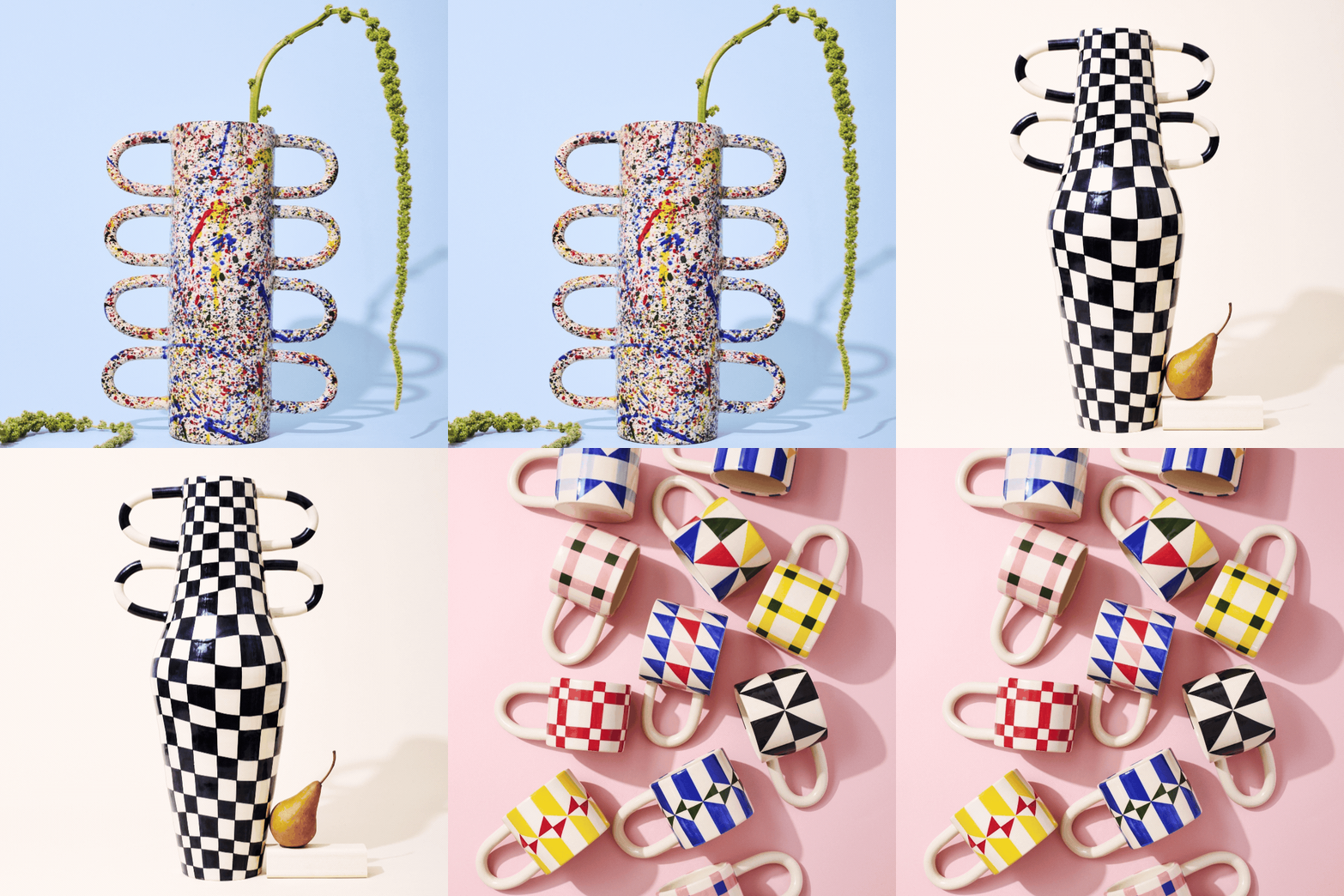
Diana Hoover is a ceramic artist, based in Asheville, NC, and working under the studio name Knook Ceramics. She creates functional pieces that explore the intersection of contemporary craft with fine art and design, often incorporating sculptural elements such as exaggerated curves and oversized, industrial-looking handles. These unusual functional components invite new perspectives, such as a different approach to an action as simple as holding a mug. Deeply influenced by the Bauhaus, minimalist art, neo-concretism, geometric abstraction, and modern quilting, Hoover’s body of work is wheel-thrown and hand built with a creamy white clay body and an emphasis on surface decoration. Utilizing the technique of hard-edge painting, she uses masking tape and underglaze to paint meticulous, repeated patterns and bold graphic motifs on the surfaces of each piece, which then can drastically warp and distort over the strong curves and shoulders of the 3-dimensional forms. Hoover brings a PhD and a 15-year career in the sciences to her craft. In her work, there is a tension between a scientific striving for “perfection” with the awareness of the limits of control and embrace of imperfections such as visible brush strokes or glaze bleeding and drips. These variations reveal that each piece is unique, handmade, and an organic collaboration between the artist and her materials.
Johnston & Gentithes Studios
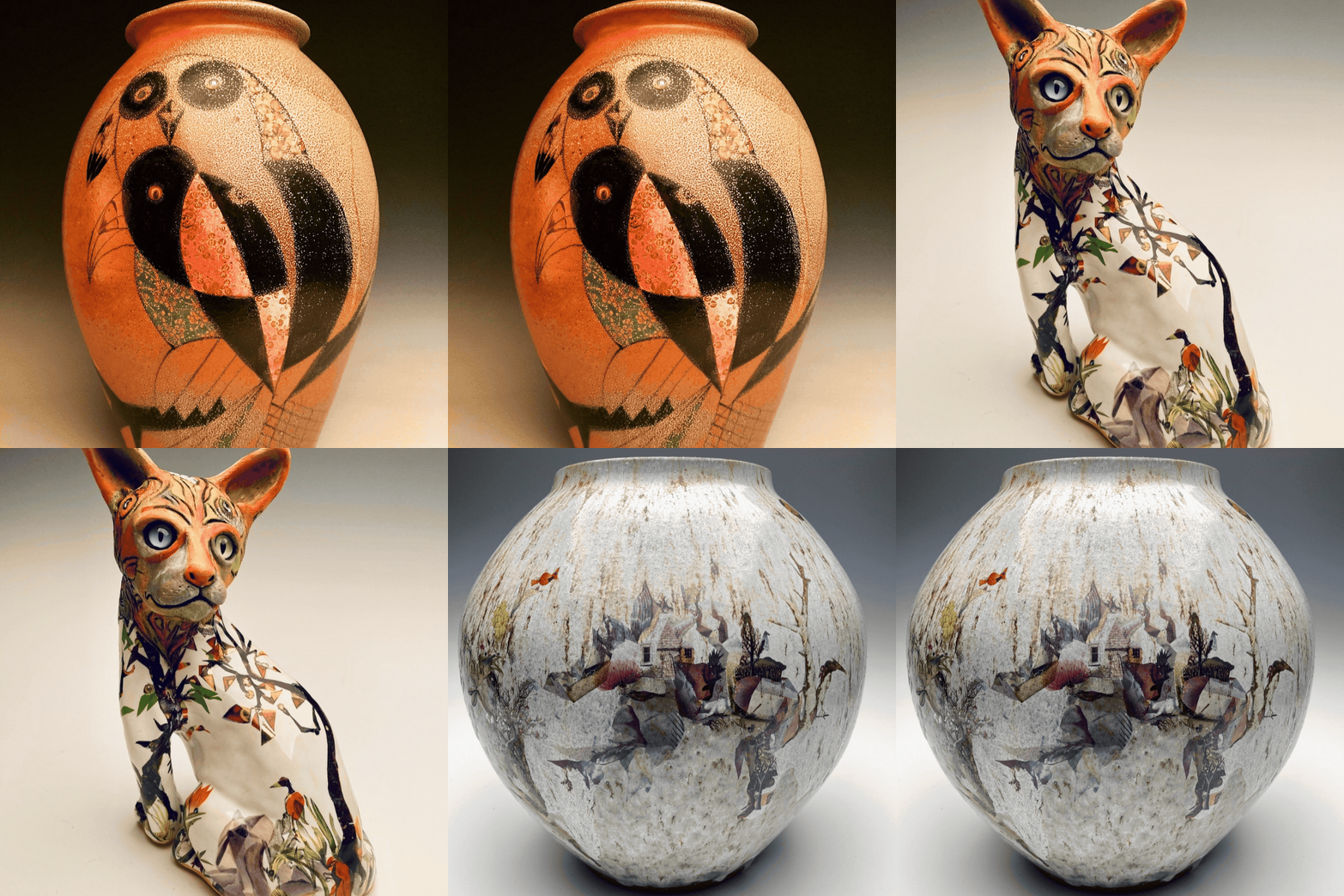
Fred's interest lies in the abstraction of nature. He questions how mark making and decoration accentuates form while at the same time contemplating what forms are best suited for a particular zoomorphic motif. He relies on intuition, spontaneity and what is visceral as a mode of creating. Carol's quixotic sculptures can be seen in vivid color. Abstracting from mythology, literature and life’s observations, the subject matter ranges anywhere from pictorial witticisms to political commentaries. Fred and Carol collaborate through their keen sense of the pottery vernacular and the historical canon of art and culture. Their vessel collaborations are an amalgamation of surrealistic and atmospheric surfaces which come from the wood firing process and the reconfiguration & distortion of ceramic decals.
Bill Jones Pottery
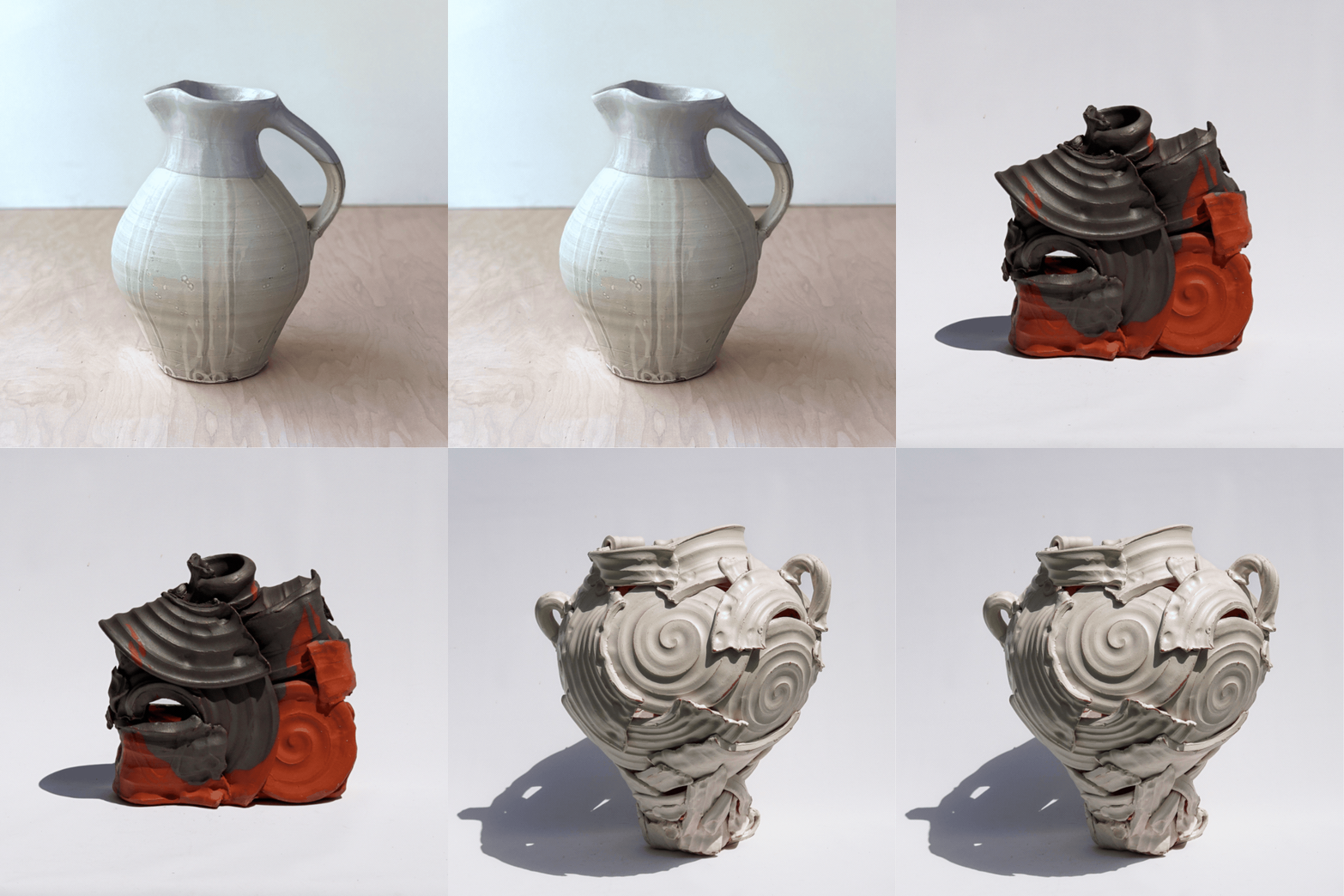
I grew up in an old stone house and from an early age found beauty in simple articulations of material. A loosely laid stone wall, a sketch done with a finger in damp sand, the haphazard stability of a quickly erected structure. As a potter, I work with simple materials and methods in a constant attempt to channel this same beauty. I think of my pots as drawings - each piece a passing attempt to realize a form in my head. My memory of these forms is a living thing and as it changes and distorts, so does my work.
Liz Kelly Pottery
Courtney Martin Pottery
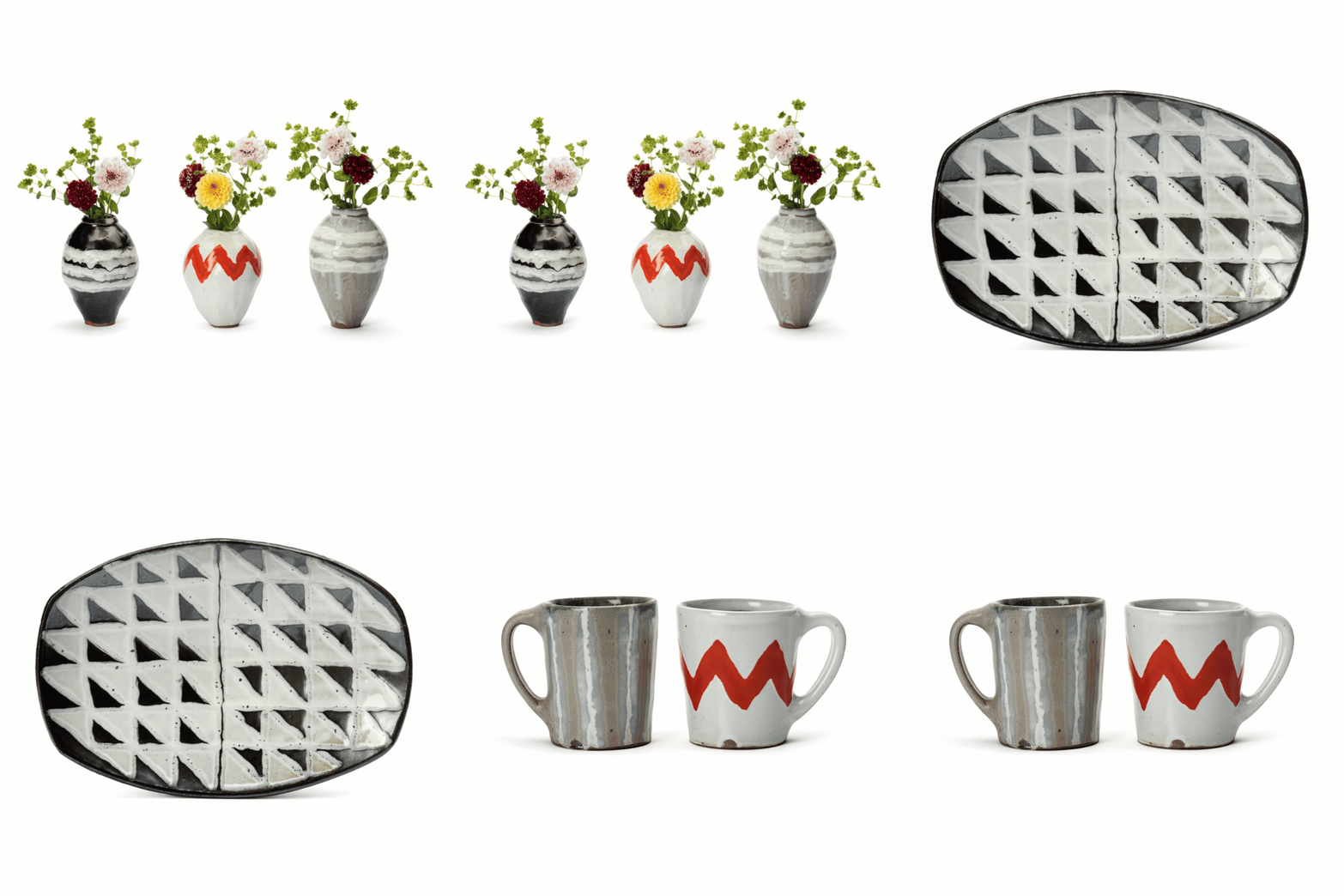
I make useful pots. I like that the function is the reason for the object. I like that I can make something beautiful to play a daily role in someone’s life. A simple mug can be such a big part of one’s routine. I have favorite pots that I reach for again and again, and that’s what I hope to achieve when I make them. I love the joy that well made pots can add to meals and a home.
I use NC clay, my hands, a kick wheel, a slab roller, and my wood kiln in the making of my pots. It’s a simple and somewhat traditional way of working. I make pots in small series and batches, one pot informing the next. I like to cover pots in stripes and patterns, and I keep my glaze color palete minimal and modern. Wood firing offers a direct connection to the kiln and finishing the pots. Wood is an abundant resource in the NC mountains, and I feel good about using it as a fuel.
Brenna Dee Ceramics
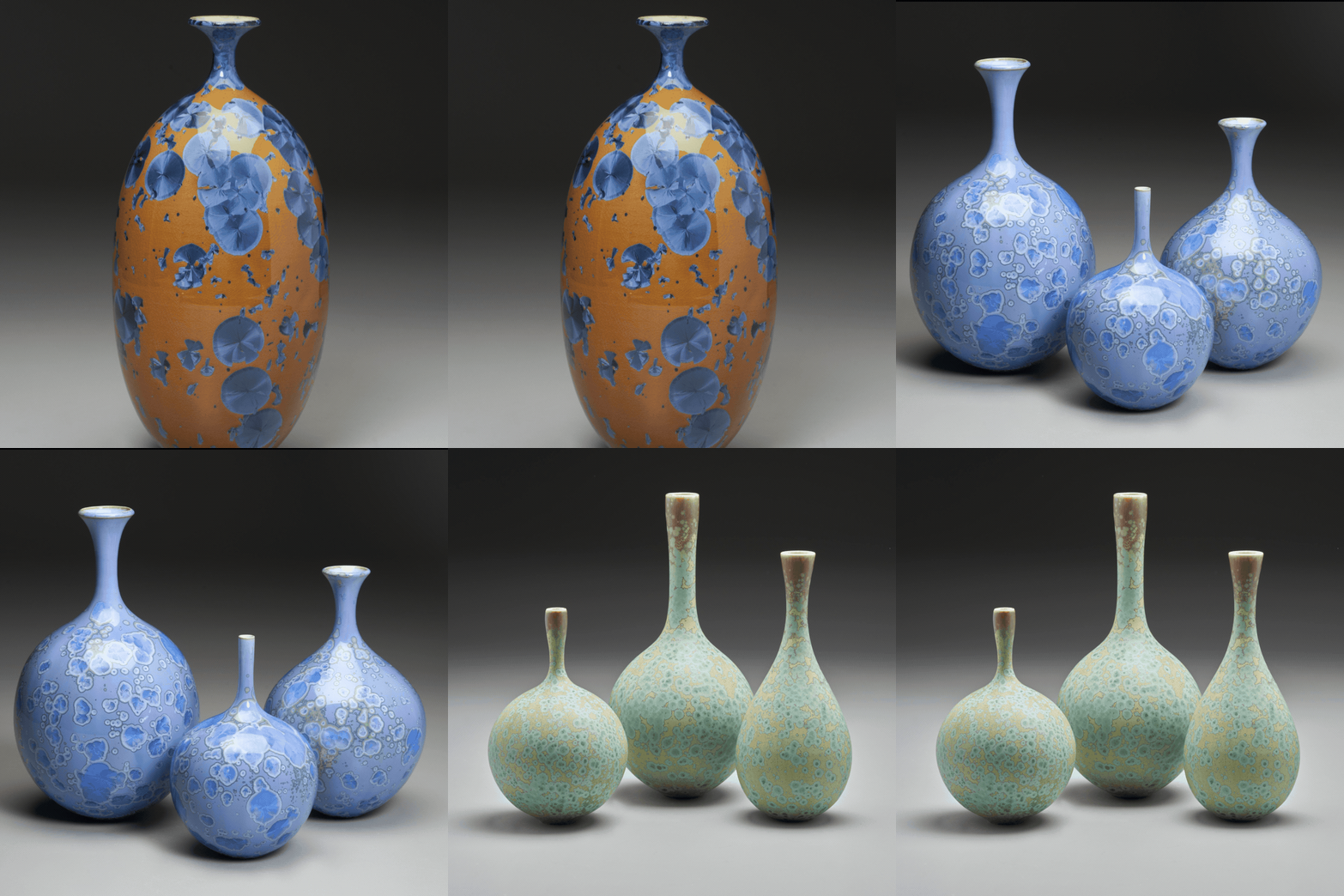
My body of work is wheel-thrown from porcelain clay and high fired in an electric kiln. I mix all of my crystalline glazes in small batches from raw materials and apply them by hand, building up several coats of glaze with a brush. I employ a long firing cycle, utilizing multiple holds at varying temperatures to achieve the two dimensional crystals on my pieces.
My forms are composed of simple, clean lines and I return at multiple points in the making process to refine the profile of each piece. I find that this minimalism provides a refined canvas that allows the glazes to shine, offering a sense of play within a paradigm of precision.
Eck McCanless Pottery
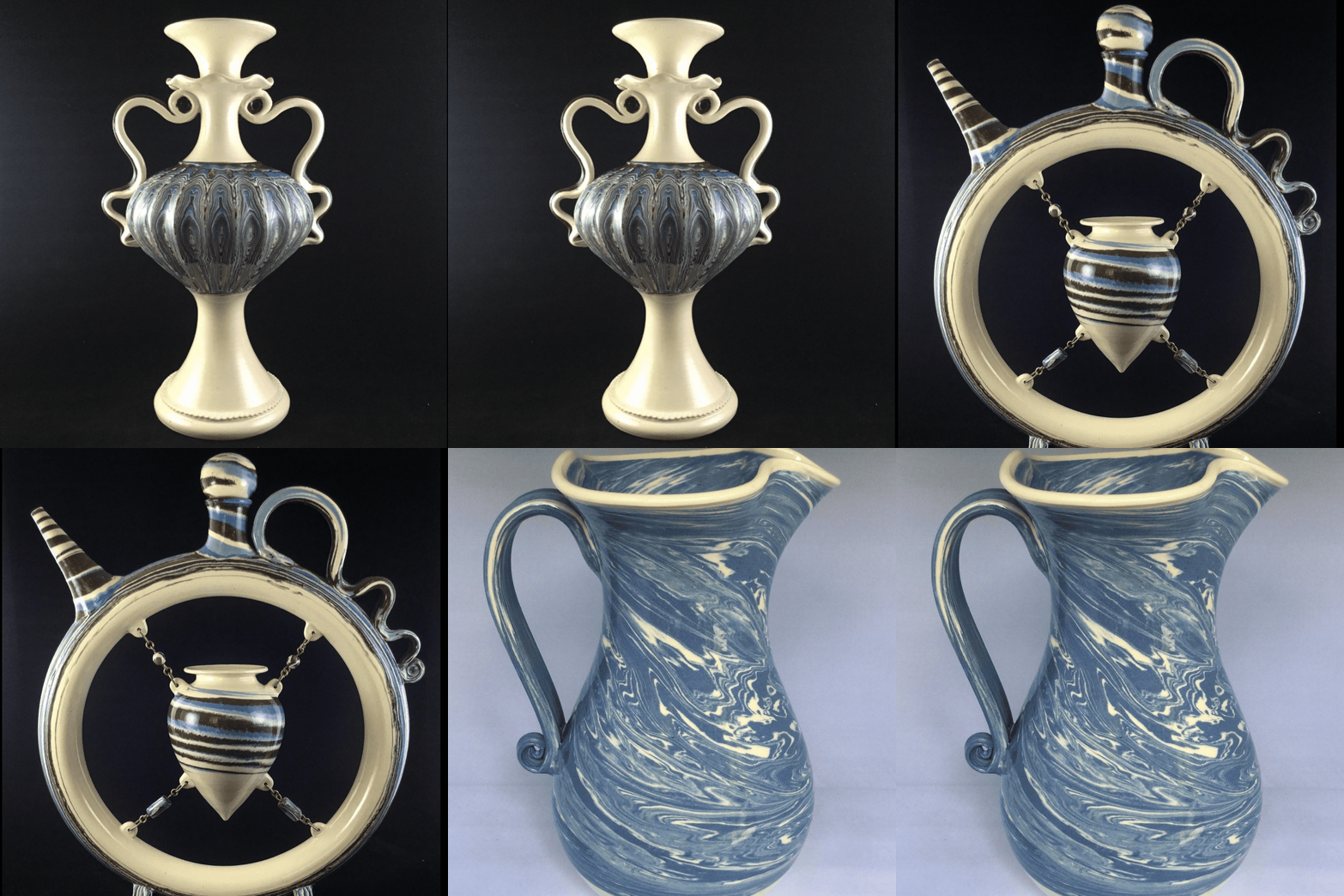
I have been a professional potter since 1993. Although I’ve worked with many different pottery techniques, I found my passion in Agateware in 2011, and it has been my sole focus since. I create Agateware pottery by turning different colors of clay on the wheel. The movement of the clay on the wheel determines my finished product, and I have learned to manipulate this process over time. The fluidity of the process creates a unique signature, highlighting the individuality of each piece. While I am inspired by examples of historical pottery, I find my biggest inspiration comes from the work itself. Watching the spiral form on the wheel and then carving into the walls of the pot hints at the workings of the universe, from plate tectonics to fluid dynamics and beyond. I love to demonstrate this technique as it gives the viewer insight into the movements that create all pottery made on the potter's wheel. The different colors of clay create a visual display of how the clay compresses and twists as it's being turned. I enjoy pushing the limits of the clay and my own creativity to create unique, elegant and lightweight forms that are both decorative and functional.
Mckee’s Pottery
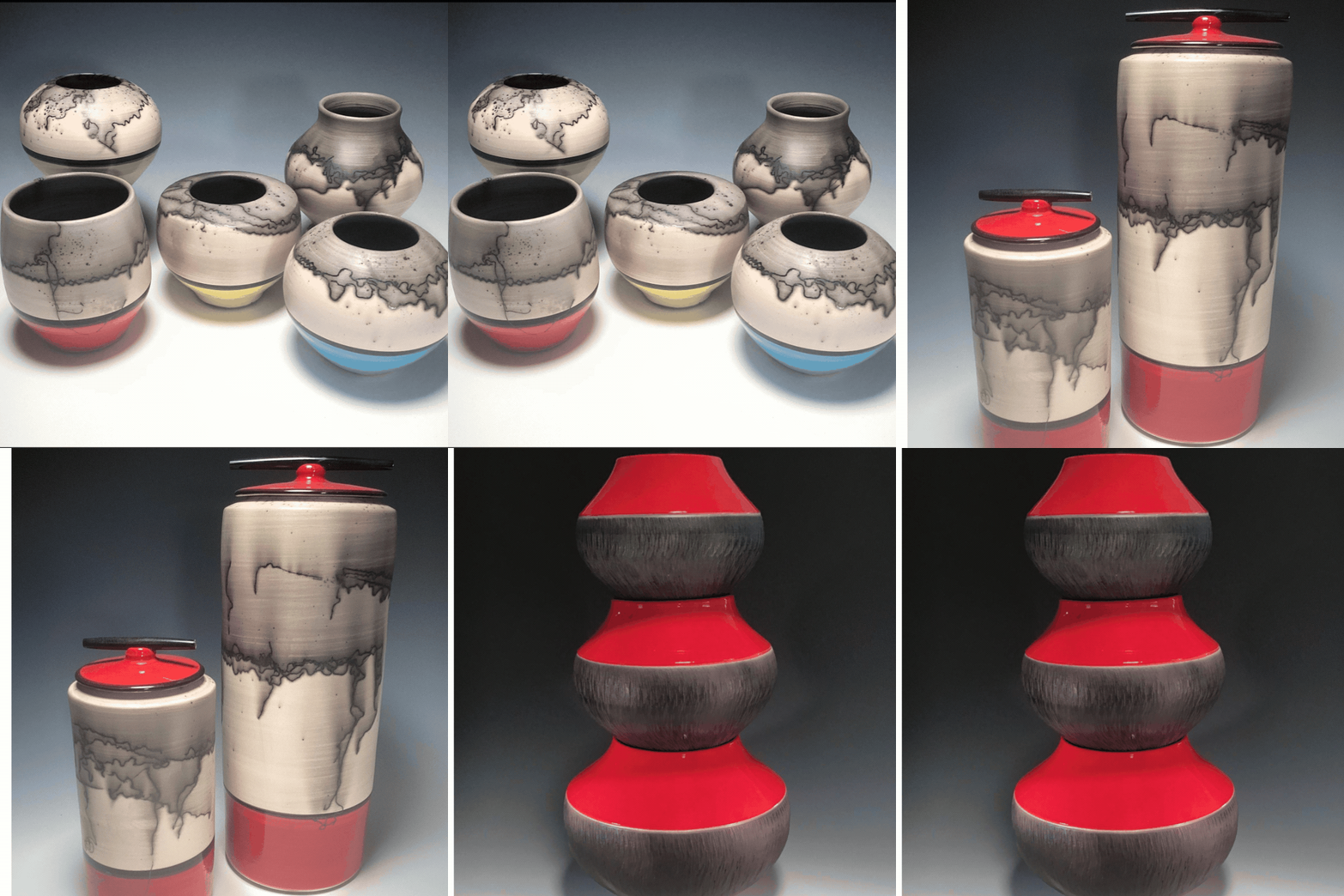
I have always loved working with clay, from the beginning on the wheel to the finished work of art that it becomes. What I have found intriguing and inspiring are the many different low-fire techniques because I believe that fire completes pottery. I love the interaction of fire, smoke and controlled heat and the beauty they can generate on the surface of a clay vessel. A vital role in my low-fired work is obtaining the right finish firing temperature. This ensures that the smoke, fire and chemical reactions all work together at the right time to get my desired outcome. Creating each pot can feel like the art of the unknown because low-fired pieces are one of a kind and unpredictable, so it becomes a puzzle I enjoy solving to achieve the very best outcome. For my personal satisfaction, I strive to obtain that one line, carbon mark, color and/or smoke pattern that finishes each piece making it feel complete.
jennifer mecca pottery
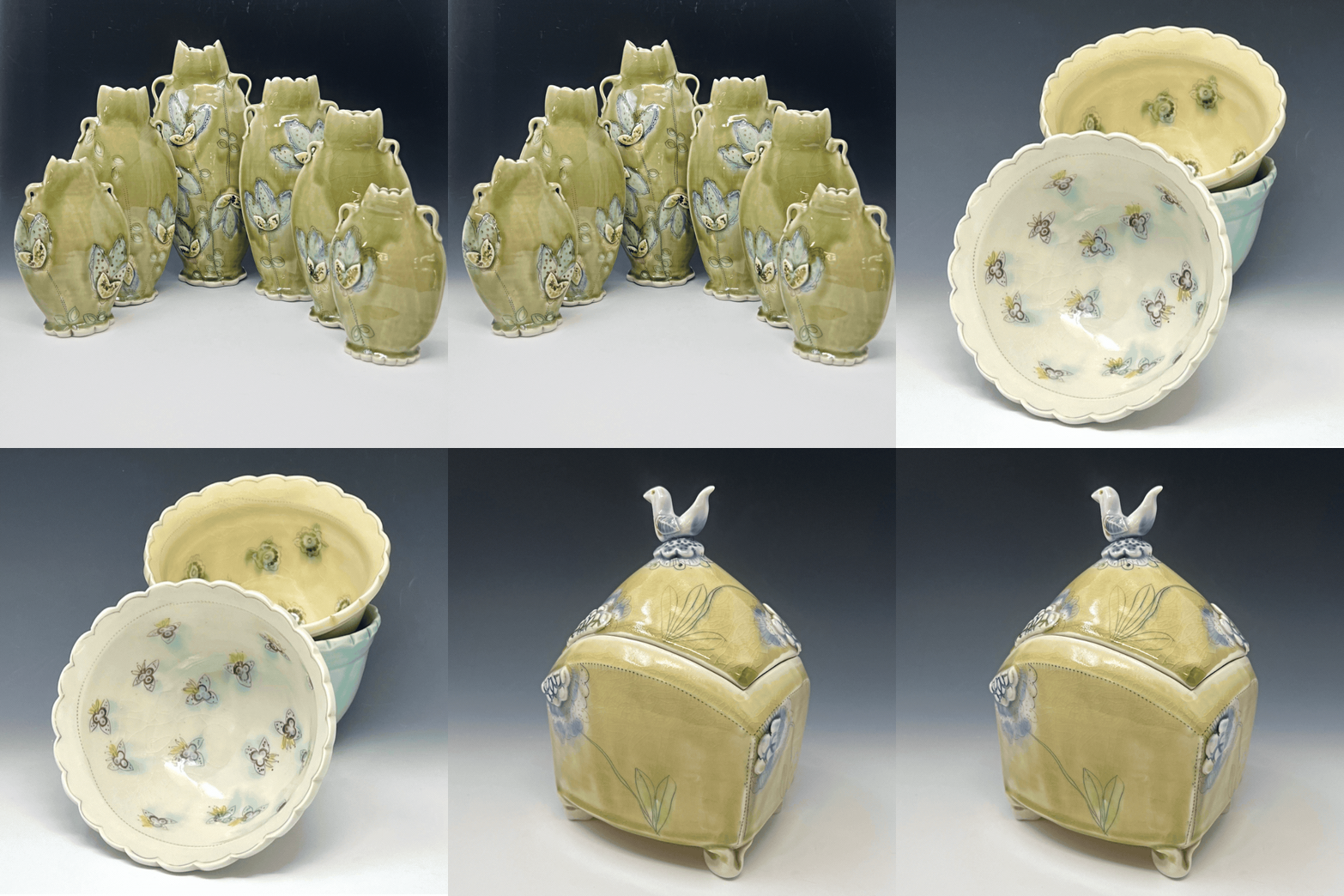
I am a utilitarian potter who lives and works in Gaston County. I create pots that are feminine and unique. Each pot is different and unique, with a variety of surface treatments I use on my pieces. They are intended to be used and bring joy to our everyday rituals in life. My pieces are thrown on the potter's wheel and then altered when wet. I use high-fire porcelain and embellish my pieces with different surface techniques and glazes. My process consists of drawing into the clay and inlaying the stain, then wiping it away, a technique called intaglio. I also make my own stamps and sprig molds that I add to these drawings. Various underglazes, accent glazes, and lusters are added to different pieces depending on their use. My pieces are used in people's homes around the United States, and I enjoy selling my work at galleries, craft shows, and on Etsy. I enjoy making serving pieces and tableware that bring delight to the daily activity of eating, setting a table, and enjoying a meal. While growing up, I spent many weekends observing and participating in the traditions and rituals of my paternal Italian-American extended family. Among the most prevalent of these traditions were the preparation and presentation of elaborate meals. The pots I create reflect my enjoyment of throwing, embellishing, creating, and using. I enjoy creating each piece with its own unique character and personality, whether I change a spout, foot, rim, glaze color, or decorative element. All of my pieces are wheel-thrown and altered in some way. Because of the bright colors I get from the glazes I use, I enjoy working with porcelain. The forms I make are usually organic in form, which stems from my love of the material I use and my personal preference for a fluid line. My inspirations for surfaces come from patterns in fabric, wrapping paper, modern floral designs, and historic dishware pottery. I currently work from my home studio in Gastonia, North Carolina, and I am the mother of 3 creative children. I teach college students part-time and am a member of a ceramic group that I founded called Thrown Together.
Ben Owen Pottery
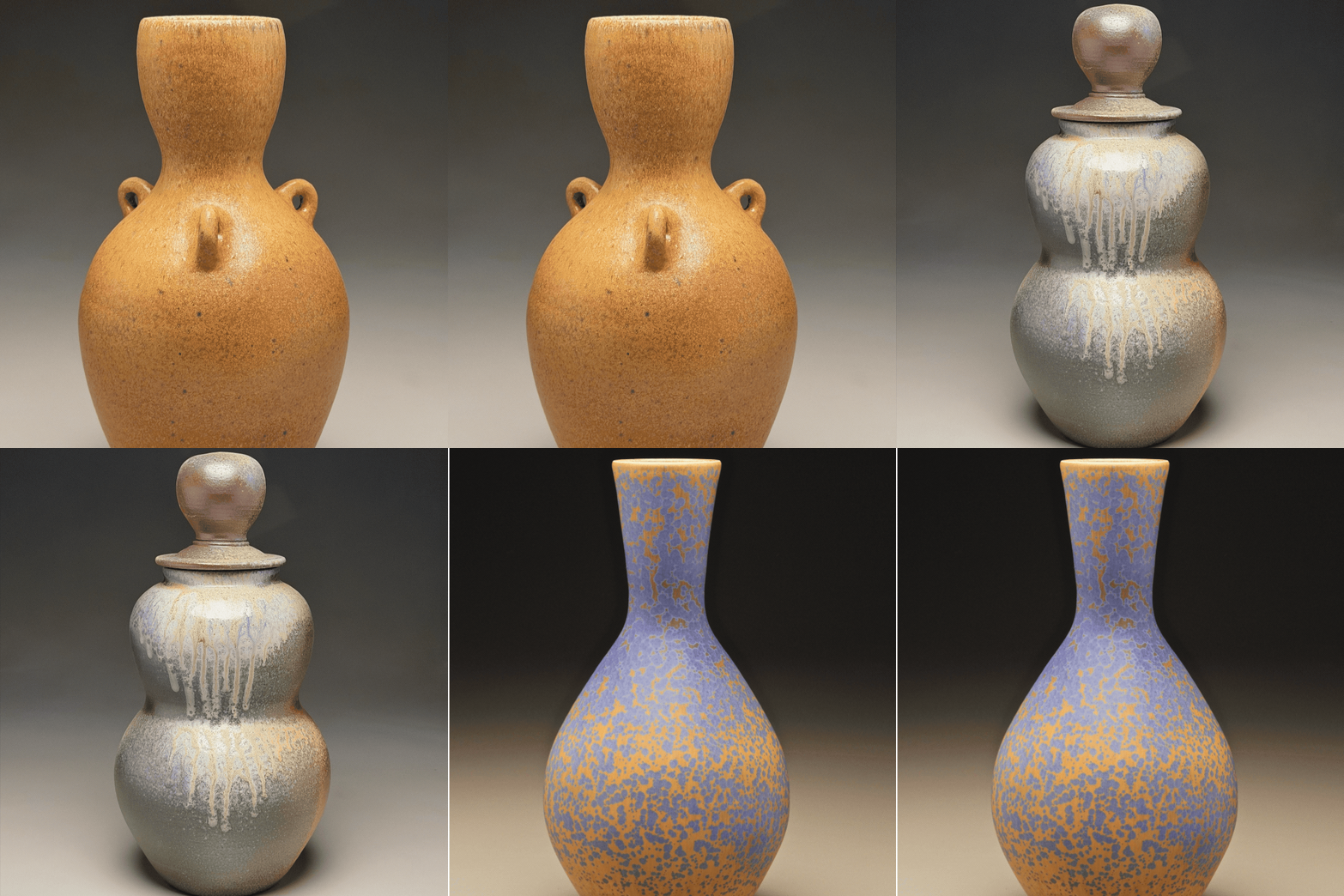
I remember, from my early years in clay, my grandfather’s frequent advice, “Keep it simple, Son. Keep it simple.”
How can something that sounds so easy on its face value prove to be an incessant and monumental daily challenge? I am constantly striving to advance my repertoire of shapes, colors, effects, and expressions while simultaneously honoring my grandfather’s voice, which was drawn from his forefathers’ experiences in clay. Hailing from a deep-rooted pottery tradition and becoming the family’s first university-educated clay artist, I am challenged to sort through the balance of tradition and vision, finding my own unique voice in the chorus of fine performances. I strive to create truly new works of art in clay that are clearly “Ben Owen III”, while paying homage to the time-honored Owen aesthetic.
Some of my works appear in traditional Owen shapes; rendered in a new, grand scale; and modeling colors and finishes of which my forefathers never dreamed. I am intrigued by the exploration of matrix and cohesion relating to glass and pigments. The discovery that follows often leads to the next big question along my journey, as I seek to take my discovery to the next level. I move slowly and methodically along my path, often stopping to evaluate my adherence to my grandfather’s guiding principle of simplicity.
My current work carries the echoes of deep history from the Asian cultures which have been consciously studied by Owen potters for three generations; and the stories of England and early America, as my forefathers were the makers of the settlers’ simple necessities including whiskey jugs, candlesticks, butter churns, and canisters. I attempt to breathe new life into these simple earthen vessels; infusing them with artistic vision that makes them comfortable at the world’s finest locations, yet friendly enough to be daily companions.
Silas Bradley has been making functional pots at Ben Owen Pottery since August 2025 with a commitment for 2 years. As he has revealed an eagerness to make new clay vessels and passion for wood firing, his hope is to contribute in the North Carolina clay tradition.
Parke Ceramics
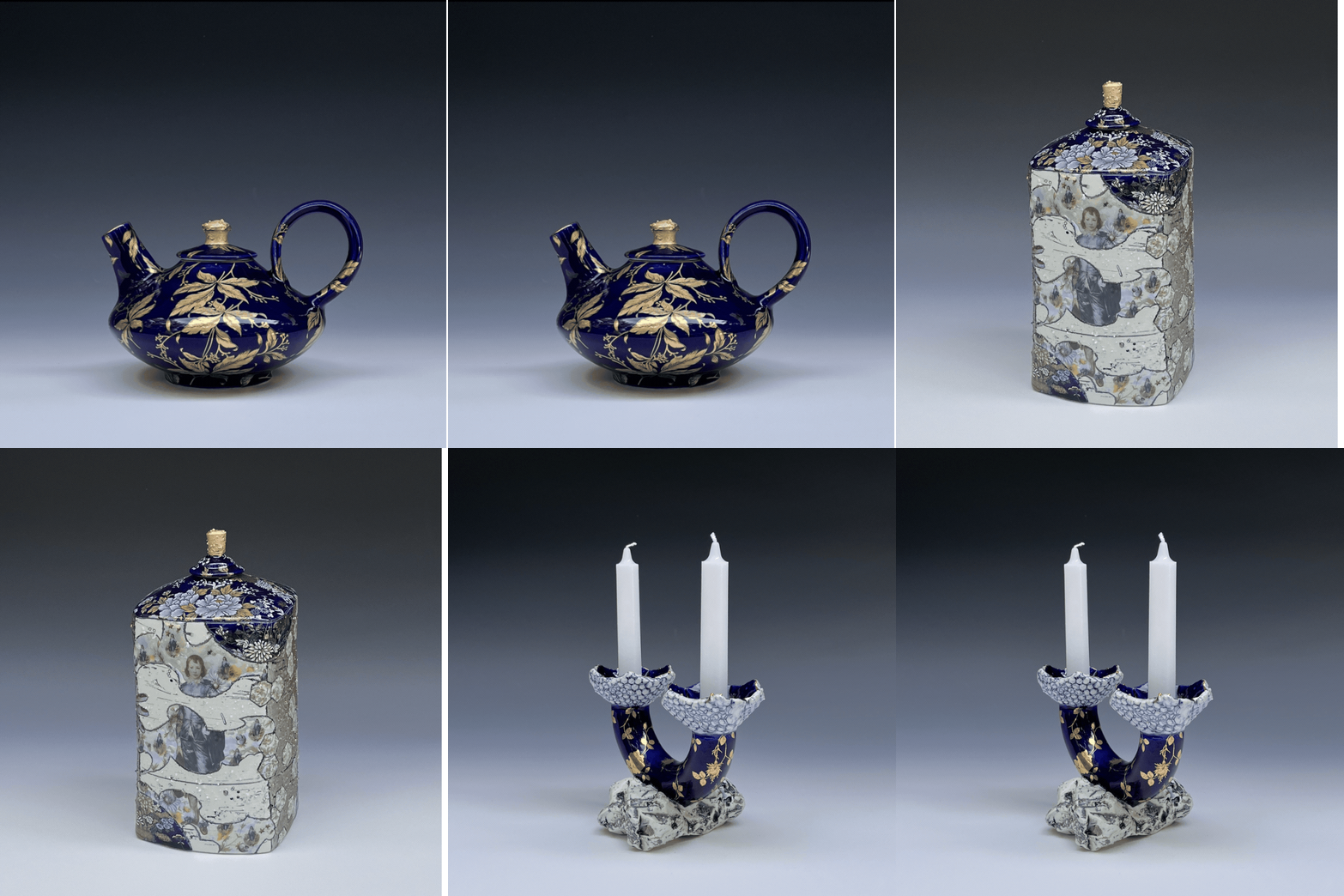
Fine bone china and porcelain are frequently associated with treasured heirlooms that are passed down between generations. My association with porcelain stems from early childhood summer trips to visit my grandmother in Northern Ireland, where she would take me to local china shops to buy small porcelain souvenirs. As I pursued my ceramic education, and started working with porcelain, these memories came to the forefront to influence both my techniques and directions. My current work combines elements of manufactured porcelain and Japanese pottery, particularly Shigaraki and Imari ware. Fine porcelain is highly processed and purified, mass-produced, and fired in a controlled manner using saggars, effectively removing any evidence of an individual artist. In contrast, Shigaraki ware is typically handmade stoneware with feldspar inclusions fired in an anagama kiln, the only decoration coming from the randomness of wood ash. Imari is highly decorated porcelain that was for the export mark
Laura Peery
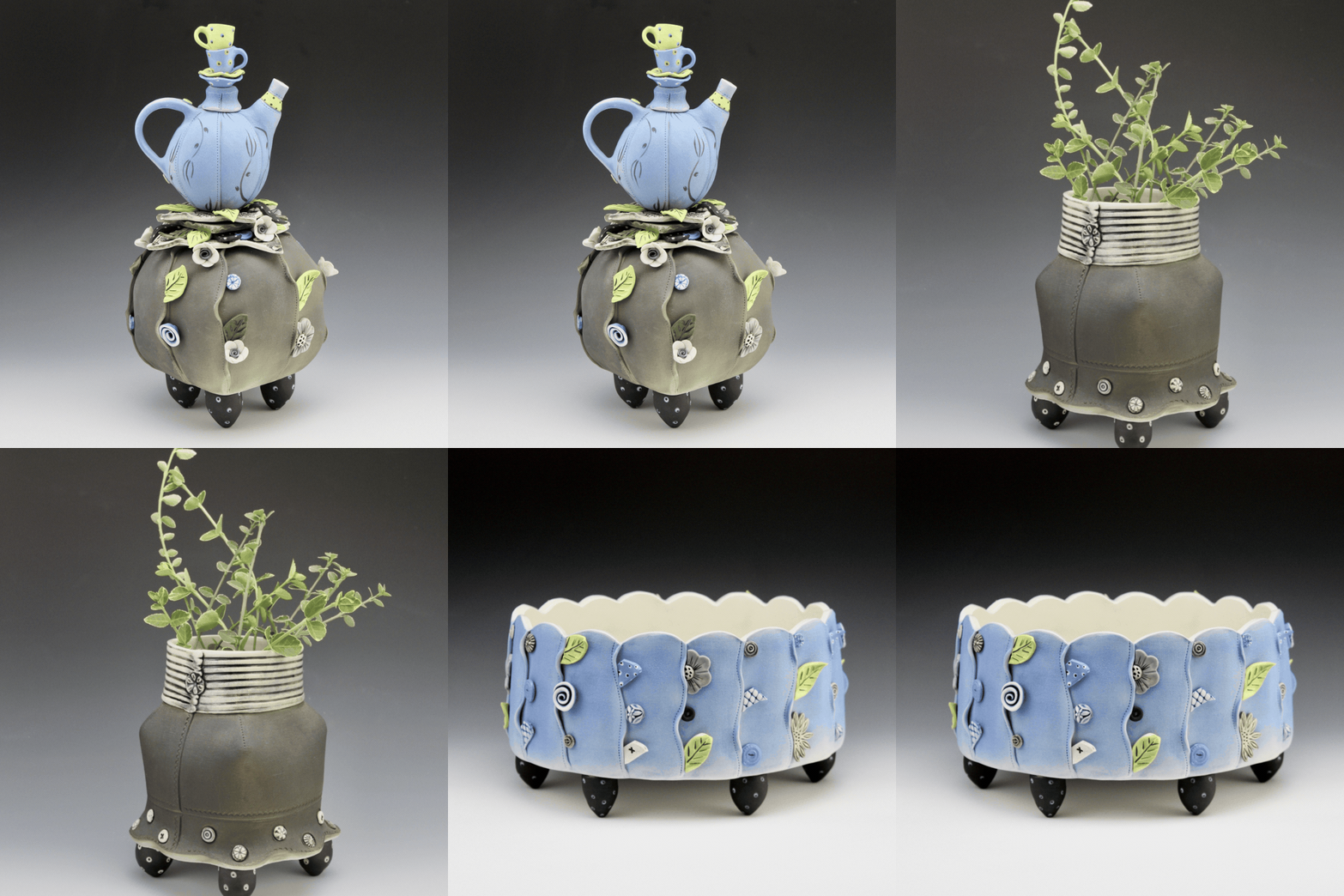
My porcelain clay work is Inspired by vintage textiles and forms. I enjoy the fool-the-eye nature achieved by imprinting fabrics onto clay, and the fantasy aspect of adding unexpected elements to the surface. Using mixtures of underglazes and ceramic stains that are rubbed, painted and airbrushed onto the surface, I can introduce soft color that enhances these textures. Interiors are glazed, teapots have working lids. I make work that brings me joy and hope the viewer experiences some of the same when encountering my work.
Allison Neiss Pottery
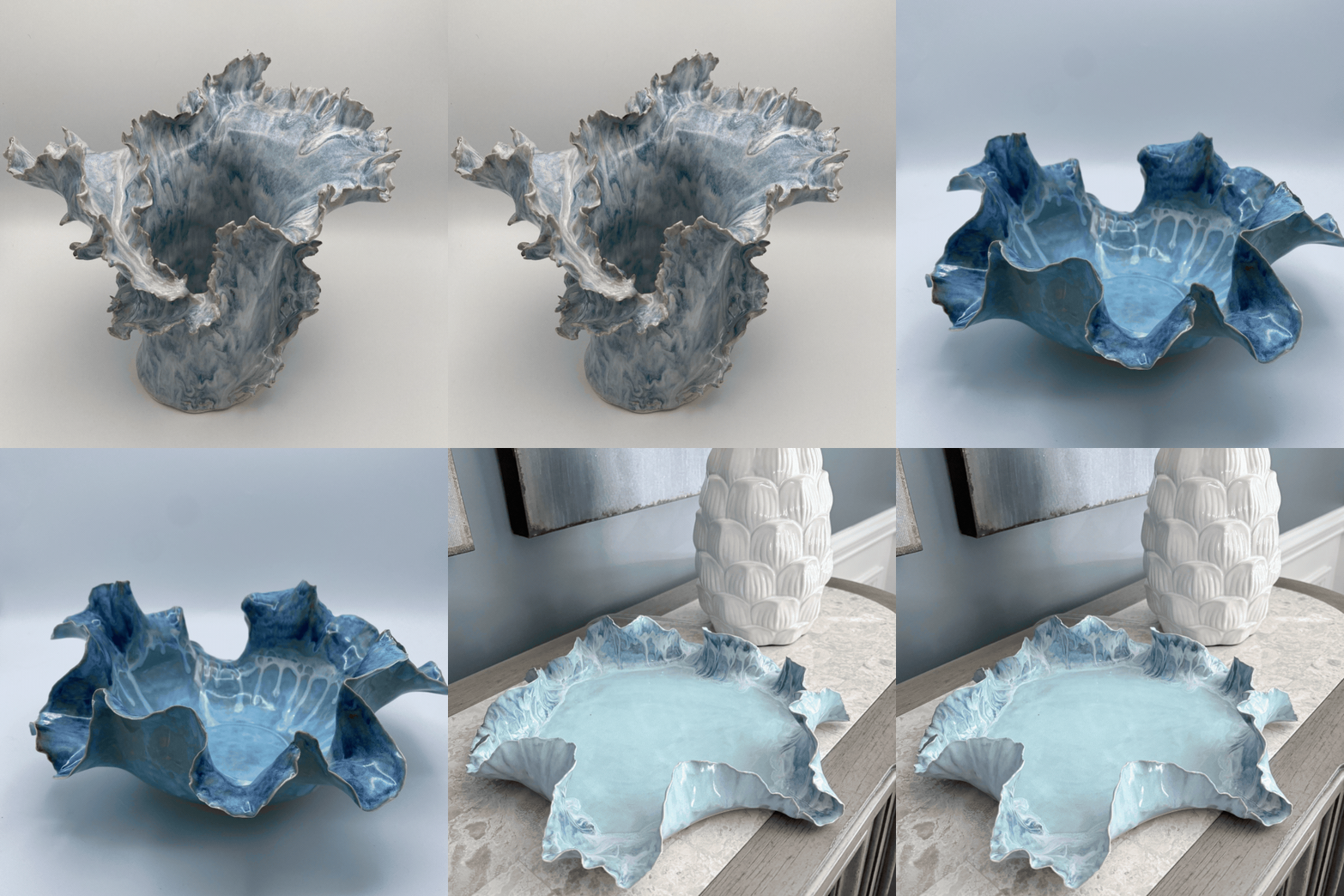
I propose to exhibit coastal-inspired handbuilt ceramics in forms such as flutter bowls, vases, sculptural platters, and sculptural décor. All of my ceramics are made from stoneware clay and built by hand using slab and coil techniques. I am inspired by travel and by coastal landscapes around the world, with a particular love for the Caribbean islands. I am drawn to the colors of the ocean and the wavy textures of the water, and I try to capture that sense of movement and calm in my work. The way I glaze each piece adds depth and beauty, creating objects that bring serenity and a touch of the coast to any room. My artistic vision is to hand build pottery that is both beautiful and practical, designed to be decorative and functional, and to invite connection through touch and everyday use.
John Ransmeier Pottery
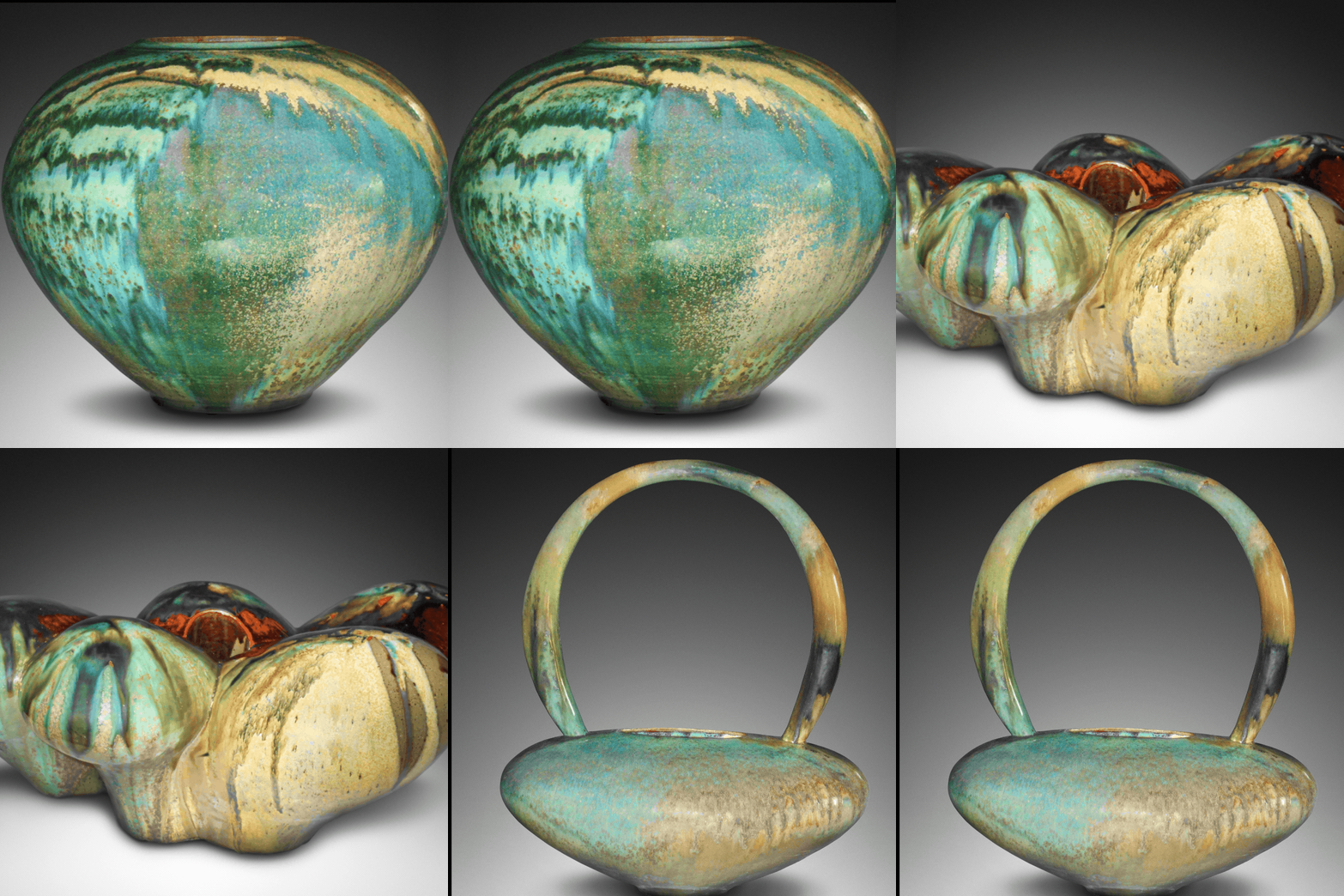
My work continues to evolve as time goes on. I try never to accept mediocrity but push to get the most out of the material at hand.
David Roswell Pottery
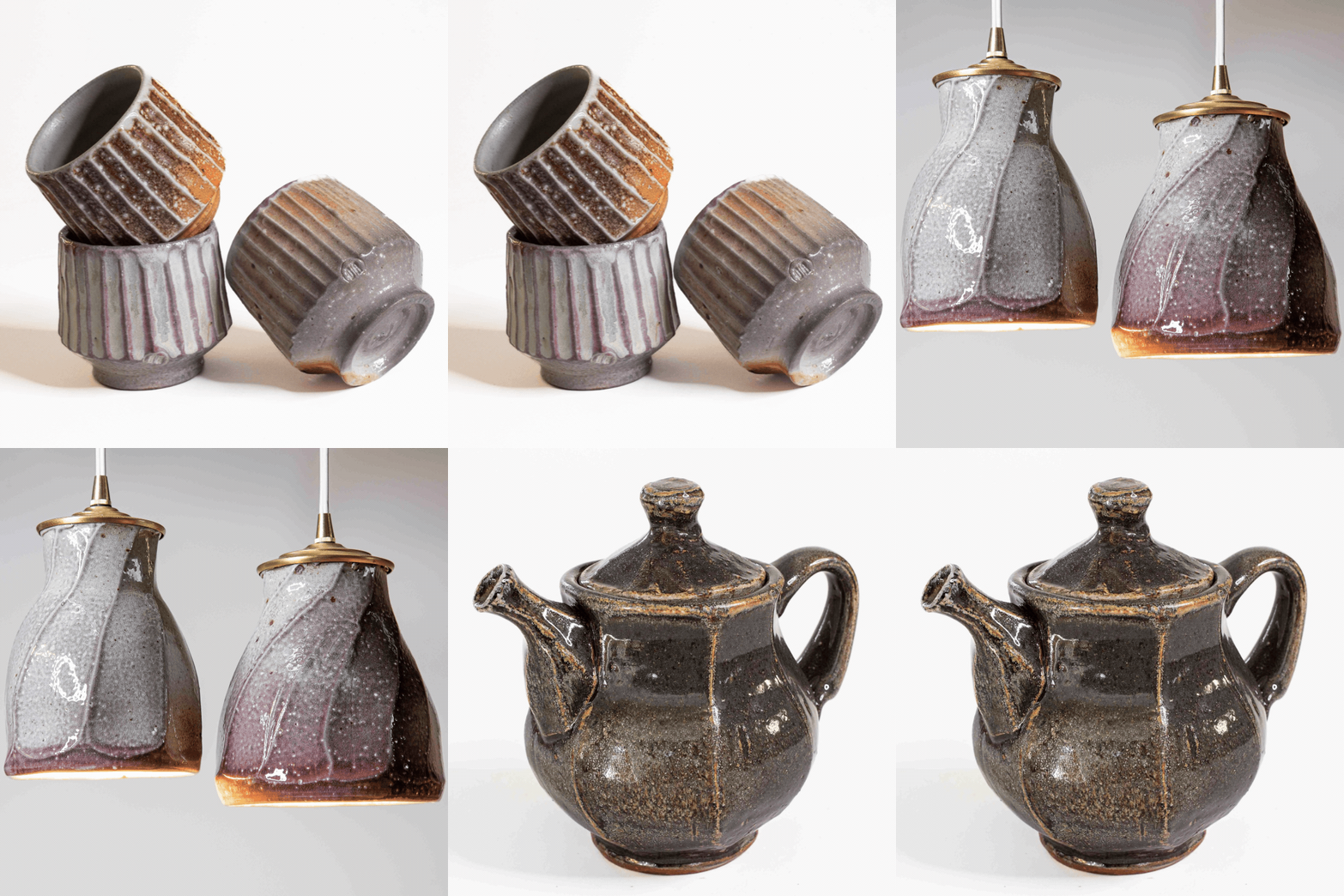
Process drives my creative journey. I love the feeling of a form rising from a ball of clay, the raging uncertainty in the atmospheric kiln, and the joy of pulling out a successful piece, still cooling, and learning its story. My work brings that sense of curiosity, excitement, and pleasure to the user—getting it right into their hands. I make pots for everyday use, so that people take pause and care for the things and people around them.
I use locally-dug wild clay, connecting me with millennia of potters making work to serve their communities and inspire their imaginations. I draw inspiration from the sun-glinted ripples in water, the patterns and disorder of clouds, and the surfaces of weatherworn, lichen covered rocks and logs in the forest.
Humid Earth
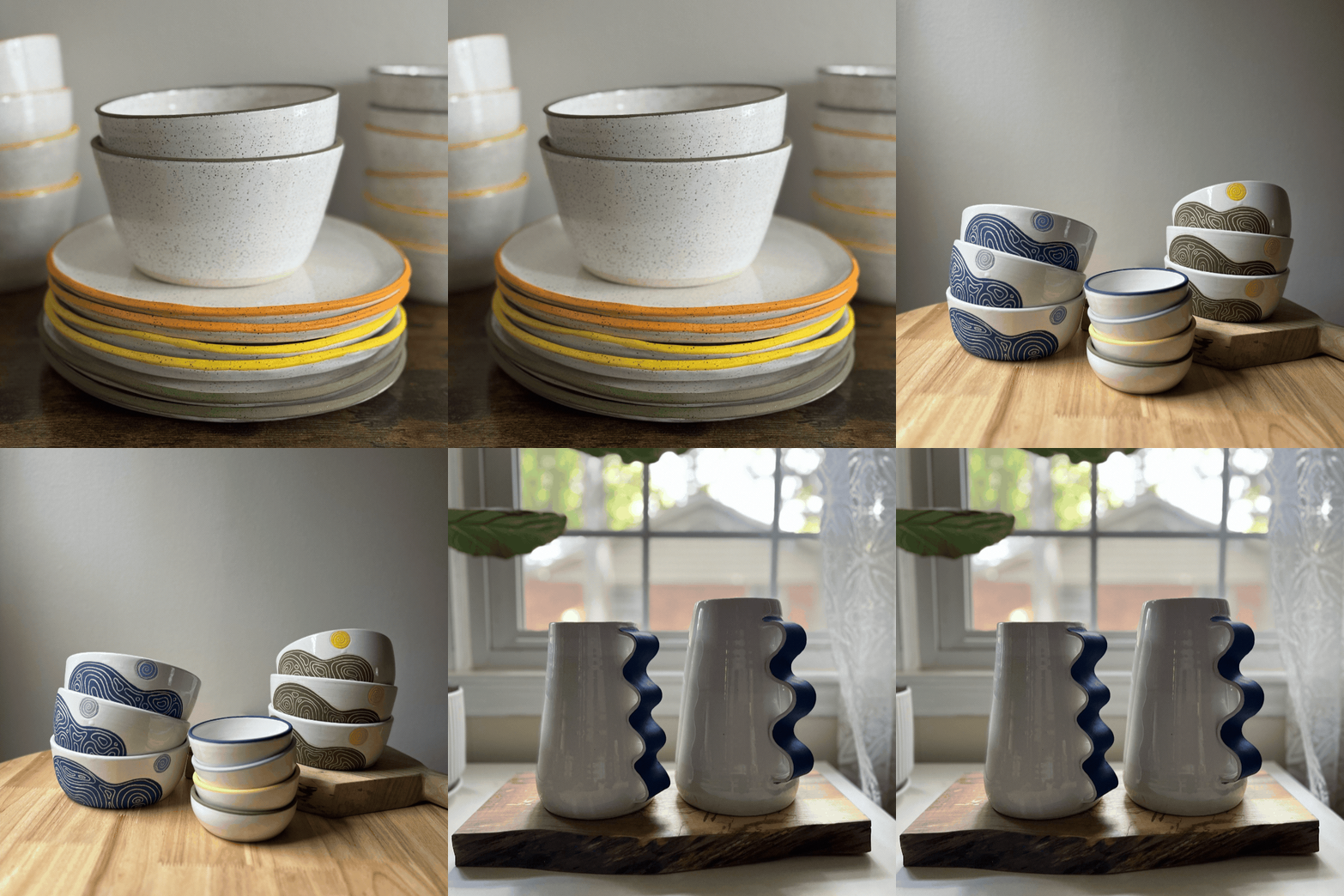
I pull inspiration from nature- themes of spirals, movement in water, bending of roots and branches. Gradient in sky scapes, negative space in the tree canopy, and the moon and all her stages inspire my work. The integrity of clay is central in my simple designs, often leaving exposed sections of clay so the texture of glazed to unglazed tells a story of the clay’s origin to the earth. Each piece is a meditation and a constant reminder to slow down. It brings me joy to share my pieces with the world, knowing that the functionality and durability of ceramics creates an opportunity for my pieces to become rhythms in people’s everyday lives.
Snow Creek Pottery
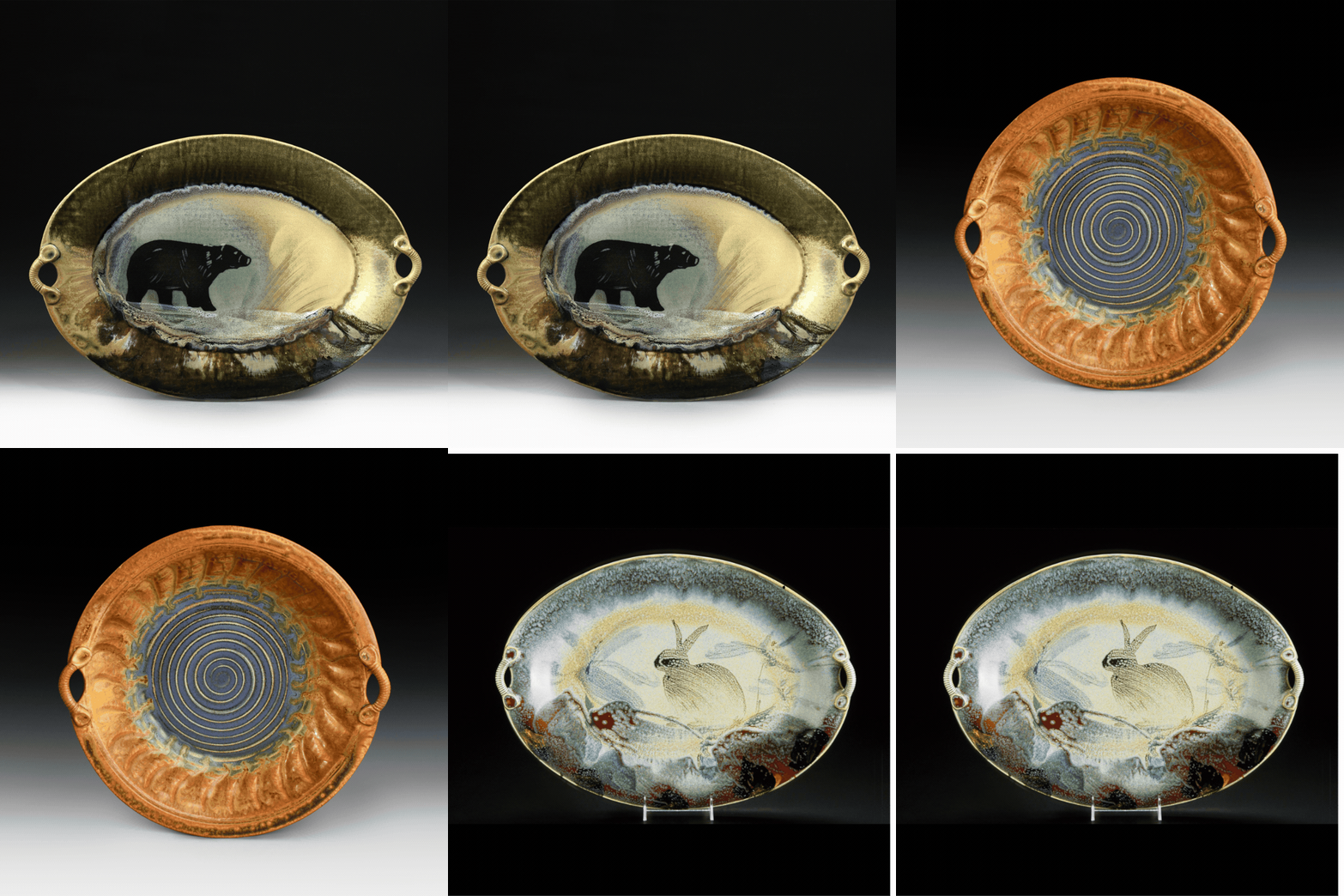
I create High, fired, stoneware and porcelain platters that are decorative and functional my images to depict sights and scenes from my time spent in nature throughout my life. My images are of Deer, turtles and horses and their natural settings. I find that people relate to these images that remind them of happy memories.
I am a founding member of the Spruce Pine, Potters market, and the Mica gallery in Bakersville, North Carolina and a member of the Penland Clay community for over 40 years. This has been very influential in the development of my work.
Ross Pottery
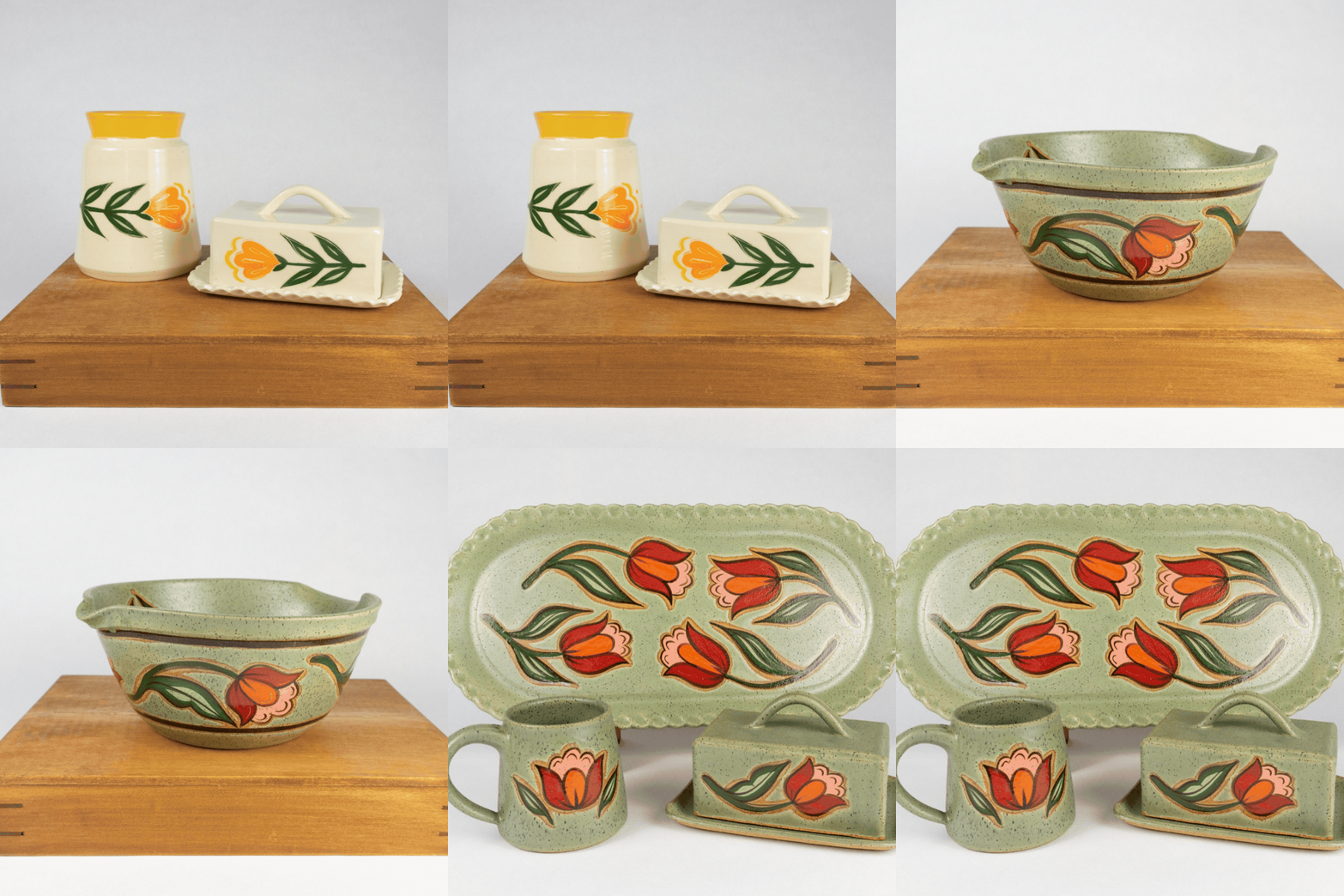
Meg and Jamie Ross create their characteristically nostalgic pottery by developing the lineage of handmade kitchenware from the mid-century. Their vintage-inspired pottery explores embroidery patterns, quilt blocks, earthenware forms, and glass dishes to create charmingly unique yet familiar wares. Ross Pottery pays homage to historical folk designs from Hungary, the Netherlands, and early America. Their work is created in tandem; Meg creates the forms using the potters' wheel and hand-building techniques, while Jamie illustrates each hand-painted design with layers of glaze, wax resist, and carved accents. Meg and Jamie add value to life's mundane aspects by creating elegant, durable forms for a busy home and adorning those forms with cheerful colors and floral motifs. This partnership allows for creative freedom for both artists while prioritizing the natural unity that comes from their joyful collaboration.
Providence Road Pottery
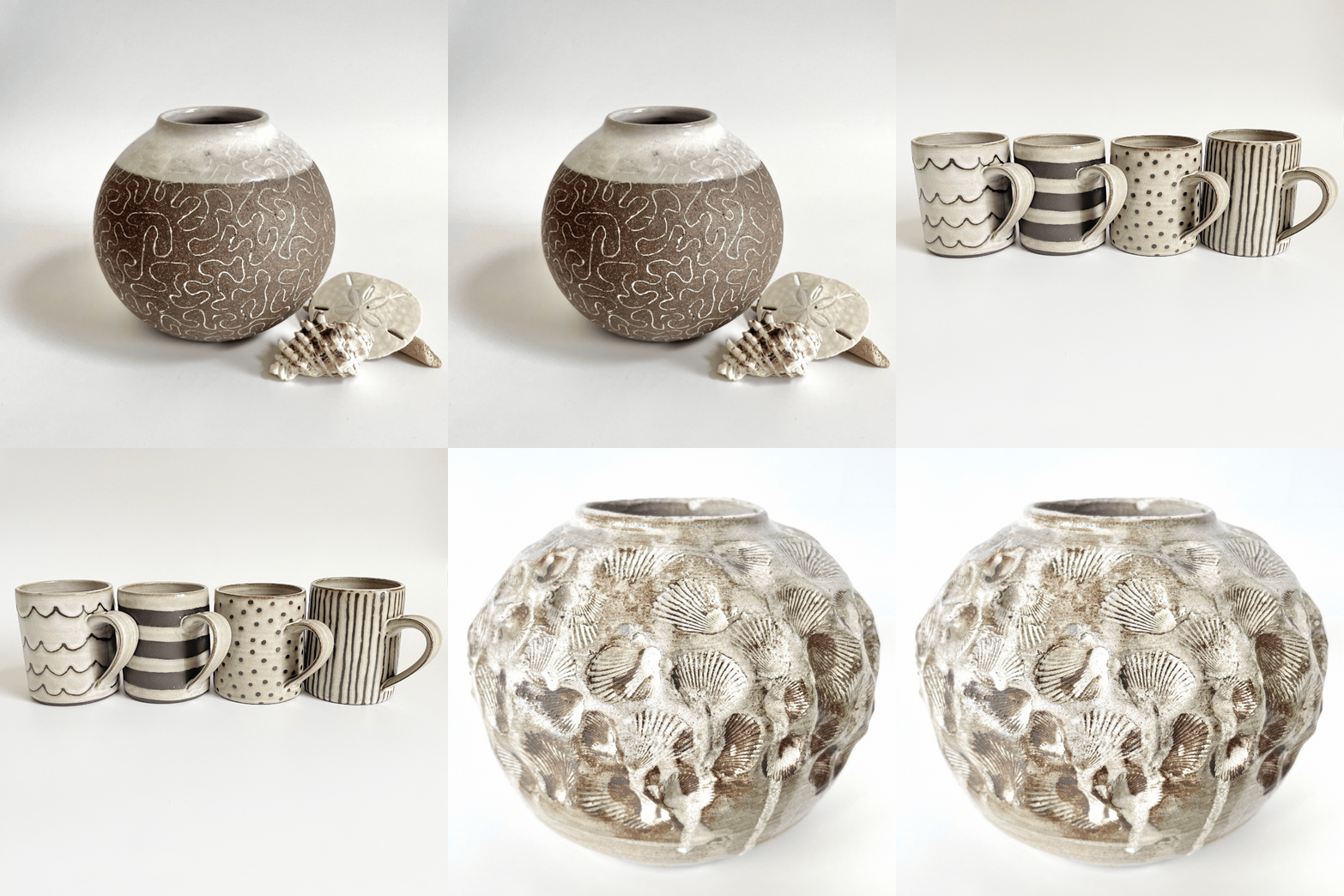
As a potter, I draw inspiration from the coastal landscapes that surround me, using my craft to connect more deeply with where I live. Relocating from the mountains to the sea has profoundly shaped my creative practice as I become more attuned to maritime life. Shells, plants, and observed phenomena inform textures, patterns, colors, and forms. My pieces evolve into tactile reflections of the environment, with a neutral palette that highlights the raw, organic beauty of these natural elements. Through my pottery, I create functional art that connects people to the landscapes we share and fosters a greater appreciation for our planet.
David Sackett
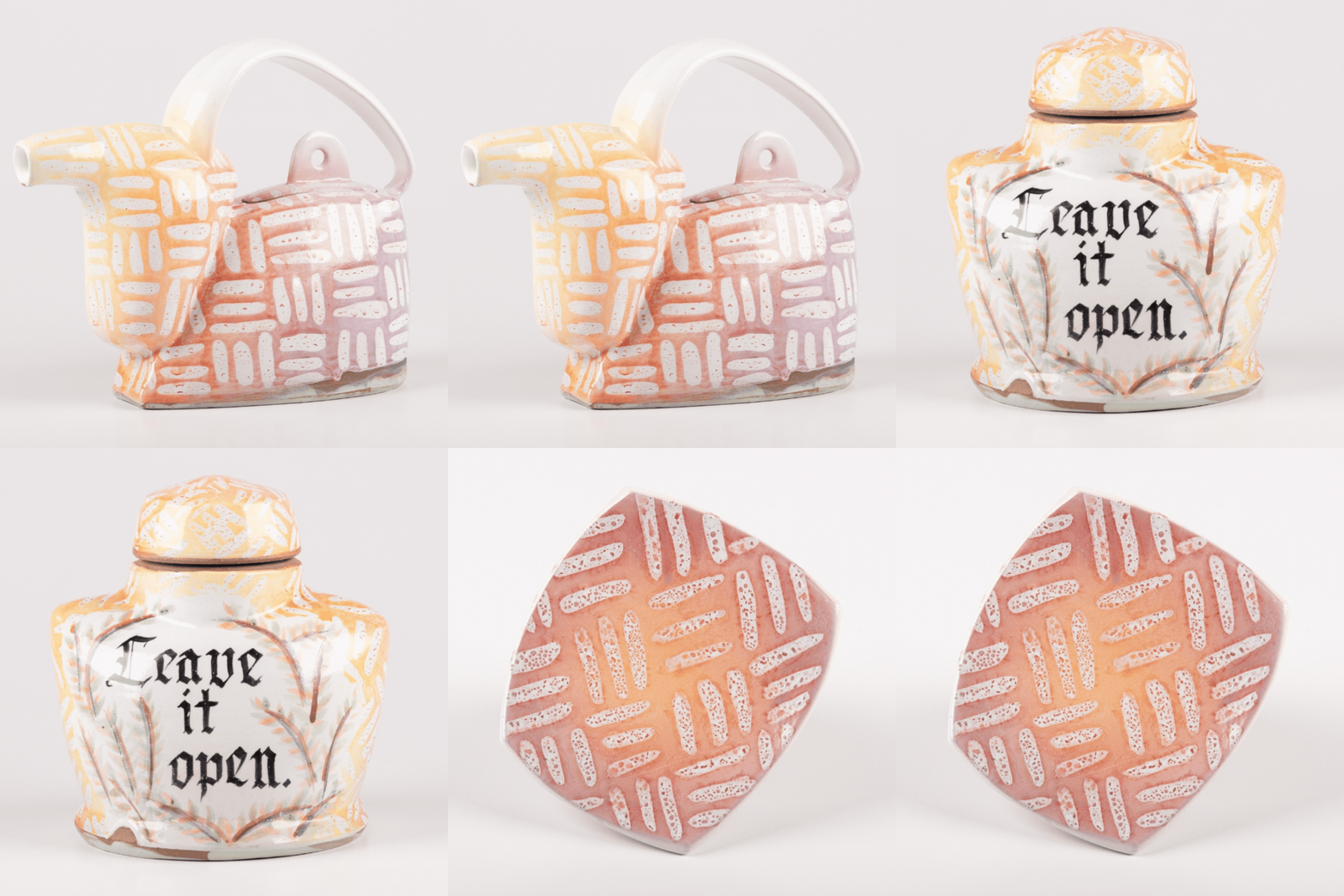
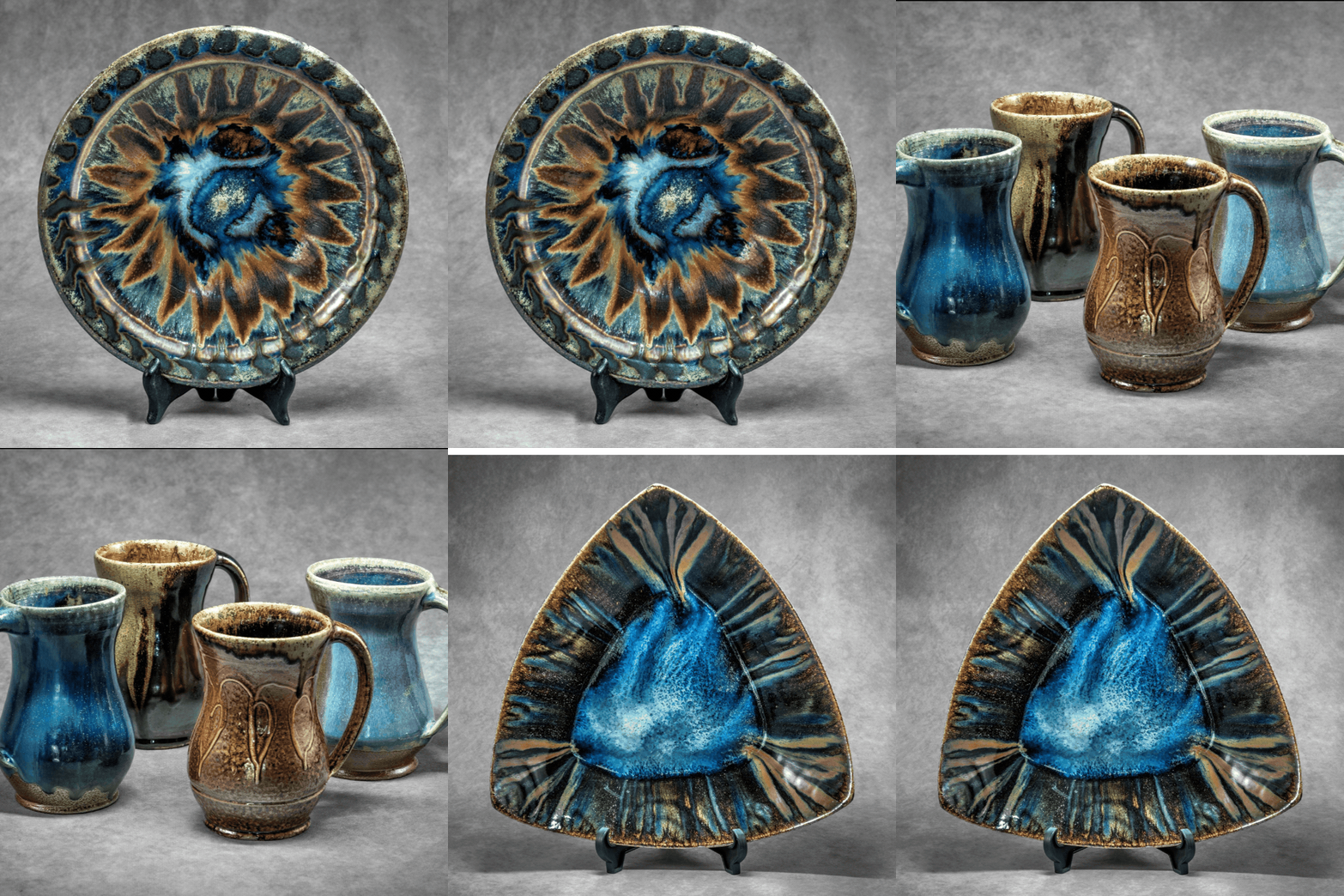
David Sackett’s ceramic work explores the relationship between form, surface, and meaning. Working in a majolica tradition on cone 6 stoneware, he integrates wheel thrown and altered forms with layered color and imagery, creating objects in which decoration and structure function as a unified language. His vessels operate between use and reflection, inviting viewers to consider how narrative, memory, and interpretation are embedded in material objects.
David Sackett is a ceramic artist born in Miami and currently living and working in the Charlotte area. His practice centers on ceramics as a dynamic interplay between concept and material, using form, surface, and process to explore how objects carry meaning between function and sculpture. Working primarily in majolica on stoneware, Sackett creates pieces that embrace idiosyncrasy while engaging broader cultural and historical contexts of the vessel and the decorated surface. He frequently collaborates with artist Liliya Zalevskaya, both are active members of the Goodyear Arts Collective, and an Instructor of Art at Gaston College. Sackett holds an AFA from Gaston College, a BFA from University of North Carolina at Charlotte, and an MFA from Tyler School of Art and Architecture.
Joseph Sand Pottery
My ceramic work is created in the heart of North Carolina: Randolph County. In 2010, I built, brick by North Carolina brick, a 40-foot-long, 8-foot-wide kiln on my property outside of Randleman. This unique kiln not only allows me to wood-fire a large body of work, but to infuse my pottery quite literally with the spirit of the Piedmont Triad.
If you look closely at my work, you will see the red North Carolina clay I use to shape everything from coffee cups to large sculptural outdoor planters. I fire the kiln with pine slab offcuts from a local sawmill. Three times a year, I invite the community to kiln openings so they can see my work, talk with me, meet my wife Amanda and our two young sons, and take home a piece of authentic North Carolina pottery. The best part of my potter’s life is meeting my customers face to face and witnessing their excitement and pleasure in viewing, holding and owning—or giving as gifts—my work.
I’m grateful to Pittsboro potter, Mark Hewitt, for allowing me to apprentice with him for three and a half years. Because of my training with Mark, who is originally from England, I learned how to create functional pottery in the English tradition, including incorporating the fluid, slip-trailed lines and rounded form I admire. My work has also been influenced through my exploration of the South’s historic alkaline and salt-glazed pottery as well as colorful glazes. My glaze experimentation relates directly to my love of nature, reminding me of the diverse properties of the elements.
Having worked and trained primarily on the wheel, since 2015 I have expanded my work to include hand-built sculptures—some as high as five feet tall. Just as I do with all of my ceramic work, I use locally dug clay bodies and select local clays for glazes that I know will react well in my kiln. The challenges and rewards of working with this off-the-wheel technique adds to my love of my work as a ceramic artist and helps me connect even more to this place I call home: the Piedmont Triad region of North Carolina.
Thomas Schmidt Art and Design
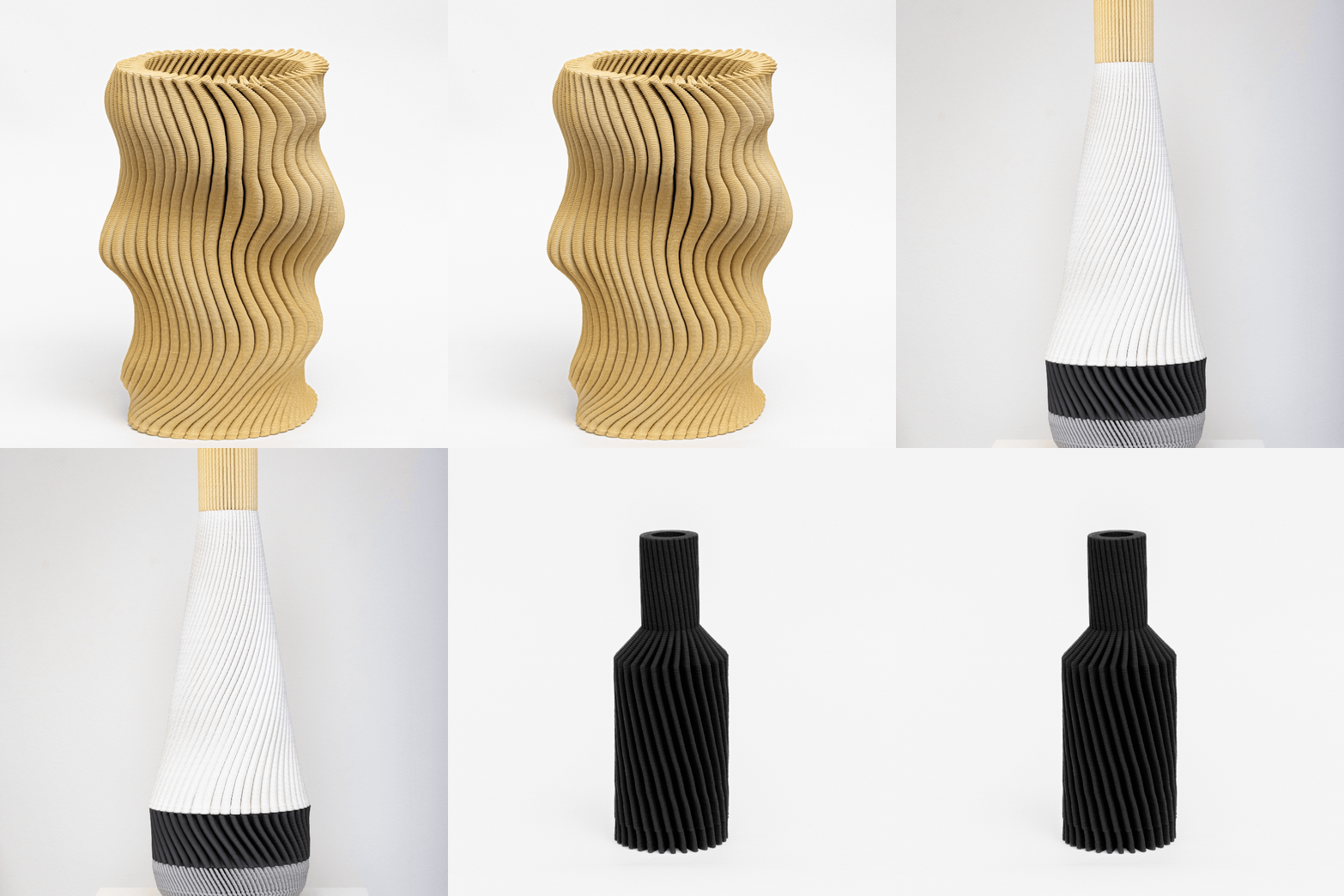
This body of work, titled "Morphology Series" explores the intersection of digital design and ceramic materiality. The work begins in a 3D modeling environment that functions as a kind of digital playground—an open space for improvisation, iteration, and discovery. Rather than treating modeling as detached from material reality, I approach it as a form of material thinking. Each adjustment anticipates gravity, scale, shrinkage, and the behavior of clay, allowing the virtual and physical to inform one another.
The forms are 3D-printed in porcelain, a material historically associated with refinement and precision. I intentionally preserve the horizontal layer lines produced by the printing process, allowing the technology to remain visible rather than concealed. These layered strata are contrasted with vertical lines that create a woven or textile-like effect, emphasizing rhythm, structure, and surface tension.
Surface finishes include glaze and terra sigillata made from locally and globally sourced clays, producing a spectrum of color that ranges from subtle earth tones to more saturated hues.
At its core, Morphology reflects my ongoing interest in Post-Digital Craft—the idea that craft is not defined by a specific medium or tool, but by a way of thinking through materials. In an era increasingly shaped by screens and algorithms, these works insist on the persistence of touch. They ask how digital tools can expand, rather than replace, the tactile knowledge embedded in ceramic traditions.
The Morphology Series is one facet of my broader studio practice, which includes sculpture, design, and public art in a range of materials. I am also a Professor of Interdisciplinary 3D Studio at UNC Charlotte, where my teaching and research focus on integrating digital technologies with traditional craft practices.
GSclayart
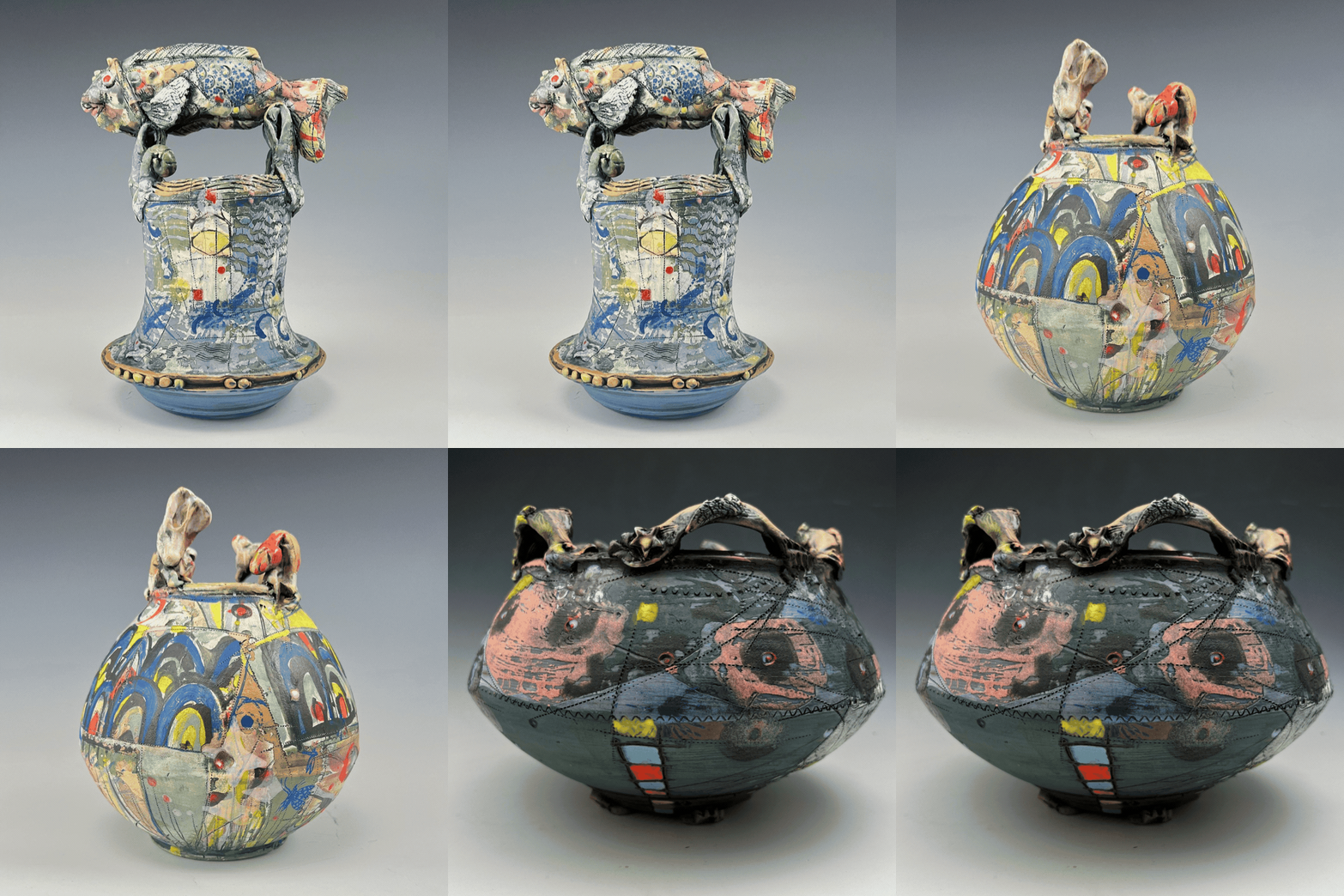
Ceramist, painter, sculptor and teacher, my goal is to create expressionist works that unite Fine and Decorative arts with works in ceramics and painting. Continually manipulating form and surface, I allude to historical influence while creating works of unusual depth in an effort to create a new and deeper understanding of my work and process.
Foot, naval and surface characterize my decidedly anthropomorphic vessels. My Casual approach to drawing, form and color are a solid strength of the Painterly vessel I create. The rawness of the native clays that are brushed under and over the glaze, giving my vessels the ability to convey to the viewer the constant change that is the ceramic process and an analogy for the changes that are life.
Sedberry Pottery
My association with handmade pottery began at an early age. Growing up the son of a potter I was handling pots as soon as I graduated from a bottle. Our cabinets were stacked with work collected over the years - pots made by my dad and his piers and friends. In my detached and youthful indifference, it wasn’t even on my radar to apply significance to these objects of utility we used every day at meal time, or when I would come in from playing outside to get a cup of water. I do remember however having go-to pots - favorites that I would instinctively reach for though never questioning why. Looking back, I understand it was because those select pots simply felt right in my hands; their texture and weight and balance perhaps felt like holding a loved ones hand. It is only now as a maker that I can fully appreciate that powerful yet simple explanation and indeed drives the work that I attempt to make now - pots that I just want to reach for.
Currently I am investigating the possibilities between deliberate surface decoration and the limitless variables derived from wood firing. I want my imagery to evoke themes of movement and energy, an aesthetic that I rely of the firing process to deliver. Painted with a stained porcelain slip, the lines and brush marks that make up the imagery on my pots are initially controlled but static. It is only after the application of ash glaze and the chaos of the wood firing atmosphere that the pots take on new life and create surfaces that come alive.
I relish the collaborative approach between the maker and the kiln - the risk and chance of an uncontrolled flame path flashing across a pot in just the right way to produce a dynamic and unplanned surface is something I could try to emulate on my own for the rest of my life and still fall short.
Ken:
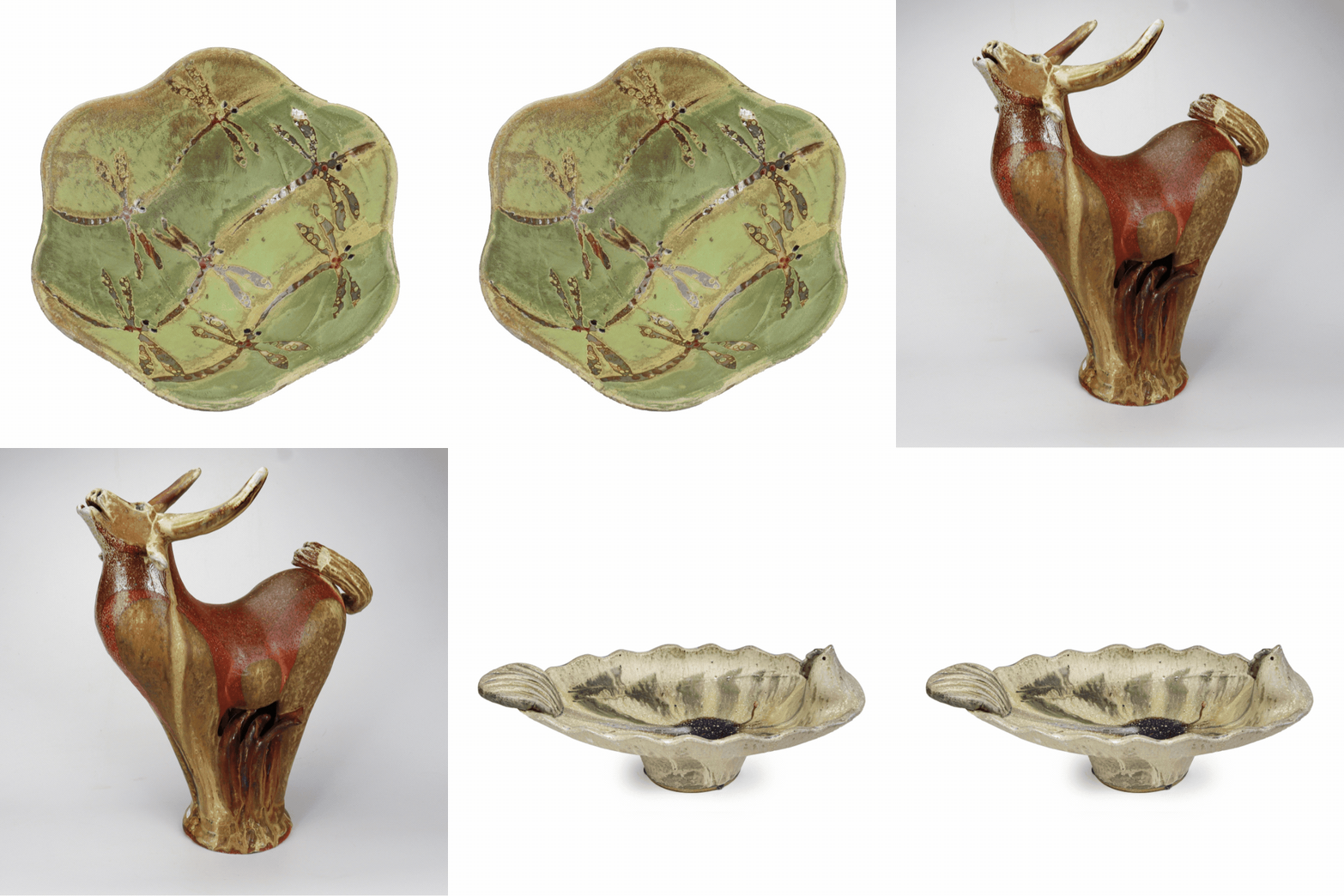
My work for the last 52 years has focused on achieving vibrant colors at stoneware temperatures. With the development of chambered climbing kilns came decorative stoneware and porcelain. Much of my work comes out of this tradition. However, I’ve always felt that there’s a range of color at these temperatures that few people have explored. I use various resist techniques to contrast glazes in both color and texture. Much of my work is fired rim to rim which allows the decoration to stay somewhat intact while the path of the flame can be seen on the backsides of the pots. For several years I have been digging a deposit of primary kaolin and developing a porcelain body and several slips rich in impurities; mica, garnets, quartz, etc.
Most recently I have been working on a new body of work; animal sculptures, thrown and altered. The idea of lifting the images off the pots and into three dimensions has been gestating for a long time. Layering slips and glazes that crackle and move and firing them in a wood kiln has been an exciting new direction.
Eric Serritella Studio
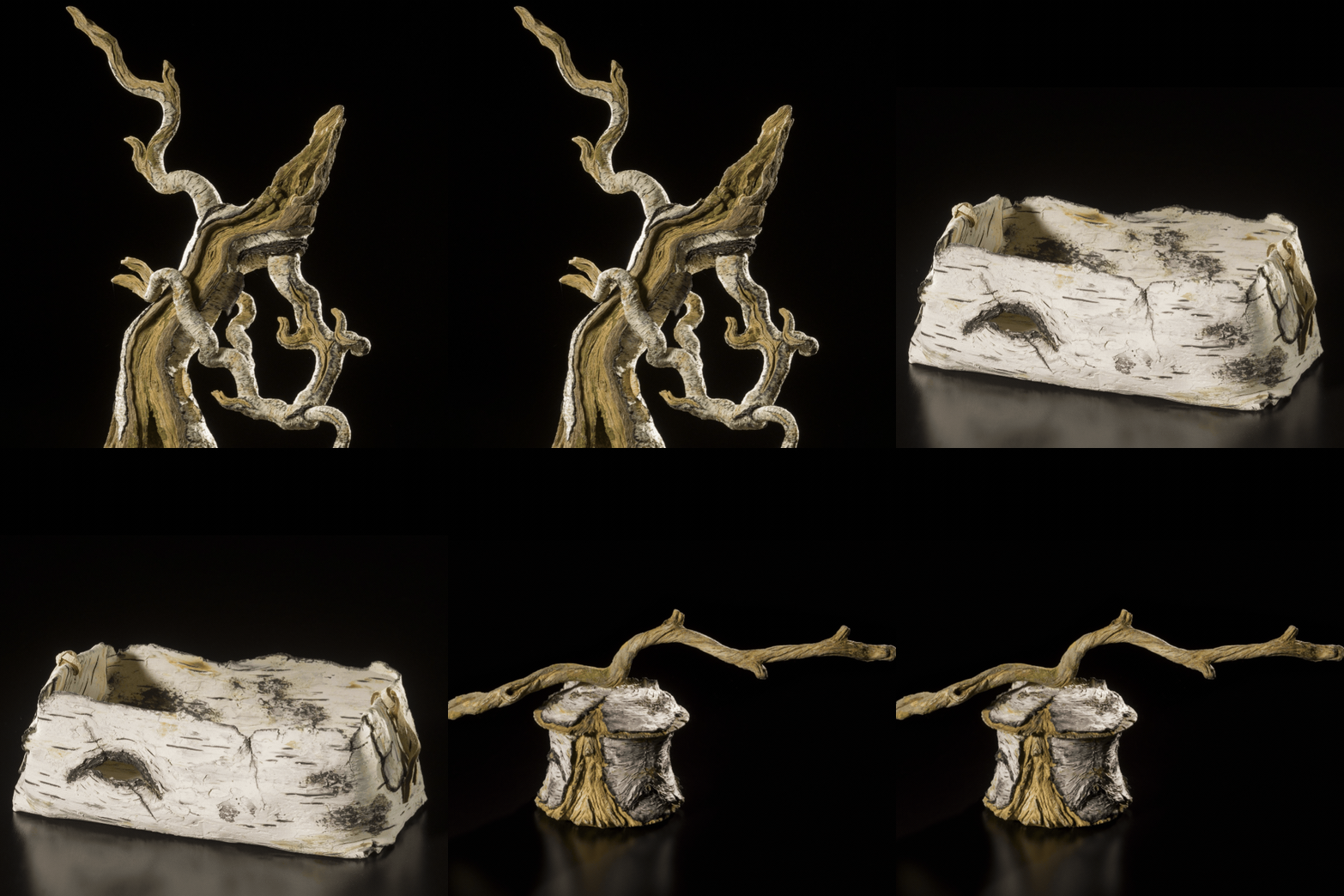
We are messing up the planet. Humans’ negative actions are eliminating ecosystems & driving extinctions. Artwork has a voice. Mine speaks to environmental awareness & changing behaviors. Each sculpture captures the beauty nature maintains, even when in peril. Through aging and decay, sculptures challenge the viewer with the nature of the material and the messages within. I unearth how nature maintains its splendors with tenacity and triumphs of existence, despite human disregard. I appreciate how materials mirror the environment’s fragility and durability—easily damaged if disrespected and yet invincible in their inherent beauty and longevity. Each organic creation is filled with literal and implied metaphor. Anthropomorphic elements and vessel forms link humanity as timelessly inseparable from our natural surroundings. Each sculpture fosters awareness to affect viewers’ behaviors toward the environment that must change immediately and begin by walking with softer steps.
Melting Mountain Pottery
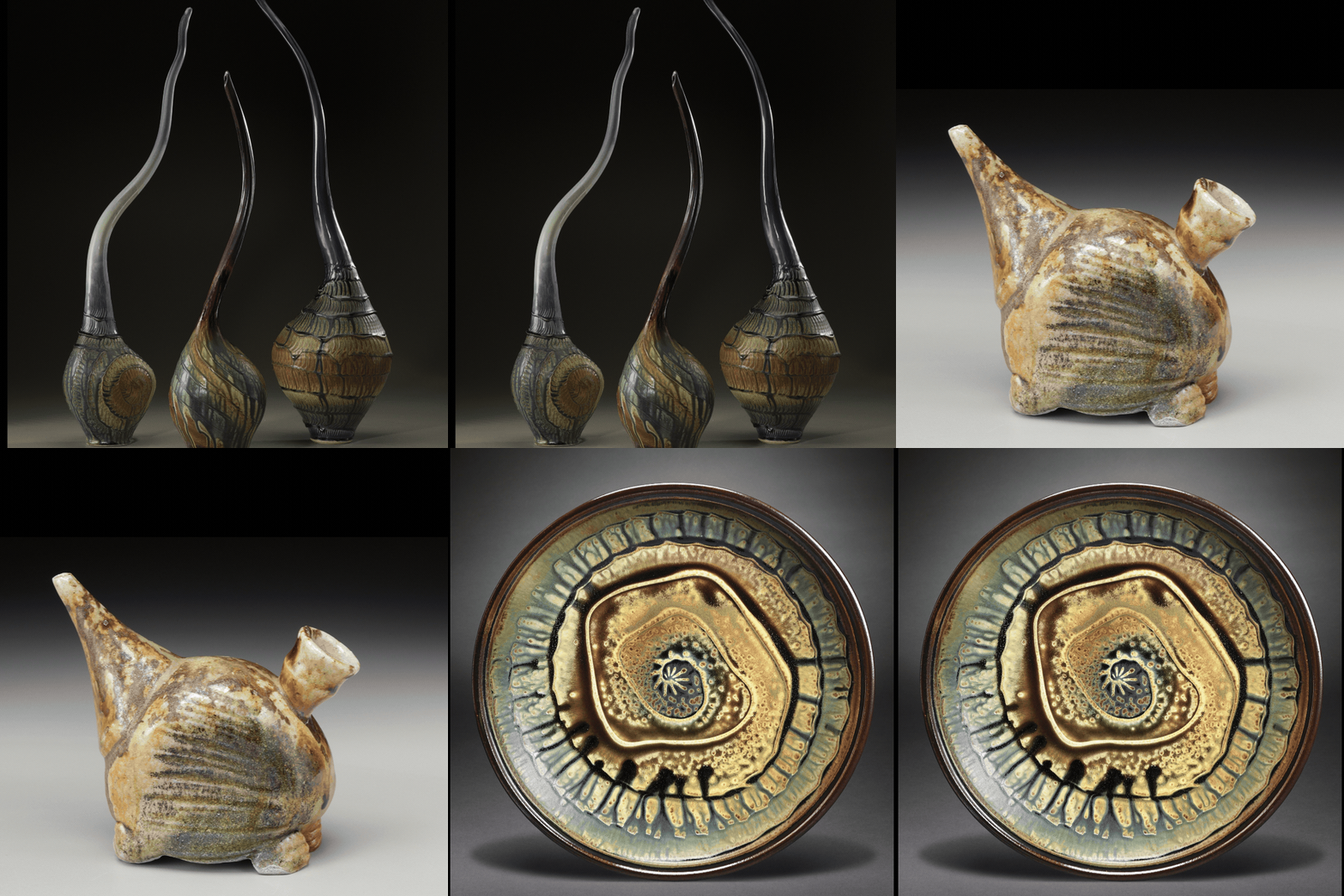
I use textural porcelain slips and layered glazes to create bright, flowing, and volatile surfaces on stoneware clay bodies. With a high focus on wheely thrown work I also include alteration, slab building and coil work into my practice. I am deeply influenced by classical shapes, their utility, and how they were made. I attempt to embrace these studied forms but with a contemporary twist. In my current method of firing in a large two chamber wood kiln as well as a reduction fired gas kiln, I am exploring the interaction between form and fire; building a relationship in each piece between function, the surface of the pot, and the story of the firing process. I have also been pushing my own limits of making and firing with large scale containers and sculptural forms. These pieces present challenges in making, moving, and firing; ensuring that I am constantly studying and learning. Each piece is made and placed conscientiously in the kiln with expectation and openness. A desire for success, and forever a student's acceptance of result.
Jenny Lou Sherburne Pottery
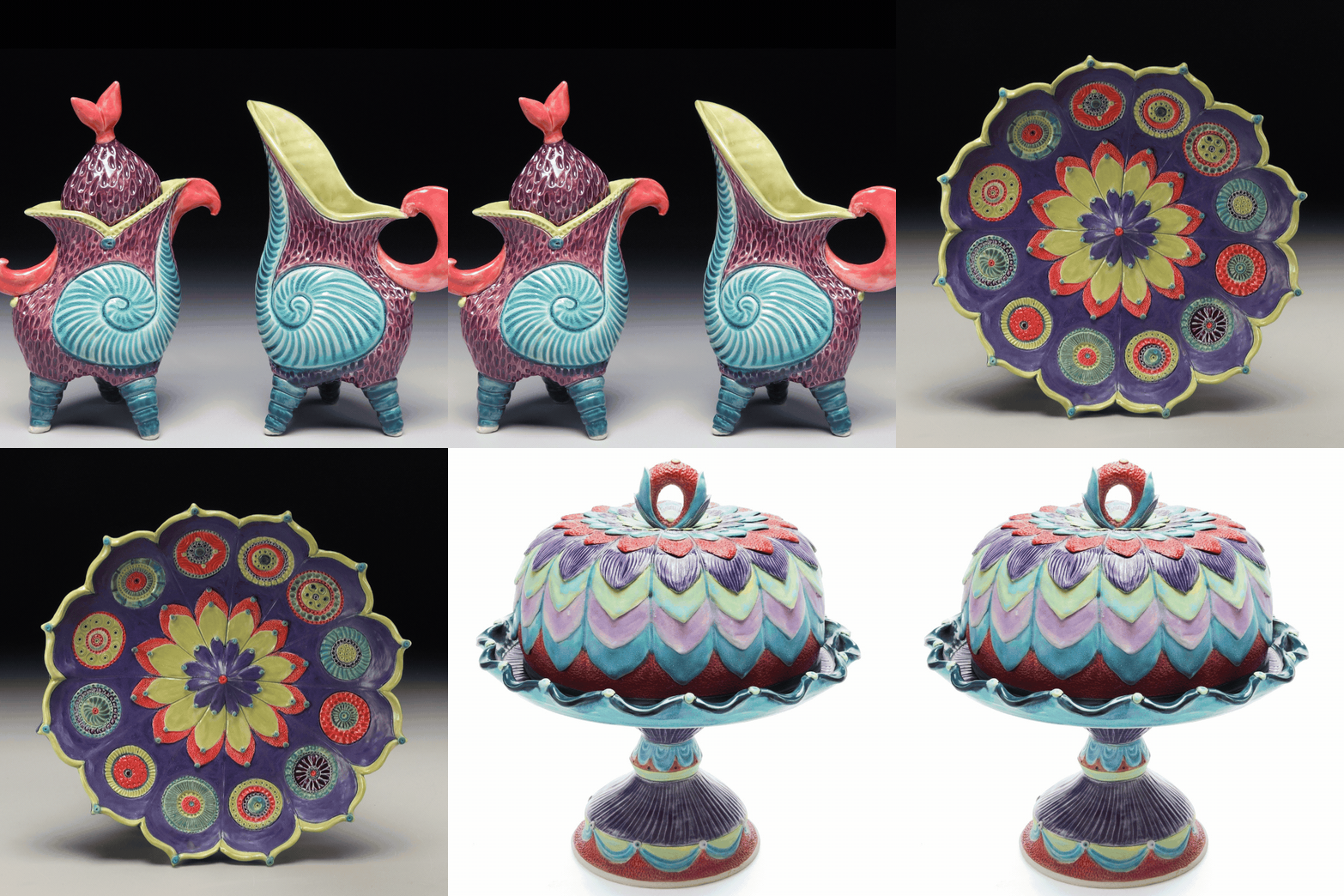
I want my work to express a sense of exuberance and joy, and to that end I apply an abundance of decoration and a bright colors. Currently I work in two different clays and temperatures as I feel that they bring out to two slightly different styles. My porcelain work speaks to the "production potter" in me, requiring less extreme forms and finer tuned decoration. My work in earthenware is more energetic, with deeper textures and gestural forms. It's important to me to try to keep my making process fun, and even adventurous. I am inspired most by Dr. Suess, and Antonio Gaudi while taking great joy in all the permutations of our organic world as well as all our man made attempts to recreate and honor it.
Smith Raku Works
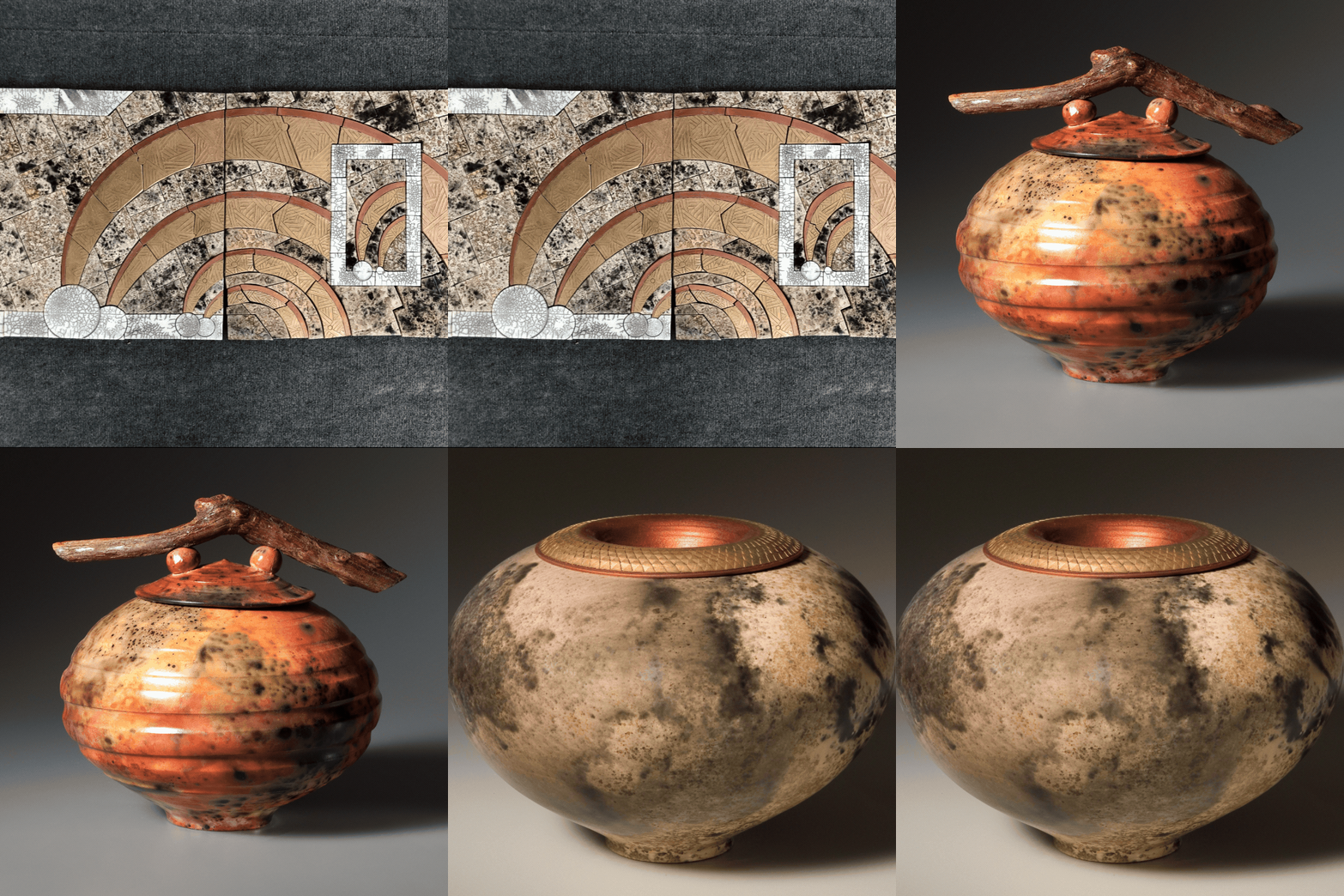
I have been a potter since 1976. It became my full-time occupation in 1982. And I have loved every minute of it. My home and studio are located in Marshville, NC. Architecture was my first love, and creating pottery allows me to design every day. Clay is so addicting and learning something different about it makes my work exciting and always new.
I have always worked with raku. Discovering the many permutations of that is what makes my work distinctive; from traditional, to smoked, and saggar. It is a pleasure to share with everyone.
Gertrude Graham Smith Pottery
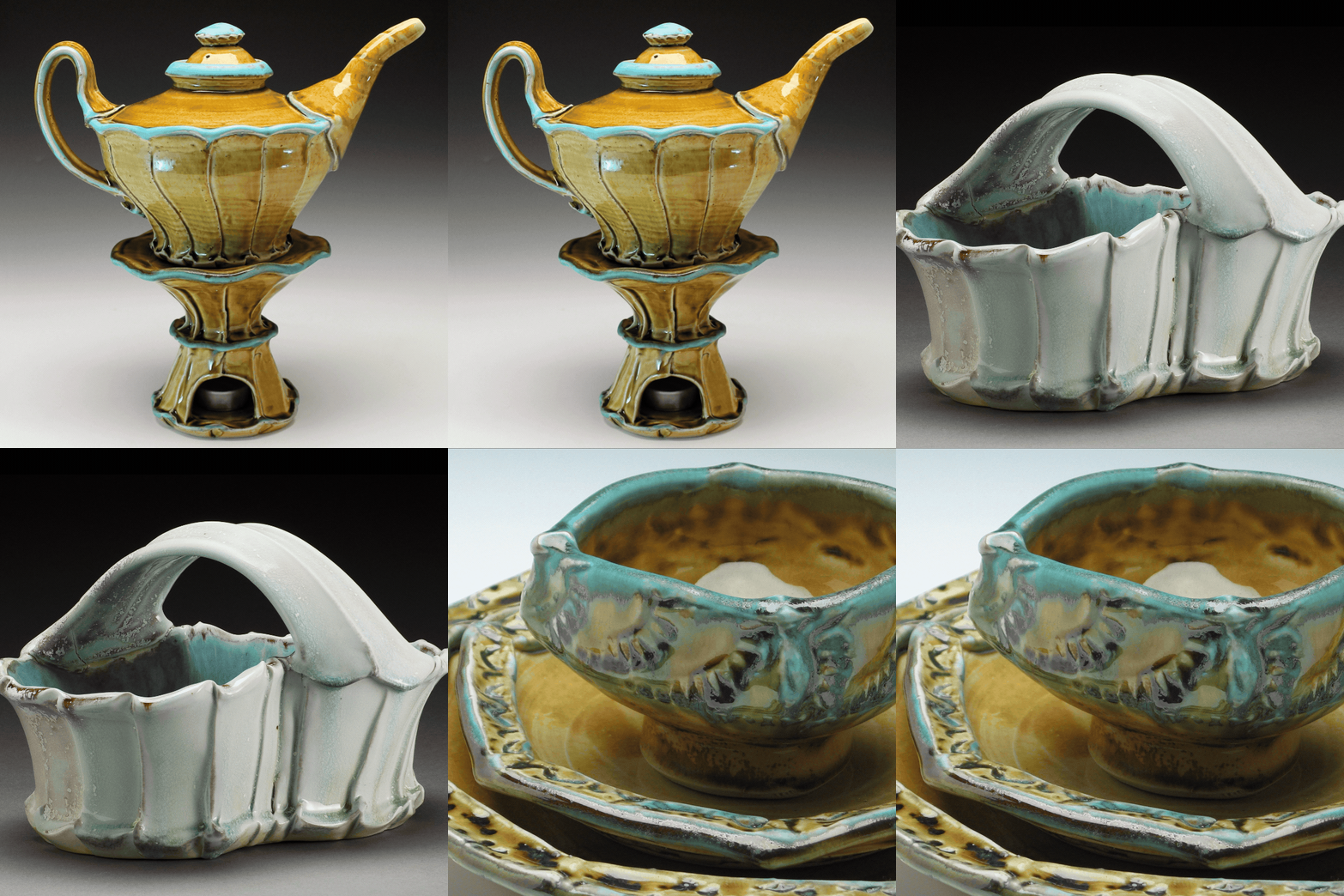
I love and celebrate the movement and soft responsive feel of porcelain clay thrown on a potters wheel in my pieces. Strong profile/form and tactile interest reflecting the clay's reaction to touch are vital. Altering the forms and surfaces of freshly thrown pieces immediately on the wheel can evoke a sense of lively spontaneity. All my work, except large scale pieces, is single-fired, (i.e. glazed when leather-hard), in a soda kiln where flames decorate anticipated edges and glazes particularly responsive to firing in soda are utilized. If I have to analyze the work, it celebrates a childhood enthralled with animated cartoons, cups and saucers whirling in dance combined with awe at the formal beauty of my grandmother's holiday table settings. My contemporary interpretation is in functional and whimsical porcelain. Larger pieces are built up over weeks by throwing soft coils off of the leather hard sections below. Smaller objects are fully functional, sturdy for eating, washing up, and stack easily, patterns and colors creating a kind of interactive sculpture. Candelabra reflect a current desire and passion to bring more light into the world.
David Stuempfle Pottery
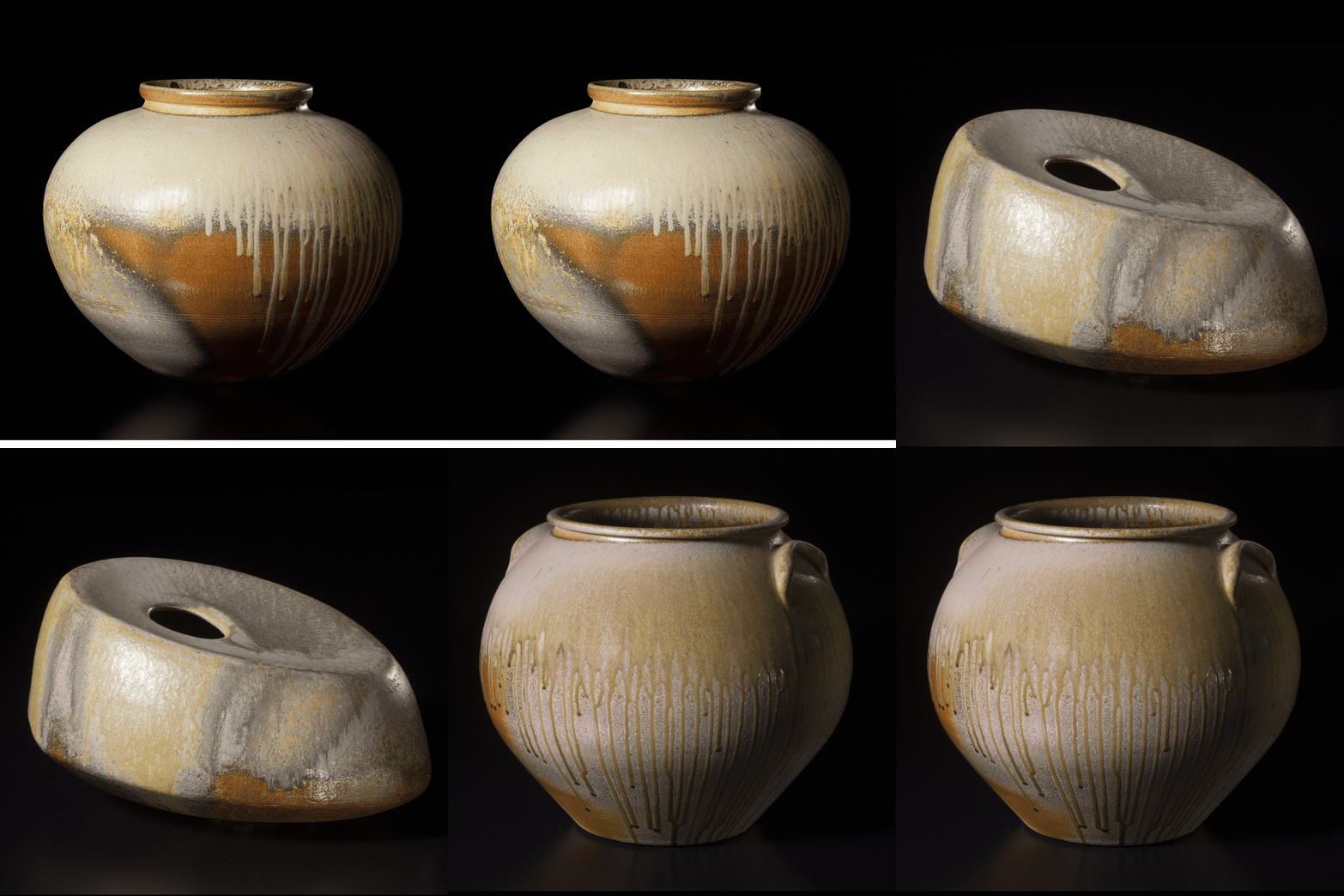
My work is at the intersection of traditional art and contemporary studio pottery. I have been influenced by extensive travel in Europe and Asia and by studying historical and contemporary American pottery in order to create work that is unique to me. Using local clays connects me to the geology and ceramic culture of the area.
Two of the kilns are crossdraft kilns and are approximately 30 feet long and are fired twice a year. Each firing lasts about five days to build up natural ash glazed surfaces on the work. Most of the pottery does not have any applied glaze so the surface markings are entirely the result of the clay and firing.
CT Pottery
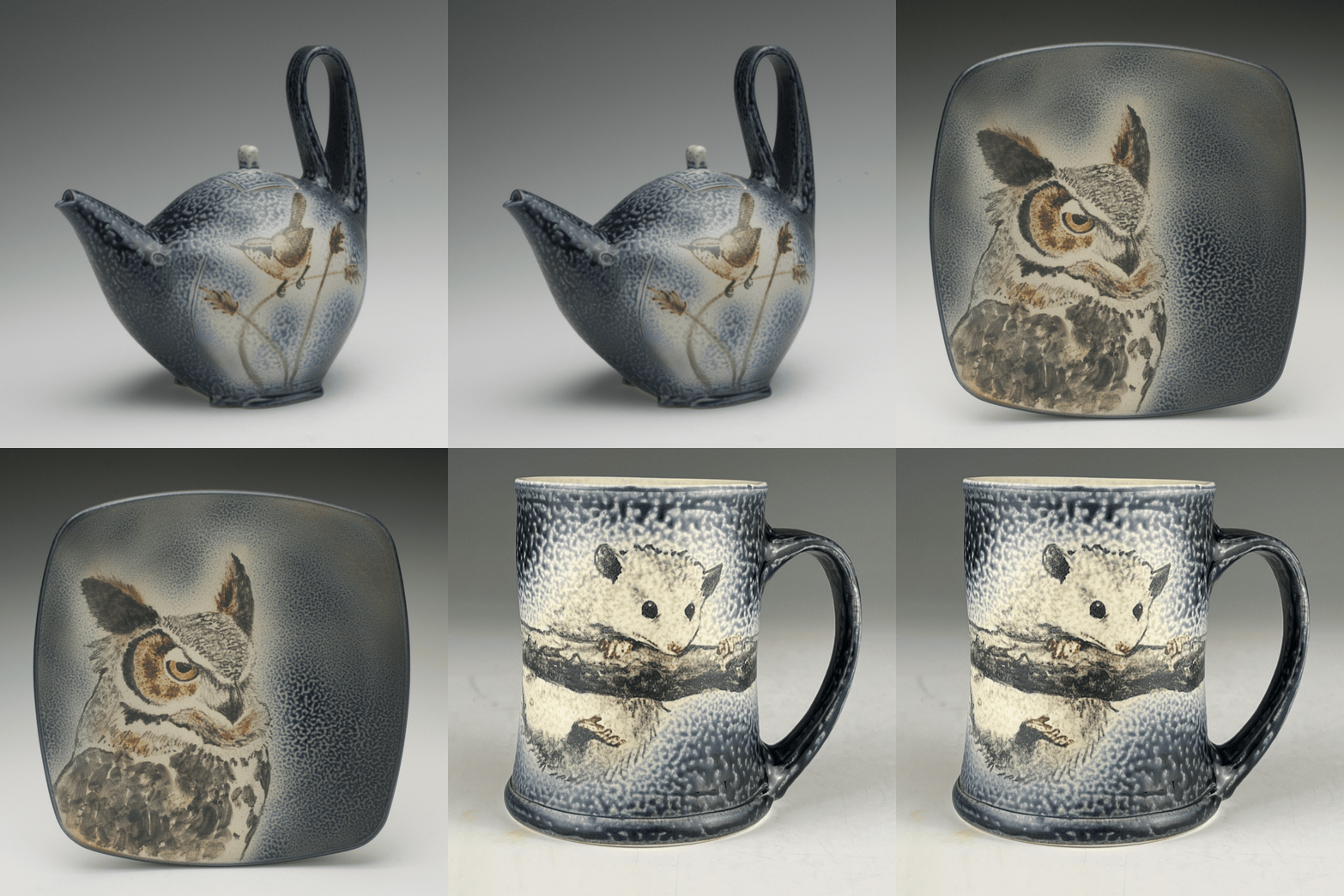
I create functional pottery that brings joy to everyday moments, blending utility with narrative through hand-painted animal imagery. My work is inspired by my lifelong fascination with the natural world, particularly the wildlife of North America. I aim to capture the energy and character of these animals, using them as a way to create connections between people, place, and pottery. Each piece begins with wheel-thrown or hand-built forms made from white stoneware or porcelain clay. After bisque, I apply layers homemade oxide washes and some underglaze to illustrate birds, foxes, rabbits, and other animals in motion or repose. The pieces are then finished with an ash-based glaze and fired in a gas kiln, where the fluidity of the glaze combined with the brushwork, contribute to the uniqueness of every piece. I strive to create pottery that is both visually engaging and deeply functional—objects that invite use and interaction while fostering a sense of connection to nature and the handmade. Ultimately, I hope my work enriches daily rituals, whether through a favorite mug for morning coffee or a serving bowl passed around the table.
Kate Waltman / The Triangle Studio
Working with the traditional tools of a potter’s wheel and wood-burning kiln, I transform local clays into objects of beauty and desire. I work in cadence with tradition to bring historically influenced ceramic objects into the modern age as employable and decorative pots.
My vessels begin as raw local earth that are diligently processed into clay, slips, and glazes. The limitation of materials gives structure and freedom to my making, allowing me to fully explore the subtlety and character of each variant as I compose a body of work.
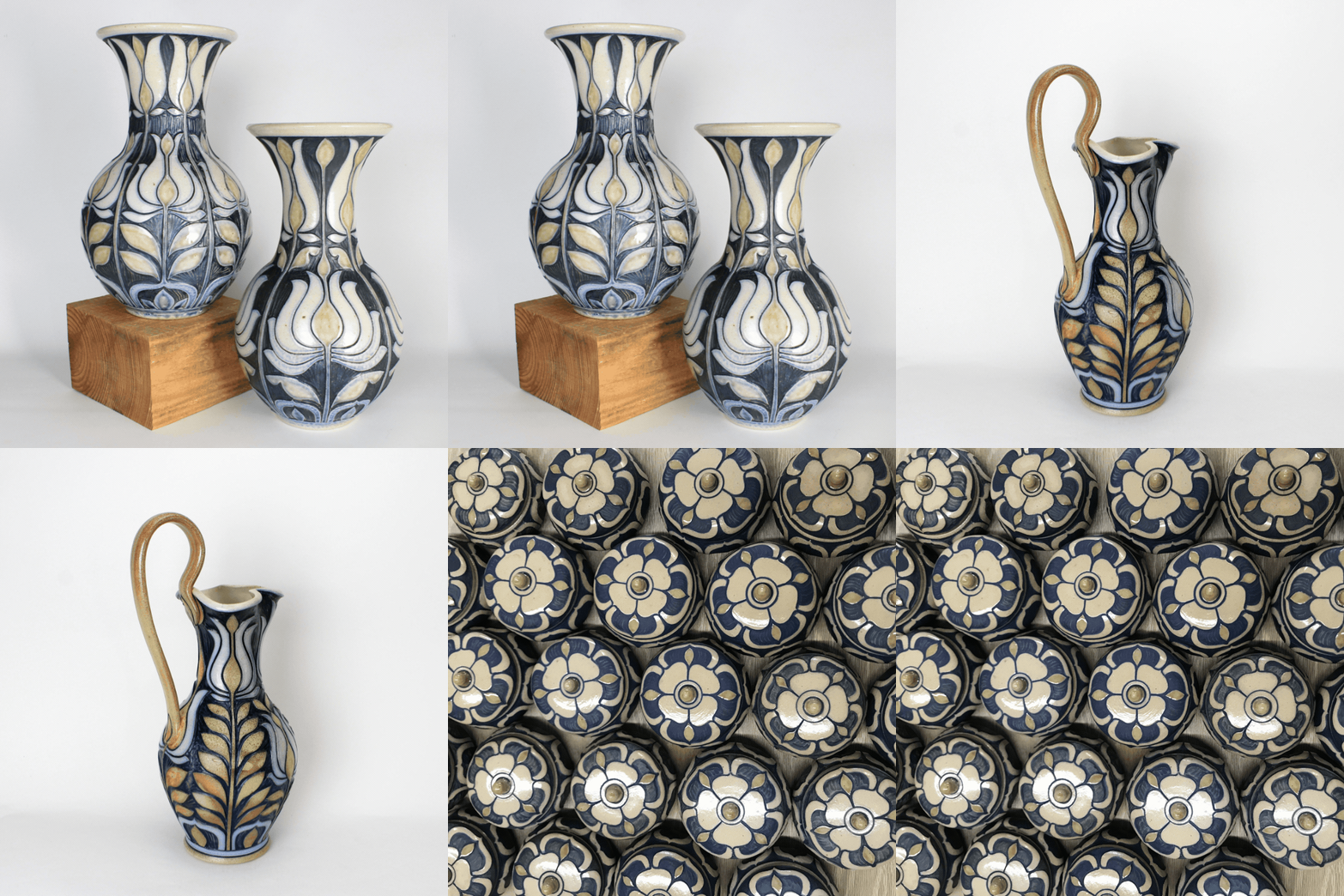
I begin the surfaces by carving an underlying armature of lines that stick to the bones of my forms, providing an arbor on which to cultivate patterns. Precise incising illustrates the surrounding flora, depicting the constraint of wild plants into domestic gardens. Through extensive drawing I hone a plant to its essential silhouettes, using the resulting motifs to structure my forms with symmetrical balance. Rhythmic ordering overtakes the capriciousness of nature just as the form of a domestic pot masters the feral clay.
The pots, damp and raw, are committed to a kiln. The earth joins with the fire’s erratic atmosphere regaining a bit of its wildness, and fusing with the patterns.
Evelyn Ward
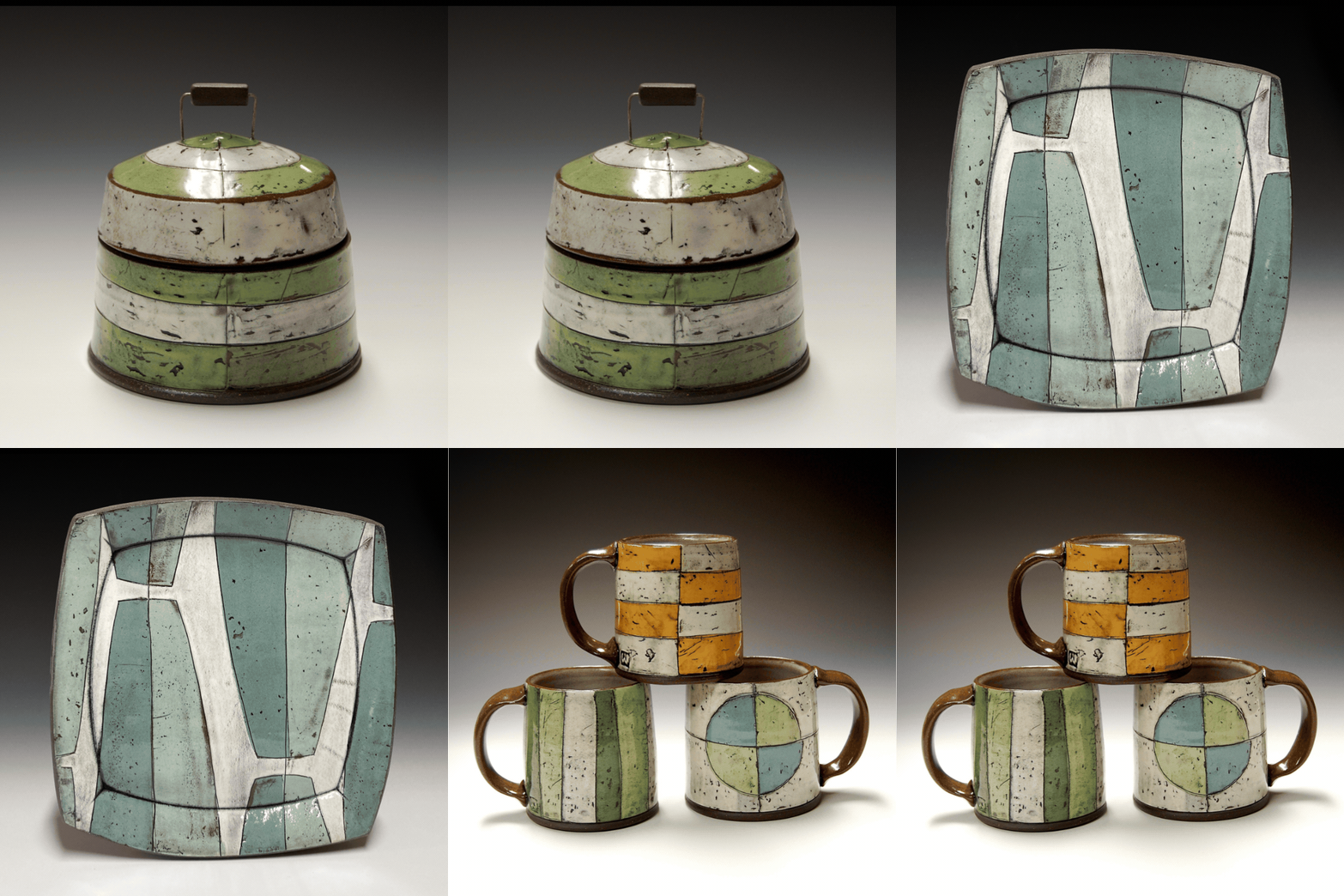
My pots are simple in form and surface design with architectural references. I try to make balanced pots that would be nice to have in the home for use or just be around. I really enjoy making pots and hope that they bring a little light to people’s lives.
I’m currently working with a dark stoneware clay because I love the rich color of the clay body and wanted to have some areas of bare clay showing through on the surfaces of the pots. I’m using a printing technique called mono-print transferring to decorate the surfaces. I paint slip onto cut pieces of paper and then transfer them onto the pot making a design. I love the imperfections that this process leaves on the surface of the pot. And the clean lines I can get from the process. I started out as a printmaker and have always gravitated to the qualities of hand printed images.
Melissa Weiss Pottery
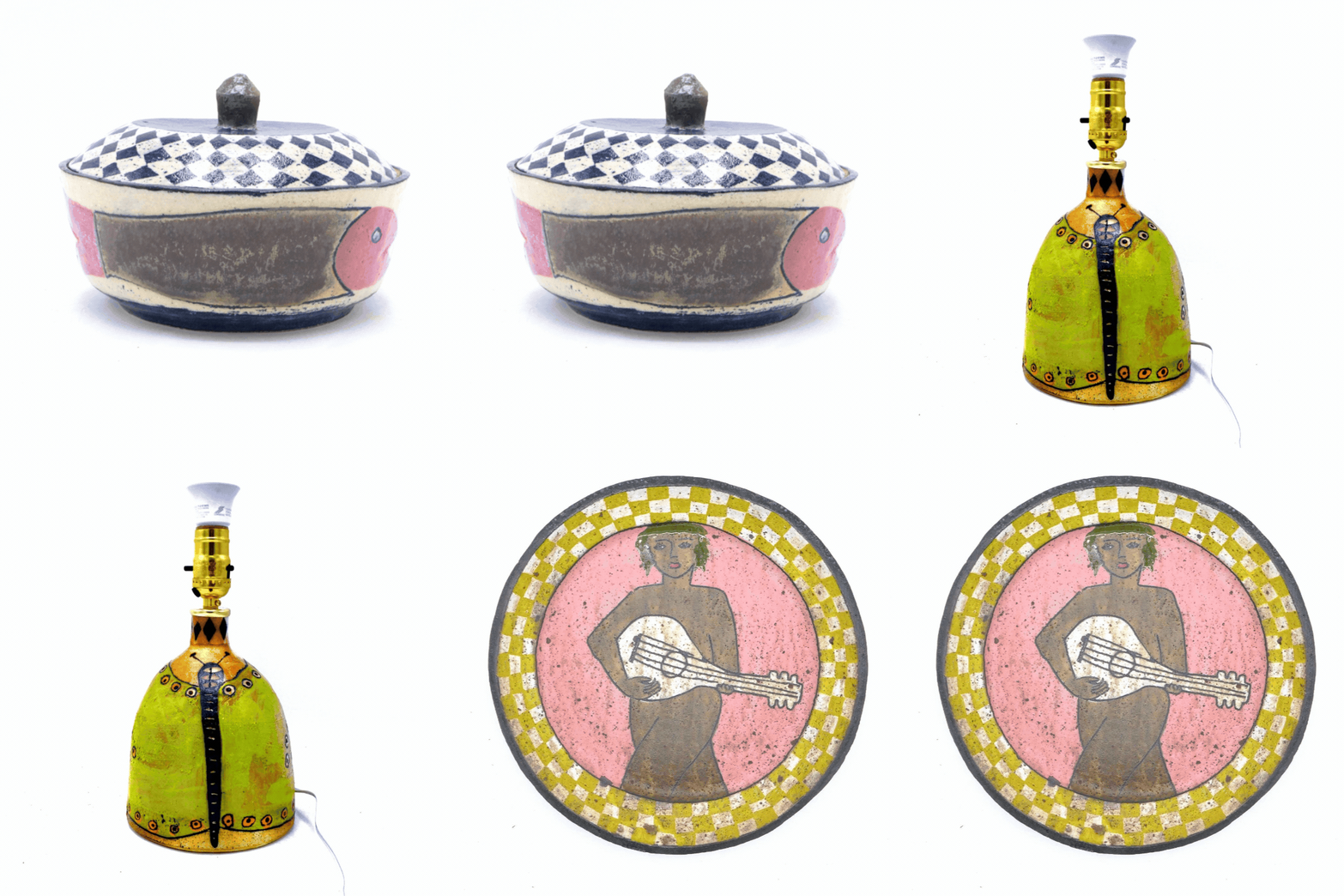
Melissa Weiss is a full time artist working primarily in clay. She lives and works in Asheville NC. Melissa took a ceramics class for the first time in 2004. She set up a studio shortly after that and continues experimenting and exploring this inexhaustible material. Melissa makes illustrative, functional ceramics from a variety of clays including wild clay dug from her land in the Arkansas Ozarks, the traditional territories of the Caddo, Osage and Quapaw tribes. She uses color and pattern to create a visual language that calls the past into the present forging a path forward into the future. She is influenced by medieval, Greek, Etruscan and folk art from around the world, aesthetically and how these peoples explore(d) the human condition visually. She is inspired by all people past and present fighting for liberation and a just world.
Julie Wiggins Pottery
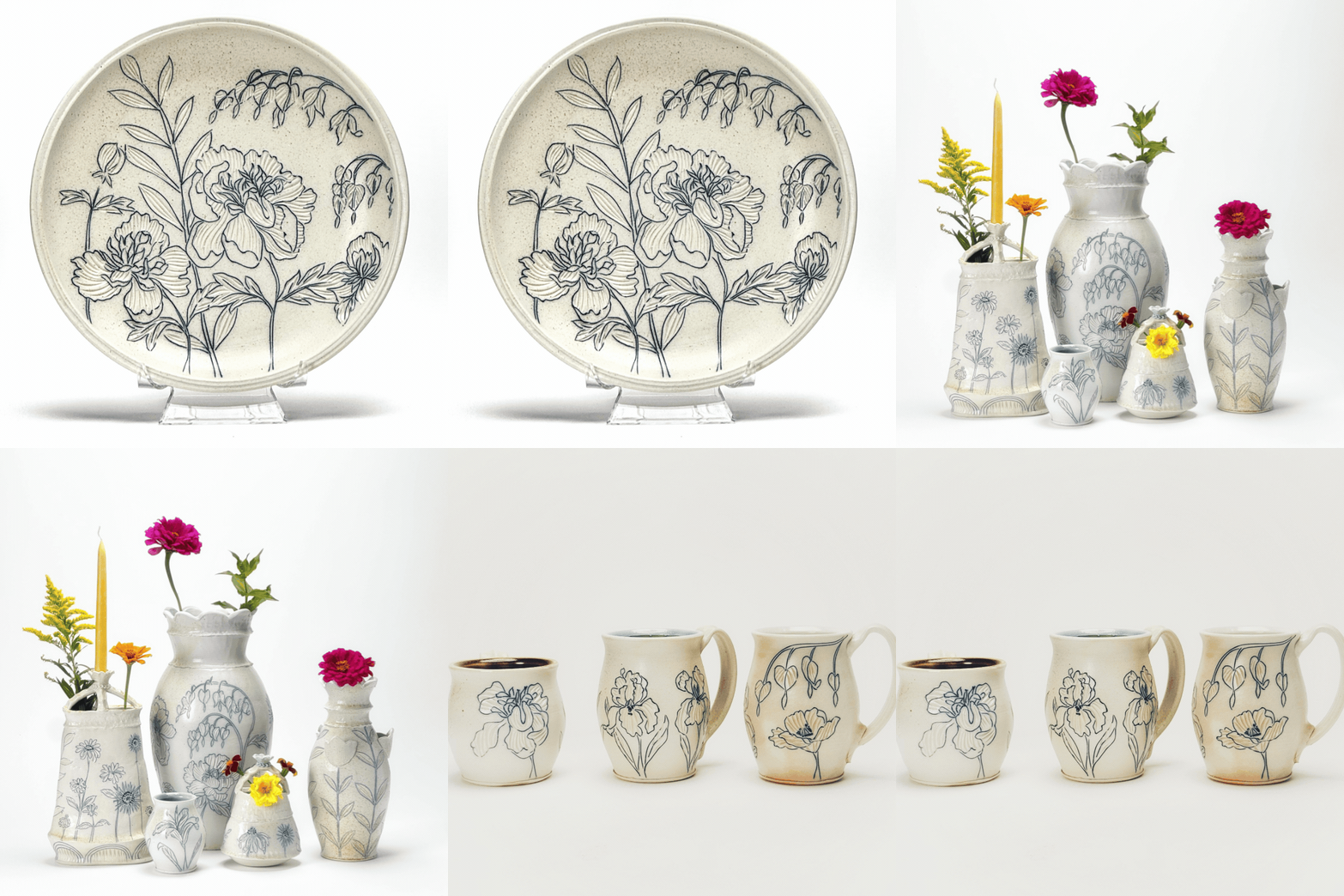
Clay is both memory and movement. My work is rooted in the quiet rituals of daily life and shaped by years of studying traditional pottery techniques in Jingdezhen, China, Italy, and Greece.. I am inspired by the connections formed through shared meals, morning coffee, and everyday rituals — moments that invite us to slow down, gather together, and appreciate the quiet beauty of handmade pottery.
Each pot begins as a gesture and becomes an offering. I consider the curve of a lip, the weight of a handle, the way a surface invites touch. Subtle shifts in glaze, imagery, and texture echo the landscapes of North Carolina that have shaped me — from the salt air and wide horizons of the beaches where I spent my childhood to the soft mountain mist that now settles around my studio in the Blue Ridge. My forms are meant to be held, used, and lived with; they gather stories over time.
Working from my studio in the Blue Ridge Mountains, I am guided by the rhythm of tending gardens, walking wooded paths, and honoring slow processes. Each piece is fired in a wood/salt kiln. The kiln teaches patience. The earth teaches humility. Through repetition and refinement, I seek a quiet elegance — objects that feel timeless, grounded, and alive in the hands of those who use them.